جامعة كيب تاون
| |
 | |
الاسم السابق | South African College |
|---|---|
| الشعار | لاتينية: Spes Bona |
| النوع | Public |
| تأسست | 1 أكتوبر 1829 |
| الانتساب الأكاديمي | |
| الوقف | ZAR 11.8 billion[1] (US$901 million)[2] |
| المستشار | Precious Moloi-Motsepe |
| نائب المستشار | Mosa Moshabela |
| الطاقم الأكاديمي | 1,176[3] |
| الطاقم الإداري | 3,179 |
| الطلبة | 28,233[4] |
| طلبة قبل البكالوريوس | 16,530[4] |
| طلاب الدراسات العليا | 11,193[4] |
| الموقع | ، Western Cape ، South Africa 33°57′27″S 18°27′38″E / 33.95750°S 18.46056°E |
| الحرم | 4 suburban and 2 urban campuses |
| Acceptance Rate | 4.85% |
| ألوان المدرسة | Light blue, dark blue, black, white |
| الكنية | Ikeys |
| التميمة | Ikey Tiger |
| الموقع الإلكتروني | uct.ac.za |
| ملف:University of Cape Town banner.svg | |
 | |
The University of Cape Town (UCT) (أفريكانز: Universiteit van Kaapstad, خوسا: iYunivesithi yaseKapa) is a public research university in Cape Town, South Africa.
Established in 1829 as the South African College, it was granted full university status in 1918, making it the oldest university in South Africa and the oldest university in Sub-Saharan Africa in continuous operation.[5][6]
UCT is organised in 57 departments across six faculties offering bachelor's (NQF 7) to doctoral degrees (NQF 10) solely in the English language.[7] Home to 30,000 students, it encompasses six campuses in the Cape Town suburbs of Rondebosch, Cape Town CBD, Observatory, Mowbray, and V&A Waterfront. It is the only African member of the Global University Leaders Forum (GULF) within the World Economic Forum, which is made up of 26 of the world's top universities.[8]
Five alumni, staff members, or researchers associated with UCT have won the Nobel Prize. Eighty-eight staff members are part of the Academy of Sciences of South Africa.[9]
التاريخ
التاريخ المبكر
The University of Cape Town was founded at a meeting in the Groote Kerk in 1829 as the South African College, a high school for young men. The college had a small tertiary-education facility, introduced in 1874[10] that grew substantially after 1880, when the discovery of gold and diamonds in the north – and the resulting demand for skills in mining – gave it the financial boost it needed to grow. The college developed into a fully fledged university during the period 1880 to 1900, thanks to increased funding from private sources and the government.
During these years, the college built its first dedicated science laboratories, and started the departments of mineralogy and geology to meet the need for skilled personnel in the country's emerging diamond and gold-mining industries. The UCT crest was designed in 1859 by Charles Davidson Bell, Surveyor-General of the Cape Colony at the time. Bell was an accomplished artist who also designed medals and the triangular Cape stamp. Another key development during this period was the admission of women.
In 1886 the professor of chemistry, Paul Daniel Hahn, convinced the council to admit four women into his chemistry class on a trial basis. Owing to the exceptional standard of work by the women students, the college decided to admit women students permanently in honour of Queen Victoria's Diamond Jubilee in 1887.
The years 1902 to 1918 saw the establishment of the Medical School, the introduction of engineering courses and a Department of Education. UCT was formally established as a university in 1918,[10] on the basis of the Alfred Beit bequest and additional substantial gifts from mining magnates Julius Wernher and Otto Beit. The new university also attracted substantial support from well-wishers in the Cape Town area and, for the first time, a significant state grant.

In 1928, the university was able to move the bulk of its facilities to Groote Schuur on the slopes of Devil's Peak, on land bequeathed to the nation by Cecil John Rhodes as the site for a national university. UCT celebrated its centenary the following year.
فترة الفصل العنصري
Apart from establishing itself as a leading research and teaching university in the decades that followed, UCT earned itself the nickname "Moscow on the Hill" during the period 1960 to 1990 for its sustained opposition to apartheid, particularly in higher education.[5] In 1968 the university withdrew the appointment of a black lecturer, Archie Mafeje, under pressure from the government which had declared it a white educational institution. This led to a nine-day protest by hundreds of students; an early example of resistance to apartheid by progressive whites.[11]
The university admitted its first small group of black students in the 1920s. The number of black students remained relatively low until the 1980s and 90s, when the institution, reading and welcoming the signs of change in the country, committed itself to a deliberate and planned process of internal transformation.
From the 1980s to the early 1990s, the number of black students admitted to the university rose by 35 percent. By 2004, nearly half of UCT's 20,000 students were black and just under half of the student body was female. Today the university boasts having one of the most diverse campuses in South Africa.[12]
فترة ما بعد الفصل العنصري
Rhodes Must Fall (#RhodesMustFall on social media) was a protest movement that began on 9 March 2015, originally directed against a statue at the University of Cape Town (UCT) that commemorates Cecil Rhodes. The campaign for the statue's removal received global attention[13][14] and led to a wider movement to "decolonise" education across South Africa.[14][15] On 9 April 2015, following a UCT Council vote the previous night, the statue was removed.

#FeesMustFall was a student protest movement[16] which was arguably indirectly inspired by the RhodesMustFall protest. It formally began at the University of the Witwatersrand and spread to UCT and Rhodes University and then the rest of the South African universities. It called for the abolition of tuition fee increases for the 2016 academic year. Diverse demands arose such as the abolition of fees and decolonisation of higher education which led to substantial changes at South African public universities.[17] At UCT, the Senate began a widespread curriculum reform process and the university began the process of the renaming of buildings on campus (the most notable example was when Jameson Hall was renamed to Sarah Baartman Hall; a process that began in 2019, and was finalized with a ceremony in 2025).[18]
In September 2019, Film and Media studies student Uyinene Mrwetyana went missing. After the community and police began searching, her body was discovered in the Cape Flats area of Cape Town and Luyanda Botha was arrested and convicted for her rape and murder.[19] Her death and the rape and death of other women precipitated widespread public outcry that led to a campus shutdown[20] and protests on campus, at the Parliament precinct in Cape Town CBD and at campuses around South Africa.
Subsequently, President Ramaphosa announced[21] reforms such as harsher punishments for sex offenders and the public disclosure of the National Register for Sex Offenders to stem sexual and physical violence against women and children.[22] Moreover, the Uyinene Mrwetyana Foundation was established and a special fund in her name was created to provide scholarships to female students in the Humanities Faculty.[23]
In March 2020, UCT opened the Neuroscience Institute at the Groote Schuur Hospital in collaboration with the Western Cape Provincial Government, the first dedicated cross- and interdisciplinary centre for the study of and development of treatments for neurological and mental disorders in Africa.[24]
In October 2025, it was announced that UCT would host the first Times Higher Education (THE) World Academic Summit in Africa. The Summit will be held from 29 September to 1 October 2026, and will convene hundreds of global leaders in higher education, research, policy, business, and civil society. The 2026 Summit's theme is, "Knowledge, justice, and futures: Universities in the age of intelligence".[25]
Campus


The main teaching campus, known as Upper Campus, is located on the Rhodes Estate on the slopes of Devil's Peak. This campus contains, in a relatively compact site, the faculties of Science, Engineering, Commerce, and Humanities (except for the arts departments), as well as Smuts Hall and Fuller Hall residences.
Upper Campus is centered on Sarah Baartman Hall, the location for graduation and other ceremonial events, as well as many examinations. The original buildings and layout of Upper Campus were designed by JM Solomon and built between 1928 and 1930. Since that time, many more buildings have been added as the university has grown. Upper Campus is also home to the main library, The Chancellor Oppenheimer Library, which holds the majority of the university's 1.3 million volume collection.
Contiguous with Upper Campus, but separated from it by university sports fields and the M3 expressway, are the Middle and Lower Campuses. These campuses, which are spread through the suburbs of Rondebosch, Rosebank and Mowbray, contain the Law Faculty, the South African College of Music, the School of Economics, most of the student residences, most of the university administrative offices, and various sporting facilities.
The state of the art artificial grass soccer field has been approved by FIFA for training for World Cup teams.[26] The Upper, Middle and Lower Campuses together are often referred to as the "main campus".
The Faculty of Health Sciences is located on the Medical School campus next to the Groote Schuur Hospital in Observatory. The Fine Arts and Drama departments are located on the Hiddingh Campus in central Cape Town. The university's original building, now known as the Egyptian Building, on the Hiddingh campus, was built in the Egyptian Revival style. The only other campus built in this style was the Medical College of Virginia in Richmond, Virginia in the United States. The UCT Graduate School of Business is located on the Breakwater Lodge Campus at the Victoria & Alfred Waterfront.
The Baxter Theatre Centre, located on the Lower Campus, is part of the University of Cape Town; it is also the second largest performing arts complex in Cape Town, after the Artscape Theatre Centre. It has three venues:
- the 665-seat Main Theatre
- the 638-seat Concert Hall, with a Von Beckerath organ
- the 172-seat Golden Arrow Studio
For his contribution of the tract of land which the campus was founded on, a bronze statue of Cecil Rhodes was erected in 1934 on the Upper Campus, overlooking the university's rugby fields. The statue was removed in April 2015 following pressure from student groups due to its representation of South Africa's colonialist apartheid past and the university's inadequate representation of black students, faculty, and staff.
The upper campus was affected by the Table Mountain fire in April 2021; the Jagger Library building, which housed rare books and documents including a large African Studies collection, was gutted.[27]

Residential halls
The university has 19 student residences (or "res" as known colloquially), offering both single-gender and mixed-gender housing. The Department of Student Housing oversees the residence system College House is the oldest university residence in Africa, having been established in 1887.
UCT's residence system is composed of three tiers. Students living in residence are placed in a tier according to the length of time that they have been in the residence system, studying in the university and service or part-time employment in a residence. As a student progresses through their academic journey they are moved into a higher tier. Postgraduate students are usually housed in the third-tier residences unless employed in lower-tier residences.
First-tier residences:[28]
- Avenue Road Residence
- Baxter Hall
- Clarinus Village
- College House
- Dullah Omar Hall
- Fuller Hall
- Glendover Residence
- Graça Machel Hall
- Kilindini
- Kopano Residence
- Leo Marquard Hall
- Rochester House
- Smuts Hall
- Tugwell Hall
- University House
- Varietas
Second-tier residences:[29]
- Forest Hill
- Groote Schuur Flats
- Groote Schuur Residence
- Liesbeeck Gardens
- Medical Residence
- Obz Square
- The Woolsack
Third-tier residences:[30]
- 1 Woodbine Road
- 8 Avenue Road
- Amalinda
- Dullah Omar Hall
- Edwin Hart Annex
- F Block (Forest Hill)
- Harold Cressy Hall
- Inglewood
- JP Duminy Court
- Linkoping
- North Grange
- Rondeberg
- TB Davie Court
-
 Smuts Hall, built in 1928 on the Upper Campus
 -
 Tugwell Hall, built in 1974 on the Lower Campus

.jpg&filetimestamp=20260902021939&)
Organisation
Administration and governance
The University of Cape Town was originally incorporated as a public university by a private act of Parliament, the University of Cape Town Act, 1916 (No. 14 of 1916) in 1918. At present it is incorporated and structured by an institutional statute issued under the provisions of the Higher Education Act, 1997.
The titular head of the university is the chancellor; this is a ceremonial position without executive power. The primary role of the chancellor is to confer degrees on behalf of the university, and to represent the university to the rest of the world.[31] The current Chancellor is fashion entrepreneur and philanthropist Precious Moloi-Motsepe who was elected in November 2019 and assumed the role on 1 January 2020[32] after the expiration of Ms Graça Machel's second consecutive 10-year term.
The University Council is the highest ranked decision-making and appointative structure in the university.[33] With wide-ranging powers of governance over areas such as the strategy, well-being and mission of the university, it is directly accountable to the Government of the Republic through the Minister of Higher Education, currently Nobuhle Nkabane for matters relating to the university.[33]
It is composed of 30 broad stakeholder representatives such as students, academics, staff and appointees of the City of Cape Town, Convocation, Premier of the Western Cape and the Minister of Higher Education among others, and the presiding officer of the council, the chair, is currently Mr Norman Arendse (SC).[34] The Registrar, who acts as the secretary of the Council and Senate, oversees academic registration and legal matters, and administers the Convocation, is currently Royston Pillay.[35]
The Convocation, composed of alumni, the Vice Chancellor, Deputy Vice Chancellors, academic staff, emeritus professors and emeritus associate professors, is a statutory body administered by the Office of the Registrar, which provides a platform for former members of the university to participate and engage with matters affecting the university.[36] Helmed by the President of the Convocation, currently Mr Kassi Carl Manlan,[37] it can make recommendations and pass non-binding resolutions in its Annual General Meetings.[36]
The Leadership Lekgotla is a coordinating and decision-making structure composed of senior executives of the university who oversee the day-to-day running of the university.[38] It contrasts with the University Council which arises from the University Statute and exercises supreme governance over the university.
The Leadership Lekgotla's members are senior executives who oversee different areas of the university's operations and policies.[38] The most senior executive is the Vice Chancellor (ranked below the Chancellor in the ceremonial protocol and order of precedence of the university) is the de facto head and chief executive of the university,[39] (currently held by Mosa Moshabela),[40] who is accountable to the council.
Below the Vice Chancellor are the Deputy Vice Chancellors[41] of Transformation (currently Professor Elelwani Ramugondo[42]), of Research and Internationalisation (currently Susanne Harris[43]) and of Teaching and Learning (currently Professor Harsha Kathard, acting[44]). The Chief Operations Officer, currently Reno Morar,[45] brings together and oversees the functional, support and technical areas of the university's operations.[46]
| University Chancellors & Vice-Chancellors | |||
|---|---|---|---|
| Chancellor | Vice-Chancellor | ||
| Term | Name & image | Term | Name |
| 1918–1936 | .jpg&filetimestamp=20220905145854&) H.R.H. the Prince of Wales |
1918–1938 | Sir John Carruthers Beattie |
| 1936–1950 |  General Jan Smuts |
1938–1947 | AW Falconer |
| 1950–1967 | .jpg&filetimestamp=20260902021551&) The Hon. Mr Justice Albert van der Sandt Centlivres |
1948–1955 | TB Davie |
| 1956–1957 | RW James, in an acting capacity | ||
| 1958–1967 | Jacobus Duminy | ||
| 1967–1999 |  Harry Oppenheimer |
1968–1980 | Sir Richard Luyt |
| 1981–1996 | Stuart J Saunders | ||
| 1996–2000 | Mamphela Ramphele | ||
| 1999–2019 |  Graça Machel |
2000–2008 | Njabulo Ndebele |
| 2008–2018 | Max Price | ||
| 2019–present | .jpg&filetimestamp=20260902021420&) Precious Moloi-Motsepe |
2018–2023 | Mamokgethi Phakeng |
| 2023–2024 | Daya Reddy, interim | ||
| 2024- | Mosa Moshabela | ||
Academic divisions
The university is composed of six Faculties (Commerce, Engineering and the Built Environment, Health Sciences, Law, Sciences and Humanities) which together comprise 57 departments.[47] Faculties are helmed by a Dean[48] and their administrative and operational matters are administered by a Director.
The Senate has delegated substantial powers to the faculties in academic matters over their internal protocol and management such as on matters concerning class timetables, admission requirements, academic exclusion, examinations, research projects and so on. Faculties vary substantially in student size and in buildings occupied, with the Commerce faculty having the highest student population and the law faculty having the lowest while the Humanities faculty spans the most buildings followed by the Faculty of Health Sciences with the Commerce and Law faculties having (by far) the lowest physical footprint.[49]
Notwithstanding interdisciplinary research units and centers, additional academic structures exist that eschew the faculty-based organisational structure. The multidisciplinary Center for Higher Education Development ranks on an equal level as the faculties and the UCT Graduate School of Business maintains substantial latitude over its internal affairs despite being nominally part of the Faculty of Commerce.
The interdisciplinary School of Information Technology, comprising the Departments of Information Systems and of Computer Science in the Commerce and Science faculties is neither a faculty nor a department but a coordinating mechanism to promote IT education and research.[50]
The departments of the faculties are listed as follows:

Faculty of Commerce
- College of Accounting
- School of Economics (jointly established with Faculty of Humanities)
- Department of Finance and Tax
- Department of Information Systems
- The Nelson Mandela School of Public Governance
- School of Management Studies
- Education Development Unit
- Graduate School of Business
Faculty of Engineering and the Built Environment
- Department of Architecture, Planning and Geomatics
- Department of Chemical Engineering
- Department of Civil Engineering
- Department of Construction Economics and Management
- Department of Electrical Engineering
- Department of Mechanical Engineering
Faculty of Health Sciences
- Department of Anaesthesia and Perioperative Medicine
- Department of Health and Rehabilitation Sciences
- Department of Health Sciences Education
- Department of Human Biology
- Department of Integrative Biomedical Sciences
- Department of Medicine
- Department of Obstetrics and Gynaecology
- Department of Paediatrics and Child Health
- Department of Pathology
- Department of Psychiatry and Mental Health
- Department of Public Health and Family Medicine
- Department of Radiation Medicine
- Department of Surgery

Faculty of Humanities
- African Feminist Studies
- Anthropology
- African Studies and Linguistics, including the Centre for African Studies[55]
- Centre for Film and Media Studies
- Education Development Unit
- English Literary Studies
- Historical Studies
- Knowledge and Information Stewardship
- Michaelis School of Fine Art
- Department of Philosophy
- Department of Political Studies
- School of Education
- Department of Psychology
- School of Languages and Literatures
- Department of Social Work & Social Development
- Department of Sociology
- South African College of Music
- Department for the Study of Religions
- Theatre, Dance and Performance Studies

Faculty of Law
- Department of Commercial Law
- Department of Private Law
- Department of Public Law
Faculty of Science
- Department of Archaeology
- Department of Astronomy
- Department of Biological Sciences
- Department of Chemistry
- Department of Computer Science
- Department of Environmental and Geographical Science
- Department of Geological Sciences
- Department of Mathematics and Applied Mathematics
- Department of Molecular and Cell Biology
- Department of Oceanography
- Department of Physics
- Department of Statistical Sciences
Funding

The university's endowment (the financial capital and investment funds on which it can draw to carry out its work)[58] is deposited with the UCT Foundation (a legally independent nonprofit organisation) and it is managed by the Investment Office.[59] Through the Distinguishing UCT fundraising campaign, the university is trying to raise its endowment.
As of 2019, its designated endowment stands at R2.5 billion and its undesignated endowment stands at R676 million with R133 million raised for infrastructure projects (bringing the total undesignated endowment to R809 million which the university aims to increase to R1 billion).[59]
There have been several campaigns at the university to divest its endowment. Fossil Free UCT was formally established in 2015 as a campaign by environmental activism lobbying groups and student organisations, most notably the Green Campus Initiative compel UCT to divest from fossil fuel companies which resulted in a non-binding resolution passed by UCT's Convocation in 2017 to support the divestment.[60]
Student lobby groups, most notably the Palestinian Solidarity Front and the SRC called on the university's management to divest from Israeli companies and organisations working in the Palestinian Occupied Territories (among other demands), which, in the end, the university refused to do.[61] Palestinian groups also pressured the university through 'emcampment' protests organised by UCT4Palestine in 2024, with around 10-20 tents set up in public spaces, despite the university not formally authorising the groups to occupy campus grounds.[62][63]
The university's income comes from a combination of government grants, tuition fees, donations, investment and research income. In the 2017–2018 financial year, the university received R1.415 billion in state subsidies, R1.428 billion in tuition fees and R539 million in other income. R1.2 billion was committed to student financial aid for both undergraduate and postgraduate students from the university, the government through the NSFAS scheme and the university's partners and donors.[49]
Students and staff
اعتبارا من 2018[تحديث], there were 27,907 students; 25% of whom were black South African, 22% were white South African, 18% identified as another race, 15% were international students.[64] In 2016 there were 29,074 students enrolled (18,421 undergraduates and 10,653 postgraduates) and 4,542 staff were employed (1,179 academic and 3,363 professional, administrative, support and service staff).[65]
The UCT Employment Equity Plan April (2010 to 2015) indicated moderate but consistent changes in the demographic makeup of the staff body. The five-year plan specified specific targets ranging from between about 5% to 10% adjustments in the representation of SA black staff. According to the plan the staff makeup would have changed by 2015 by achieving either parity or more SA black staff than SA white in all categories other than senior lecturer and professor positions.[66]
UCT spokesperson Elijah Moholola noted that, in 2017, UCT employed 45 white professors, 38 black African, Cape Coloured or Indian South African professors, 67 foreign national professors and 7 who did not disclose their race.[67]
Student enrolment 2009–2013
Student enrolment by population group 2009–2013, showing percentage growth on base:[68][69]
| 2009 | 2010 | 2011 | 2012 | 2013 | 2014 | % Growth | % Of Total | |
|---|---|---|---|---|---|---|---|---|
| SA Black | 5068 | 5323 | 5744 | 6012 | 6199 | 6813 | 28.67% | 25.23% |
| SA coloured | 3623 | 3653 | 3687 | 3530 | 3573 | 3601 | 0.73% | 13.34% |
| SA Indian | 1630 | 1681 | 1671 | 1701 | 1714 | 1813 | 11.6% | 6.72% |
| SA White | 8984 | 9183 | 8992 | 8814 | 8434 | 8093 | -10.69% | 30% |
| International | 3821 | 4171 | 4268 | 4802 | 4708 | 4674 | 19.57% | 17.32% |
| Other | 886 | 1003 | 1146 | 1191 | 1488 | 1993 | 73.28% | 7.39% |
| Total | 24012 | 25014 | 25508 | 26505 | 26116 | 26987 | -0.32% | 100% |
| Program | Asian | Black | Coloured | Indian | White | International (Rest of Africa) | Undeclared |
|---|---|---|---|---|---|---|---|
| Undergraduate | 0.50% | 32% | 12% | 5% | 14% | 7% | 30% |
| Postgraduate | 0.50% | 25% | 12% | 5% | 14% | 18% | 20% |
| PhD | 0.50% | 21% | 9% | 6% | 20% | 35% | 8.9% |
Student enrolment 2020–present
| Year | Black (Number) | Black (%) | White (Number) | White (%) | Coloured (Number) | Coloured (%) | Indian (Number) | Indian (%) | International | International (%) | Unknown (Number) | Unknown (%) | Total |
|---|---|---|---|---|---|---|---|---|---|---|---|---|---|
| 2020 | 7,915 | 28,03% | 5,353 | 18,96% | 3,738 | 13,24% | 1,599 | 5,66% | 4,068 | 14,41% | 5,560 | 19,70% | 28,233 |
| 2021 | 8,787 | 29,67% | 4,899 | 16,55% | 3,753 | 12,67% | 1,580 | 5,34% | 3,658 | 12,35% | 6,931 | 23,41% | 29,608 |
| 2022 | 8,259 | 28,27% | 4,222 | 14,45% | 3,514 | 12,03% | 1,442 | 5% | 3,702 | 12,67% | 8,072 | 27,63% | 29,211 |
| 2023 | 10,414 | 35,87% | 5,261 | 18,12% | 4,149 | 14,29% | 1,819 | 6,26% | 3,526 | 12,15% | 3,862 | 13,30% | 29,031 |
| 2024 | 11,667 | 39,69% | 5,591 | 19,01% | 4,562 | 15,52% | 1,939 | 6,60% | 4,655 | 15,84% | 982 | 3,34% | 29,396 |
Student life
UCT had 36 different sports clubs in 2003, including team sports, individual sports, extreme sports and martial arts.[70]
The university's sports teams, in particular the rugby union team, are known as the "Ikey Tigers" or the "Ikeys". The "Ikey" nickname originated in the 1910s as an antisemitic epithet applied to UCT students by the students of Stellenbosch University, because of the supposed large number of Jewish students at UCT.[71]
Stellenbosch is UCT's traditional rugby opponent; an annual "Intervarsity" match is played between the two universities.[72] The University of Cape Town Football Club also known as the "Ikeys Warriors" is the main team for association football (soccer), representing the university at tournaments such as Varsity Football.

As of 2007 there were more than 80 student societies at UCT, falling into five categories:[73]
- Academic societies for those interested in a particular field of study or studying a particular topic: The most prominent of these include the History and Current Affairs Society (HCA), the Space and Astronomy Society (SpaceSoc, also a SEDS South Africa chapter), the United Nations Association of South Africa (UNASA), and the Students for Law and Social Justice (SLSJ).
- Political societies, including branches of the youth wings of national political parties such as the South African Students Congress (SASCO), the Democratic Alliance Students Organisation (DASO), and the African National Congress Youth League.
- Religious societies, some of which are associated with religious denominations or local places of worship.
- National/cultural societies for students from particular countries or particular ethnic backgrounds.
- Special interest societies (such as RainbowUCT, the university's LGBTI society, UCT Mountain & Ski Club, UCT Ballroom and Latin dancing) for those interested in various activities or issues.
In addition to the plethora of student societies, there are several student organisations dedicated to the development of communities surrounding the university in the Cape Metropolitan Area. Some of the biggest include: SHAWCO, Ubunye and RAG.[74] Recently, several students movements have developed, such as the Green Campus Initiative.
Rankings
| ترتيب الجامعات | |
|---|---|
| Global – Overall | |
| ARWU World[75] | 201-300 (2026) |
| CWUR World[76] | 271 (2024) |
| CWTS World[77] | 451 (2024) |
| QS World[78] | 150 (2026) |
| THE World[79] | =164 (2026) |
| USNWR Global[80] | 116 (2024-25) |
| Regional – Overall | |
| QS BRICS[81] | 22 (2019) |
| THE Africa[82] | 1 (2025) |
| THE BRICS[83] | 10 (2020) |
| USNWR Africa[84] | 1 (2024-25) |
The University of Cape Town has, for many consecutive years, ranked as the top university not only in South Africa, but across the continent of Africa. In the 2026 QS World University Rankings, UCT ranked first in the categories of Academic Reputation, Employer Reputation, Sustainability, and Web Impact.[85] In July 2026, UCT was named second best nationally and regionally in the more widely accepted and objective Center for World University Rankings (CWUR)[86], following the University of the Witwatersrand. CWUR places more weight on education and employability scores than other traditional ranking systems, which use research output and subjective surveys to rank universities worldwide.[87]
The university received a rank of 150 in the 2026 QS Rankings,[85] a rank of 164 in the 2026 Times Higher Education World University Rankings,[88] and a rank of 201–300 in the 2024 Shanghai Academic Ranking of World Universities.[89]
The faculties of Commerce, Law and Medicine have appeared in the top 100 faculties internationally.[90] The Faculty of Law achieved a global rank of 40 in the 2014 QS World University Rankings by Subject.[90]
| UCT Times Higher Education Ranking 2011 to 2026 | ||
|---|---|---|
| Year | World Rank | Change |
| 2026 | 164 | ▲ 16 |
| 2025 | 180 |  13 13
|
| 2024 | 167 | 7
|
| 2023 | 160 | ▲ 23 |
| 2022 | 183 | 28
|
| 2021 | 155 | 19
|
| 2020 | 136 | 
|
| 2019 | 136 | ▲ 35 |
| 2018 | 171 | 23
|
| 2017 | 148 | 28
|
| 2016 | 120 | ▲ 4 |
| 2015 | 124 | 2
|
| 2014 | 126 |
|
| 2013 | 126 | 23
|
| 2012 | 103 | ▲ 4 |
| 2011 | 107 |
|
| [91][92][93][94][95][96][97][98][99][100][101][102][103][104][105][88] | ||
 | هذا القسم يحتاج أن يـُحدَّث. (October 2025) |
خطأ في الرسم البياني: تعذر تحميل Data:Rankings of the University of Cape Town.tab QS World University Rankings[106] Times Higher Education World University Rankings[107]
Affiliations
UCT is a member of the Worldwide Universities Network (WUN), the Association of African Universities, the Association of Commonwealth Universities, the Cape Higher Education Consortium, Higher Education South Africa, the International Alliance of Research Universities (IARU), the African Research Universities Alliance (ARUA) and the International Association of Universities.
The Faculty of Law is a member of the Law Schools Global League (LSGL).
Notable alumni and staff


Five alumni of the University of Cape Town have been awarded Nobel Prizes: Ralph Bunche, American political scientist and diplomat awarded the Nobel Peace Prize in 1950 for his role in the 1949 Armistice Agreements, Professor Allan McLeod Cormack, physicist awarded the Nobel Prize in Medicine (1979) for his work on X-ray computed tomography, Max Theiler, virologist awarded the Nobel Prize in Physiology or Medicine in 1951 for developing a vaccine against yellow fever, Sir Aaron Klug, chemist and biophysicist awarded the Nobel Prize in Chemistry (1982) for his development of crystallographic electron microscopy and his structural elucidation of biologically important nucleic acid-protein complexes and professor emeritus J. M. Coetzee (Literature, 2003).[108]
UCT alumni have gone on to achieve positions in academica, politics and other fields as follows. According to a non-peer-reviewed study conducted by the Mail & Guardian in 2018, 6% of members of the Parliament of South Africa obtained a degree from UCT (the study had a sample of 247 out of 449 MPs).[109]
Ministers of the Cabinet of South Africa, Naledi Pandor and Ebrahim Patel, former Vice President of the World Bank and former Vice Chancellor of UCT, Mamphela Ramphele, South African surgeon Christiaan Barnard,[110] South African writer Breyten Breytenbach,[111] South African entrepreneur and inventor behind Ubuntu, Mark Shuttleworth, South African activist and judge Albie Sachs,[112] former member of the South African music band Freshlyground, Zolani Mahola,[113] South African cartoonist Zapiro[114] and former Speaker of the National Assembly of South Africa, Baleka Mbete[115] are among the alumni of the university. Kindly refer to List of Notable Alumni of the University of Cape Town for further information on notable UCT alumni.
The National Research Foundation of South Africa rates researchers and academics according to the quality of their research output in four categories. اعتبارا من 2019[تحديث], 35 staff are A-rated, that being they are internationally recognised leaders in their fields.[116] These are 30% of the A-rated researchers recognised by the NRF, making UCT, by far, the university with the highest number of such researchers.[49]
6 researchers are recognised as P-rated, that being they have potential to become leaders in their fields.[117] اعتبارا من 2019[تحديث], 15% of South Africa's total NRF-rated researchers (about 524) are employed or associated with UCT.[49] For a comprehensive and up-to-date list of B, Y and C-rated researchers, see this site.
اعتبارا من 2019[تحديث], 19% of South African Research Chairs (about 42 academics) are held by UCT employed or associated researchers.[49] 88 members of faculty are members of the Academy of Sciences of South Africa.[citation needed] Notable staff members include Minister of Trade and Industry, Ebrahim Patel, Minister of International Relations and Cooperation, Naledi Pandor,[118] former Premier of the Western Cape, Helen Zille and George Ellis, collaborator with Stephen Hawking and winner of the 2004 Templeton Prize, was a professor of applied mathematics in the Faculty of Sciences.
For a larger albeit inexhaustive list of former and current notable UCT faculty and staff, see the List of University of Cape Town faculty. Jerry Ikechukwu Igwilo impact of information and communication technology adoption on stock market development in Africa.[119]
Notable research

- The Department of Mathematics and Applied Mathematics is an international centre for research in the fields of cosmology and topology.
- The Centre for Rhetoric Studies, the only one of its kind on the African Continent (director: Philippe-Joseph Salazar).
- The Department of Physics is home to the UCT-CERN research centre, which is partially responsible for the software design of the High Level Trigger component of the ALICE experiment at the Large Hadron Collider, as well as other activities related to ALICE.
- The Department of Electrical Engineering is involved in the development of technology for the Karoo Array Telescope (KAT). KAT is a precursor to the Square Kilometer Array, a proposed International project to build the world's largest radio telescope by 2020. Research groups in RF design and digital design contribute to the RF front-end and digital back-end of the KAT project.
- The Institute of Infectious Disease and Molecular Medicine (IIDMM)[120] is engaged in research on candidate tuberculosis vaccines, and is developing candidate HIV vaccines matched to the South African epidemic.
- The OpenUCT Initiative[121] is funded by the Andrew W. Mellon Foundation and works to make UCT's research, teaching and learning materials openly available online. Major research projects include the African Climate Development Initiative (ACDI) pilot curation project, Digital Scholarship in Emerging Knowledge Domains and Open Data in the Governance of South African Higher Education and Scholarly Communication in Africa (SCAP)
- The Department of Archaeology has found some of the oldest evidence of art and abstract thought in the world. Specifically, engrained ostrich eggshell water containers dated to 60,000 years ago[122]
- The African Centre for Cities is one of the few research organisations focusing on urbanism in Africa.[123]
- On 21 September 2020 the new Khoi and San Centre was launched, with an undergraduate degree programme planned to be rolled out in coming years. The centre will support and consolidate this collaborative work on research commissions on language (including Khoekhoegowab), sacred human remains, land and gender.[124]
Controversies
The "Mafeje Affair"

University of Cape Town Council's decision to rescind Archie Mafeje's (black) offer for a senior lecturer position due to pressure from the Apartheid government angered students and led to protests on 15 August 1968 followed by a nine days sit-in at UCT administration building. Protesters faced intimidation from the government, anti-protestors and fellow Afrikaans students from other universities. The police swiftly squashed support for the sit-in. In the aftermath, Mafeje left the country and did not return until 2000.[125]
Rhodes Must Fall
A debate at UCT over the removal of a statue of Cecil Rhodes spawned Rhodes Must Fall movement. The FeesMustFall movement, which began at Wits and spread to UCT, was inspired by the Rhodes Must Fall protests.
Destruction and censorship of art
Since the removal of the Rhodes statue, other art has been removed or destroyed. FeesMustFall students burned 23 of the university's historical paintings in February 2016.[126]
According to GroundUp, art experts connected to the university are concerned about intolerance towards art at the institution, as UCT has removed and censored 75 further "vulnerable" art which it claims are offensive to students.[127][128]
An Artworks Task Team was set up in September 2015 to assess art at the university "with a view to transformation and inclusivity",[128] and went about finding "artworks on campus that may be seen to recognize or celebrate colonial oppressors and/or which may be offensive or controversial", and specifically artworks deemed to be "offensive" in their depiction of black people.
Both Stanley Pinker's Decline and Fall, which makes ironic use of colonial iconology, and Breyten Breytenbach's Hovering Dog, which shows a black person wearing a white mask and a white person wearing a black mask, were removed;[127] and Diane Victor's Pasiphaë, which depicts black farmers with allusions to Greek mythology, was covered by a wooden panel.[129][مطلوب مصدر أفضل] In response, Breyten Breytenbach remarked that UCT were making fools of themselves,[130] while Diane Victor thought UCT's actions were "slightly comical" and her artwork was being understood on a "simplistic level".[131]
Jacques Rousseau, then chair of the Academic Freedom Committee, told GroundUp: "There are a number of artworks in UCT's collection that could legitimately be regarded as problematic. Even so, any piece of art is potentially offensive to someone, and the very point of art is to provoke reflection and sometimes discomfort." The Academic Freedom Committee noted with "grave concern recent instances of threats to academic freedom".[127]
The South African Human Rights Commission was investigating the matter as of May 2017, in order to determine whether the university was infringing on the constitutional right to freedom of expression, in particular the right to artistic creativity.[128]
Popular culture
The university was the shooting location of the 2019 film Critters Attack! where it was called Leroy College[citation needed] and the 2008 film Disgrace.[citation needed]
The university was the shooting location of Netflix movies The Kissing Booth and The Kissing Booth 2 and the 2020 Netflix series Blood & Water.[132] The Upper Campus residence served as the grounds and building for the show's fictional Parkhurst College.
Gallery
-
 Memorial Plaza on Upper Campus viewed from the columns of the Sarah Baartman Hall
 -
 The Oracle Fountain next to the Department of Mathematics Building; inspired by the I Ching trigrams on the Taoist sun disc
 -
 Fuller Hall, a student residence on Upper Campus built in 1928
 -
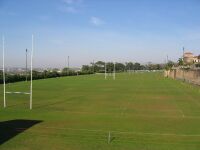 The rugby fields that separate the Upper Campus and Middle Campus
 -
 The M3 highway that separates the Upper Campus and Middle Campus; a tunnel beneath the highway connects the two campuses.
 -
 The Japonica Walk, a footpath connecting the Upper, Middle and Lower Campuses; it is lined with various flora, including japonica flowers and oak trees.
 -
 The Japonica Walk, looking towards the Summer House Pavilion
 -
 The Summer House Pavilion, built ح. 1760, is one of the oldest buildings in South Africa.
 -
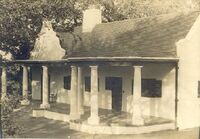 The Woolsack Building; it was a refuge for writers and artists, and also where Rudyard Kipling spent his summers between 1900 and 1908.
 -
 The famous steps on Upper Campus leading up to the Sarah Baartman Hall, nicknamed the "Jammie steps" (after the former Jameson Hall name)
 -
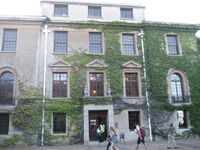 The Jagger Library, housing rare books and special collections
 -
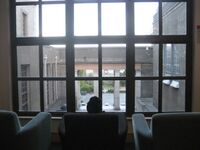 View from the Chancellor Oppenheimer Library
 -
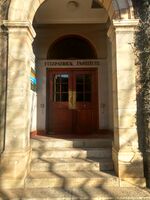 Entrance to the FitzPatrick Institute of African Ornithology
 -
 Student Housing and Residence Life Building
 -
 The Breakwater Lodge, which houses the UCT Graduate School of Business
 -
 A lecture theatre in the Leslie Social Science Building (Faculty of Humanities)

.jpg&filetimestamp=20260902024009&)


See also
- Centre for Curating the Archive
- List of universities in South Africa
- Education in South Africa
- Chancellor of the University of Cape Town
- Open access in South Africa and List of South African open access repositories
- List of demonstrations at the University of Cape Town
- University of Pretoria
- University of Port Elizabeth
المراجع
- ^ Annual Report for 2017 (PDF). University of Cape Town. p. 127. Archived from the original (PDF) on 11 أبريل 2019. Retrieved 1 سبتمبر 2018.
- ^ "Sars Rates Of Exchange: US$ rate for Jan 2017". tools.sars.gov.za. Retrieved 22 يناير 2022.
- ^ Annual Report for 2020 (PDF). University of Cape Town. p. 60. Archived (PDF) from the original on 8 يناير 2022. Retrieved 17 أبريل 2022.
- ^ أ ب ت Annual Report for 2020 (PDF). University of Cape Town. p. 30. Archived (PDF) from the original on 8 يناير 2022. Retrieved 17 أبريل 2022.
- ^ أ ب University of Cape Town. "History introduction". uct.ac.za. Archived from the original on 5 أغسطس 2020. Retrieved 25 مايو 2020.
- ^ "Home | University of Cape Town". www.uct.ac.za. Retrieved 24 يوليو 2025.
- ^ "CHE | Council on Higher Education | Regulatory body for Higher Education in South Africa | Education | Innovation | University | South Africa". che.ac.za. Archived from the original on 24 مايو 2020. Retrieved 25 مايو 2020.
- ^ "Global University Leaders Forum Members" (PDF). Archived from the original (PDF) on 19 مايو 2018. Retrieved 18 مايو 2018.
- ^ "Academy of Science of South Africa members". University of Cape Town. Archived from the original on 28 سبتمبر 2020. Retrieved 30 مارس 2020.
- ^ أ ب Kannnemeyer, J.C. (2012). J.M.Coetzee: A life in writing. Melbourne: Scribe. p. 77.
- ^ "Timeline: UCT during the apartheid years".
- ^ "Main website of the University of Cape town". Archived from the original on 5 أغسطس 2020. Retrieved 15 مارس 2018.
- ^ Hall, Martin. "The symbolic statue dividing a South African university". BBC News. Archived from the original on 4 ديسمبر 2021. Retrieved 4 أبريل 2015.
- ^ أ ب Hlophe, Wadantu (1 أبريل 2015). "HLOPHE: Rhodes must fall everywhere". Yale Daily News. Archived from the original on 4 ديسمبر 2021. Retrieved 9 أبريل 2015.
- ^ Kamanzi, Brian (29 مارس 2015). ""Rhodes Must Fall" – Decolonisation Symbolism – What is happening at UCT, South Africa?". The Post Colonialist. Archived from the original on 4 ديسمبر 2021. Retrieved 9 أبريل 2015.
- ^ "Book provides in-depth analysis of FeesMustFall movement". Talk 702. Archived from the original on 8 أبريل 2019. Retrieved 21 مارس 2020.
- ^ "An analysis of the FeesMustFall Movement at South African universities" (PDF). CSVR. Archived (PDF) from the original on 27 أبريل 2020. Retrieved 21 مارس 2019.
- ^ Morgan Van De Rede (10 سبتمبر 2025). "UCT officially renames Jameson Memorial Hall to Sarah Baartman Hall". EWN. Retrieved 13 سبتمبر 2025.
- ^ Nkanjeni, Unathi (9 سبتمبر 2019). "Five Shocking Revelations in Uyinene Mrwetyana's Murder Case". Times Live. Archived from the original on 21 مارس 2020. Retrieved 21 مارس 2020.
- ^ "Academic classes and tests suspended for 5 and 6 September". University of Cape Town News. 4 سبتمبر 2019. Archived from the original on 21 مارس 2020. Retrieved 21 مارس 2020.
- ^ "President calls for a Joint Sitting of Parliament on Gender-Based Violence". The Presidency of South Africa. 17 سبتمبر 2019. Archived from the original on 21 مارس 2020. Retrieved 21 مارس 2020.
- ^ Brothwell, Ryan (7 مارس 2020). "New laws aim to introduce harsher punishments for criminals in South Africa". Business Tech. Archived from the original on 21 مارس 2020. Retrieved 21 مارس 2020.
- ^ Kubheka, Thando (7 سبتمبر 2019). "UCT Announces Uyinene Mrwetyana Scholarship for Women in Humanities". Eye Witness News. Archived from the original on 21 مارس 2020. Retrieved 21 مارس 2020.
- ^ Jacobs, Kirsten (13 مارس 2020). "UCT Opens Cutting-Edge Neuroscience Institute". Cape Town Etc. Archived from the original on 21 مارس 2020. Retrieved 21 مارس 2020.
- ^ Mosa Moshabela (9 أكتوبر 2025). "UCT to host first-ever THE World Academic Summit in Africa". The University of Cape Town. Retrieved 12 أكتوبر 2025.
- ^ "University of Cape Town / Newsroom & publications / Daily news". Uct.ac.za. 25 يونيو 2009. Archived from the original on 2 مايو 2014. Retrieved 20 نوفمبر 2013.
- ^ Naidoo, Yasantha; Hyman, Aron (18 أبريل 2021). "Two firefighters hospitalised as Cape Town heritage gems including Mostert Mill and UCT library gutted". TimesLIVE. Archived from the original on 18 أبريل 2021. Retrieved 19 أبريل 2021.
- ^ Handbook 2.1: A Guide to UCT's First Tier Residences. Department of Student Housing and Residence Life, University of Cape Town. Archived 9 يوليو 2021 at the Wayback Machine
- ^ Handbook 2.2: A Guide to UCT's Second Tier Residences. Department of Student Housing and Residences, University of Cape Town. Archived 18 مارس 2017 at the Wayback Machine
- ^ Handbook 2.3: A Guide to UCT's Third Tier Accommodation. Department of Student Housing and Residence Life, University of Cape Town. Archived 17 مارس 2017 at the Wayback Machine
- ^ "Chancellor". University of Cape Town. Archived from the original on 11 أبريل 2020. Retrieved 1 أبريل 2020.
- ^ Pityana, Sipho (30 أغسطس 2019). "UCT elects new Chancellor". UCT News. Retrieved 1 أبريل 2020.[dead link]
- ^ أ ب Benjamin, Dee (28 فبراير 2020). "Council". University of Cape Town. Archived from the original on 11 أبريل 2020. Retrieved 1 أبريل 2020.
- ^ "Council". UCT administration-leadership. 2 أغسطس 2023. Retrieved 2 أغسطس 2023.
- ^ "Registrar". University of Cape Town. Archived from the original on 12 أبريل 2020. Retrieved 1 أبريل 2020.
- ^ أ ب "Convocation". UCT Department of Development and Alumni. Archived from the original on 20 فبراير 2020. Retrieved 1 أبريل 2020.
- ^ Phakeng, Mamokgethi (30 مارس 2022). "Announcing the new president of Convocation". UCT News. Retrieved 22 فبراير 2023.
- ^ أ ب Phakeng, Mamokgethi (13 أكتوبر 2018). "Report on the recruitment of members of the Leadership Lekgotla". UCT News. Archived from the original on 19 سبتمبر 2020. Retrieved 1 أبريل 2020.
- ^ "Vice Chancellor". University of Cape Town. Archived from the original on 11 أبريل 2020. Retrieved 1 أبريل 2020.
- ^ "UCT announces new VC: Professor Mosa Moshabela". UCT News. 24 مايو 2024. Archived from the original on 6 أغسطس 2024. Retrieved 21 أغسطس 2024.
- ^ "Management". University of Cape Town. Retrieved 22 فبراير 2023.
- ^ Phakeng, Mamokgethi (24 نوفمبر 2022). "Leadership Lekgotla appointments". UCT News. Retrieved 22 فبراير 2023.
- ^ May, Je'nine (17 مايو 2019). "VC welcomes DVC Research and Internationalisation". UCT News. Retrieved 1 أبريل 2020.[dead link]
- ^ Phakeng, Mamokgethi (2 مايو 2022). "Leadership Responsibilities: DVC Teaching & Learning". UCT News. Retrieved 22 فبراير 2023.
- ^ Haw, Penny (23 نوفمبر 2018). "Meet UCT's first Chief Operating Officer". UCT News. Retrieved 1 أبريل 2020.[dead link]
- ^ "Chief operating officer". University of Cape Town. Retrieved 1 أبريل 2020.[dead link]
- ^ "Faculty factsheets". University of Cape Town. Archived from the original on 11 أبريل 2020. Retrieved 1 أبريل 2020.
- ^ "Deans". University of Cape Town. Archived from the original on 11 أبريل 2020. Retrieved 1 أبريل 2020.
- ^ أ ب ت ث ج "Year in Review 2018" (PDF). University of Cape Town. Archived (PDF) from the original on 30 مارس 2020. Retrieved 30 مارس 2020.
- ^ "Introducing the School of IT". UCT School of IT. Archived from the original on 27 مارس 2020. Retrieved 27 مارس 2020.
- ^ "Commerce" (PDF). University of Cape Town. Retrieved 22 فبراير 2022.
- ^ "Commerce". University of Cape Town. Archived from the original on 3 أغسطس 2017. Retrieved 4 أغسطس 2017.
- ^ "Commerce". University of Cape Town. Archived from the original on 2 أغسطس 2017. Retrieved 4 أغسطس 2017.
- ^ "Humanities" (PDF). University of Cape Town. Retrieved 22 فبراير 2023.
- ^ "About". Faculty of Humanities. Archived from the original on 8 أغسطس 2025. Retrieved 7 نوفمبر 2025.
- ^ "Commerce". University of Cape Town. Archived from the original on 10 أغسطس 2017. Retrieved 4 أغسطس 2017.
- ^ "Commerce". University of Cape Town. Archived from the original on 7 أغسطس 2017. Retrieved 4 أغسطس 2017.
- ^ Chen, James (3 أبريل 2019). "Endowment Fund Definition". Investopedia. Archived from the original on 11 أبريل 2020. Retrieved 30 مارس 2020.
- ^ أ ب "The Campaign". Distinguishing UCT. Archived from the original on 30 مارس 2020. Retrieved 30 مارس 2020.
- ^ "Divestment: Fossil Free UCT Timeline". UCT Green Campus Initiative. Archived from the original on 30 مارس 2020. Retrieved 30 مارس 2020.
- ^ Price, Max. UCT response to calls to support anti-Israel measures. Issued by the Office of the Vice Chancellor, University of Cape Town, 2018.
- ^ Thebus, Shakirah. "UCT, Wits join global student movement and establishes encampments for Palestine". IOL (in الإنجليزية). Retrieved 25 أغسطس 2025.
- ^ Hendricks, Ashraf. "'Resistance is beautiful': UCT students set up camp in solidarity with Palestine". News24 (in الإنجليزية الأمريكية). Retrieved 25 أغسطس 2025.
- ^ "TRANSFORMATION REPORT - 2018" (PDF). University of Cape Town. 2018.
- ^ "Fact sheets | University of Cape Town". www.uct.ac.za (in الإنجليزية). Archived from the original on 28 أغسطس 2018. Retrieved 28 أغسطس 2018.
- ^ "Transformation Plan & Policies: UCT Employment Equity Plan (2010 - 2015)". About the University. University of Cape Town. Archived from the original on 20 مارس 2015. Retrieved 20 مارس 2015.
- ^ Merwe, Marelise Van Der. "New UCT Vice-Chancellor: Transformation, student engagement high on the agenda | Daily Maverick". Daily Maverick (in الإنجليزية الأمريكية). Archived from the original on 28 أغسطس 2018. Retrieved 28 أغسطس 2018.
- ^ "Introducing UCT: Statistics". About the University. University of Cape Town. Archived from the original on 20 مارس 2015. Retrieved 20 مارس 2015.
- ^ "Census 2011 Western Cape Municipal Report" (PDF). About the Western Cape. Statistics South Africa. Archived (PDF) from the original on 7 يناير 2016. Retrieved 20 مارس 2015.
- ^ "Current Sports Clubs". Sportsclubs.uct.ac.za. Archived from the original on 9 أبريل 2003. Retrieved 8 يونيو 2007.
- ^ Swanson, Felicity (2007). "'Die SACS kom terug': intervarsity rugby, masculinity and white identity at the University of Cape Town, 1960s-1970s". In Field, Sean; et al. (eds.). Imagining the City: Memories and Cultures in Cape Town (PDF). Cape Town: HSRC Press. p. 210. ISBN 978-0-7969-2179-6. Archived from the original (PDF) on 26 أبريل 2007. Retrieved 8 يونيو 2007.
- ^ "University of Cape Town / Current students / Sports, societies & recreation". Uct.ac.za. Archived from the original on 26 فبراير 2017. Retrieved 20 نوفمبر 2013.
- ^ "Student Affairs: Societies". University of Cape Town. Archived from the original on 4 ديسمبر 2021. Retrieved 8 يونيو 2020.
- ^ "Student Community Service: SHAWCO". University of Cape Town. Archived from the original on 29 يناير 2010. Retrieved 1 مارس 2010.
- ^ Jonathan Hoyle (21 أغسطس 2026). "Top 3 universities in South Africa ranked among the best 500 in the world". BusinessTech. Retrieved 21 أغسطس 2026.
- ^ "GLOBAL 2000 List by the Center for World University Rankings; 2024 Edition". cwur.org. Retrieved 25 مارس 2025.
- ^ "CWTS Leiden Ranking 2024". Retrieved 25 مارس 2025.
- ^ "QS World University Rankings".
- ^ "University of Cape Town". Times Higher Education (in الإنجليزية). 9 أكتوبر 2025. Retrieved 11 أكتوبر 2025.
- ^ U.S. News. "University of Cape Town". Retrieved 25 مارس 2025.
- ^ "QS BRICS Rankings 2019". www.topuniversities.com. Archived from the original on 17 ديسمبر 2013. Retrieved 27 فبراير 2021.
- ^ "Best universities in Africa 2025". Times Higher Education World University Rankings. 11 نوفمبر 2024. Retrieved 25 مارس 2025.
- ^ "BRICS & Emerging Economies University Rankings - 2020". Times Higher Education World University Rankings. 18 فبراير 2020. Archived from the original on 20 فبراير 2020. Retrieved 27 فبراير 2021.
- ^ U.S. News. "2024-2025 Best Global Universities in Africa". Retrieved 25 مارس 2025.
- ^ أ ب Luke Fraser (12 فبراير 2026). "South African universities dominate in new international ranking". BusinessTech. Retrieved 14 فبراير 2026.
- ^ "University of Cape Town Ranking | 2026 | CWUR". cwur.org. Retrieved 12 أغسطس 2026.
- ^ "Methodology | CWUR | Center for World University Rankings". cwur.org. Retrieved 12 أغسطس 2026.
- ^ أ ب Adekunle Agbetiloye (9 أكتوبر 2025). "Best universities in Africa, according to latest ranking (2026)". Business Insider Africa. Retrieved 12 أكتوبر 2025.
- ^ "2024 Academic Ranking of World Universities: University of Cape Town". www.shanghairanking.com. Retrieved 25 مارس 2025.
- ^ أ ب "University of Cape Town". Top Universities. 2019. Archived from the original on 19 أكتوبر 2017. Retrieved 1 نوفمبر 2019.
- ^ "World University Rankings 2024 (South Africa)". Times Higher Education (THE) (in الإنجليزية). 20 أكتوبر 2024. Retrieved 27 فبراير 2024.
- ^ "World University Rankings 2023 (South Africa)". Times Higher Education (THE) (in الإنجليزية). 20 أكتوبر 2023. Retrieved 27 فبراير 2024.
- ^ "World University Rankings 2022 (South Africa)". Times Higher Education (THE) (in الإنجليزية). 20 أكتوبر 2022. Retrieved 27 فبراير 2024.
- ^ "World University Rankings 2021 (South Africa)". Times Higher Education (THE) (in الإنجليزية). 20 أكتوبر 2021. Retrieved 27 فبراير 2024.
- ^ "World University Rankings 2020 (South Africa)". Times Higher Education (THE) (in الإنجليزية). 20 أكتوبر 2020. Retrieved 27 فبراير 2024.
- ^ "World University Rankings 2019 (South Africa)". Times Higher Education (THE) (in الإنجليزية). 20 أكتوبر 2019. Retrieved 27 فبراير 2024.
- ^ "World University Rankings 2018 (South Africa)". Times Higher Education (THE) (in الإنجليزية). 20 أكتوبر 2018. Retrieved 27 فبراير 2024.
- ^ "World University Rankings 2017 (South Africa)". Times Higher Education (THE) (in الإنجليزية). 20 أكتوبر 2017. Retrieved 27 فبراير 2024.
- ^ "World University Rankings 2016 (South Africa)". Times Higher Education (THE) (in الإنجليزية). 20 أكتوبر 2016. Retrieved 27 فبراير 2024.
- ^ "World University Rankings 2015 (South Africa)". Times Higher Education (THE) (in الإنجليزية). 20 أكتوبر 2015. Retrieved 27 فبراير 2024.
- ^ "World University Rankings 2014 (South Africa)". Times Higher Education (THE) (in الإنجليزية). 20 أكتوبر 2014. Retrieved 27 فبراير 2024.
- ^ "World University Rankings 2013 (South Africa)". Times Higher Education (THE) (in الإنجليزية). 20 أكتوبر 2013. Retrieved 27 فبراير 2024.
- ^ "World University Rankings 2012 (South Africa)". Times Higher Education (THE) (in الإنجليزية). 20 أكتوبر 2012. Retrieved 27 فبراير 2024.
- ^ "World University Rankings 2011 (South Africa)". Times Higher Education (THE) (in الإنجليزية). 20 أكتوبر 2011. Retrieved 27 فبراير 2024.
- ^ "University of Cape Town". Times Higher Education (THE) (in الإنجليزية). 29 مارس 2024. Retrieved 12 أبريل 2025.
- ^ "University of Cape Town – QS Top University Rankings". QS World University Rankings. Retrieved 19 أبريل 2022.
- ^ "University of Cape Town". Times Higher Education (THE) (in الإنجليزية). 17 نوفمبر 2021. Retrieved 19 أبريل 2022.
- ^ "The University of Cape Town". www.southafrica.net. Archived from the original on 31 يوليو 2017. Retrieved 31 يوليو 2017.
- ^ "Off to Parliament, educated or not". Mail & Guardian (in الإنجليزية). 30 نوفمبر 2018. Retrieved 21 يناير 2022.
- ^ Cooper, David K.C. (18 يونيو 2018). "Christiaan Barnard—The surgeon who dared: The story of the first human-to-human heart transplant". Global Cardiology Science & Practice. 2018 (2): 11. doi:10.21542/gcsp.2018.11. PMC 6062759. PMID 30083541.
- ^ "Breyten Breytenbach". South African History Online. Retrieved 21 يناير 2022.
- ^ "Judge Albert Louis "Albie" Sachs". South African History Online. Retrieved 21 يناير 2022.
- ^ "Zolani Mahola". Academic Medical Education. Archived from the original on 13 ديسمبر 2024. Retrieved 21 يناير 2022.
- ^ "Jonathan Shapiro". South African History Online. Retrieved 21 يناير 2022.
- ^ "Baleka Mbete, Ms". Government of South Africa. Retrieved 21 يناير 2022.
- ^ "NRF A-rated". University of Cape Town. Archived from the original on 28 سبتمبر 2020. Retrieved 30 مارس 2020.
- ^ "NRF P-rated". University of Cape Town. Archived from the original on 11 أبريل 2020. Retrieved 30 مارس 2020.
- ^ "Higher education's Naledi Pandor caps string of qualifications with doctorate". TimesLive. 16 أبريل 2019. Archived from the original on 13 أغسطس 2020. Retrieved 29 مايو 2020.
- ^ "the impact of information and communication technology adoption on stock market development in africa". academia.com (in الإنجليزية الأمريكية). 5 يونيو 2022. Retrieved 5 يونيو 2022.
- ^ "IDM Institute of Infectious Disease and Molecular Medicine - welcome". Uct.ac.za. Archived from the original on 25 ديسمبر 2012. Retrieved 20 نوفمبر 2013.
- ^ "OpenUCT Home Page". Openuct.uct.ac.za. Archived from the original on 12 نوفمبر 2013. Retrieved 20 نوفمبر 2013.
- ^ Texier, Pierre-Jean; Porraz, Guillaume; Parkington, John; Rigaud, Jean-Philippe; Poggenpoel, Cedric; Miller, Christopher; Tribolo, Chantal; Cartwright, Caroline; Coudenneau, Aude; Klein, Richard; Steele, Teresa; Verna, Christine (6 أبريل 2010). "A Howiesons Poort tradition of engraving ostrich eggshell containers dated to 60,000 years ago at Diepkloof Rock Shelter, South Africa". Proceedings of the National Academy of Sciences. 107 (14): 6180–6185. doi:10.1073/pnas.0913047107. PMC 2851956. PMID 20194764.
- ^ "About - African Centre for Cities". African Centre for Cities (in الإنجليزية الأمريكية). Archived from the original on 10 سبتمبر 2018. Retrieved 10 سبتمبر 2018.
- ^ Swingler, Helen (23 سبتمبر 2020). "UCT launches milestone Khoi and San Centre". UCT News. University of Cape Town. Archived from the original on 17 يناير 2021. Retrieved 4 يناير 2021.
 Text may have been copied from this source, which is available under a Attribution 4.0 International (CC BY 4.0) Archived 16 أكتوبر 2020 at the Wayback Machine licence.
- ^ Hendricks, Fred (1 ديسمبر 2008). "The Mafeje Affair: The University of Cape Town and Apartheid". African Studies. 67 (3): 423–451. doi:10.1080/00020180802505061. ISSN 0002-0184. S2CID 145251370.
- ^ Furlong, Ashleigh (17 فبراير 2016). "Rhodes Must Fall protesters burn UCT art". GroundUp. Archived from the original on 30 أبريل 2017. Retrieved 5 مايو 2017.
- ^ أ ب ت Meersman, Brent (4 أبريل 2016). "Is UCT a safe space for art?". Archived from the original on 14 مايو 2017. Retrieved 5 مايو 2017.
- ^ أ ب ت "Human Rights investigates the removal of artworks from UCT" Archived 5 مايو 2017 at the Wayback Machine, SABC Digital News, 5 May 2017
- ^ Gillespie, Todd (12 أبريل 2016). "Now snowflake students are covering up paintings". Spiked Online. Archived from the original on 5 مايو 2017. Retrieved 5 مايو 2017.
- ^ Breytenbach, Breyten (11 أبريل 2016). "Letter to the Editor: Breyten Breytenbach on vanishing UCT artworks and blank minds". The Daily Maverick. Archived from the original on 29 أكتوبر 2017. Retrieved 5 مايو 2017.
- ^ Furlong, Asheligh (8 أبريل 2016). "Prominent artwork covered up at UCT". GroundUp. Archived from the original on 30 أبريل 2017. Retrieved 5 مايو 2017.
- ^ Searra, Imogen. "Behind the scenes of local Netflix series: Blood & Water". Cape {Town} etc. Retrieved 8 مايو 2020.

وصلات خارجية
- Official website

- Statute of the University of Cape Town, Government Notice No. 1199, 20 September 2002.
- Southern African University
- UCT OpenContent - Open Educational Resource website
| أشخاص | | |
|---|---|---|
| التاريخ | ||
| الوحدات الأكاديمية | ||
| مكتبات | ||
| حياة الطلبة | ||
| مستشفيات تابعة | ||
| متفرقات | ||


قالب:Global Network for Advanced Management
| International | |
|---|---|
| National | |
- Pages using gadget WikiMiniAtlas
- Articles with dead external links from December 2021
- Articles with dead external links from October 2024
- Articles with dead external links from December 2023
- CS1 الإنجليزية الأمريكية-language sources (en-us)
- Short description is different from Wikidata
- Articles with hatnote templates targeting a nonexistent page
- Missing redirects
- Use dmy dates from June 2024
- Use South African English from July 2012
- All Wikipedia articles written in South African English
- Articles containing أفريكانز-language text
- Articles containing خوسا-language text
- Articles containing لاتينية-language text
- Coordinates on Wikidata
- Articles using infobox university
- مقالات فيها عبارات متقادمة منذ 2018
- جميع المقالات التي فيها عبارات متقادمة
- Articles using infobox templates with no data rows
- مقالات المعرفة بحاجة للتحديث from October 2025
- كل مقالات المعرفة بحاجة لتحديث
- Pages using multiple image with auto scaled images
- مقالات فيها عبارات متقادمة منذ 2019
- Articles with unsourced statements from November 2020
- كل المقالات بدون مراجع موثوقة
- كل المقالات بدون مراجع موثوقة from April 2020
- Articles with unsourced statements from January 2020
- شبكة الجامعات العالمية
- جامعة كيب تاون
- 1829 establishments in the Cape Colony
- 2021 fires in Africa
- Education in Cape Town
- Institutes associated with CERN
- Public universities in South Africa
- Rondebosch
- Universities in the Western Cape
- Universities and colleges established in 1829
- Universities and colleges in South Africa
- Fires in South Africa
- صفحات مع الخرائط