يعود تأسيس المدينة إلى بداية القرن الثاني للميلاد عندما أسس الرومان مدينة سوبيانا (باللاتينية: Sopianae). وفي القرن الرابع أصبحت المدينة عاصمة پانونيا ڤالريا ومركزاً هاماً للمسيحية. أصبح المدفن المسيحي الباكر من ذاك العصر واحداً من مواقع التراث العالميلليونسكو[3] في سنة 2000.
The earliest name for the territory was its Roman name of Sopianæ. The name possibly comes from the plural of the Celtic sop meaning "marsh".[citation needed]
The medieval city was first mentioned in 871 under the name Quinque Basilicae ("five cathedrals".) The name refers to the fact that when constructing the churches of the city, the builders used material from five old Christian chapels. In later Latin documents the city was mentioned as Quinque Ecclesiae ("five churches", a name identical in meaning to the German name Fünfkirchen and the Slovak name Päťkostolie[4]).
The name Pécs appears in documents in 1235 in the word Pechyut (with modern spelling: pécsi út, meaning "road to/from Pécs") most likely derives from the Proto-Slavic*pęčь or from the Illyrian*penče, both meaning five.[5] In other languages: in Latin, Quinque Ecclesiae; in Italian, Cinquechiese; in Croatian, Pečuh; in Serbian, Печуј (Pečuj); in Slovak, Päťkostolie; in Czech, Pětikostelí; in Dutch, Vijfkerken; in German, Fünfkirchen; and in Turkish, Peçuy.
الجغرافيا
Pécs is located in the Carpathian Basin of Central Europe, in the center of the southern Hungarian county of Baranya. It is bordered by the Mecsek hills to the north, and by a rolling plain to the south. Pécs has a significant mining past. Mecsek dolomitic water is famous for its steady, balanced high density of minerals.
The city of Pécs is located near the border of Croatia. Its southern part is rather flat whereas its northern part clings to the slope of the Mecsek mountains. It has a very favorable climate, and is bordered by a flourishing woody area. During hot summer nights a cooling air streams down from Mecsek to clean the air of the city.[6]
Pécs is bordered by plains to the south (elevation 120–130 m), while the Mecsek mountains rise up to elevations of 400–600 meters behind the city. Jakab-hill, located in the western Mecsek, is 592 m (1942 ft) tall, Tubes, straight above Pécs, is 612 m (2008 ft) tall, and Misina is 535 m (1755 ft) tall.[7] Higher parts of the city climb up to 200–250 m (656 to 820 ft), mainly Pécsbánya, Szabolcsfalu, Vasas and Somogy. Woody areas generally start from elevations of about 300 m (984 ft). The Mecsek hills are marked by numerous valleys which play a key role in ameliorating the climate of the city in the absence of lakes and rivers. Waters coming down from the Mecsek hills flow into the Pécsi stream under the east–west rail road leading them eventually to the Danube.
التاريخ
المدينة الرومانية القديمة
مدينة الموتى المسيحية المبكرة في پتش (سوپياناي)
شُيّدت في القرن الرابع مجموعة مدهشة من الأضرحة المزيّنة في مقبرة مدينة سوبياناي الرومانية. واتّسمت هذه الأضرحة بأهمية بالغة إن من حيث بنائها أو هندستها لأنها شُيّدت تحت الأرض كغرف جنائزية تقوم على سطحها كنائس تذكارية. وتتخذ هذه الأضرحة أهميةً أخرى من حيث التصميم الفني إذ أنها زُيّنت زينةً غنية برسوم جدرانية ذات نوعية استثنائية تحمل رموزا دينية.
بعد معركة موهاكس (1526) التي انتصر فيها الجيش العثماني الغازي على جيوش الملك لايوش الثاني، وبعدها احتلت جيوش سليمان القانوني پتش. Not only was a large part of the country occupied by the Ottomans, the public opinion of who should be the king of Hungary was divided, too. One party supported Ferdinand of Habsburg, the other party crowned John Zápolya in Székesfehérvár.[citation needed] The citizens of Pécs supported Ferdinand, but the rest of Baranya county supported John. In the summer of 1527, Ferdinand defeated the armies of Zápolya and was crowned king on November 3. Ferdinand favoured the city because of the support of its citizens, and granted Pécs tax exemption. The city was rebuilt and fortified.[citation needed]
In 1529, the Ottomans captured Pécs again, and went on a campaign against Vienna. The Ottomans forced Pécs to accept King John (who was allied with them) as their ruler. John died in 1540. In 1541, the Ottomans occupied the castle of Buda and ordered Isabella, the widow of John, to cede Pécs to them, due to the city's strategic importance.[citation needed] The citizens of Pécs defended the city against the Ottomans and swore loyalty to Ferdinand.[citation needed] The emperor helped the city and defended it from further Ottoman attacks, but his advisers persuaded him into focusing more on the cities of Székesfehérvár and Esztergom instead of Pécs. Pécs was preparing for the siege, but a day before, Flemish and Walloon mercenaries fled from the city and raided the nearby lands. The next day, in June 1543, the bishop himself went to the Ottomans with the keys of the city.[citation needed]
After occupying the city, the Ottomans fortified it and turned it into a truly Ottoman city. The churches were turned into mosques, complete with minarets; Turkish baths and were built, Qur'an schools were founded, and there was a bazaar in place of the market.[citation needed] For one hundred years the city was an island of peace in a land of war. It was the central city of a sanjak, at first in the Budin Eyalet and later, as "Peçuy", in the Kanije Eyalet.
The Ottoman chronicler İbrahim Peçevi (Ibrahim of Pécs), whose work forms the main body of reference for Ottoman history between 1520 and 1640, was a native of the city.[8]
In 1664, Croat-Hungarian nobleman Nicholas Zrínyi arrived in Pécs with his army. Since the city was well into the Ottoman territories, they knew that even if they occupied it, they could not keep it for long, so they planned only to pillage it. They ravaged and burned the city but could not occupy the castle. Mediaeval Pécs was destroyed forever, except for the wall encircling the historical city, a single bastion (Barbakán), the network of tunnels and catacombs beneath the city (partially closed down, and partially in possession of the famous Litke champagne factory, which can be visited today). [citation needed] Several Turkish structures also survived, namely three mosques, two minarets, remnants of a bath over the ancient Christian tombs near the cathedral, and several houses, one with a stone cannonball embedded in the wall.[citation needed]
In the 1686 Siege of Pécs, the Austrian army finally recovered the city from the Ottoman Turks. After wresting the castle of Buda from Ottoman rule, the Christian armies went on to capture Pécs. The vanguard managed to break into the city and pillaged it.[citation needed] The Ottomans saw that they could not hold the city, burnt it and withdrew into the castle. The army led by Louis of Baden occupied the city on 14 October and destroyed the aqueduct leading to the castle. The Ottomans had no other choice but to surrender, which they did on 22 October.
The city was under martial law under the command of Karl von Thüngen (de). The Viennese court wanted to destroy the city first, but later they decided to keep it to counterbalance the importance of Szigetvár, which was still under Ottoman rule. Slowly the city started to prosper again, but in the 1690s two plague epidemics claimed many lives. In 1688, German settlers arrived. Only about one-quarter of the city's population was Hungarian, the others were Germans or Southern Slavs. The census of taxpayers from 1698 lists 637 families, for which Janja Živković Mandić concludes that 308 were of Croatian nationality (Catholic Croats, Racs, Šokci, Bunjevci, Illyrians, Slavs, Bosniaks[مطلوب توضيح]) and the remaining 329 were Hungarians, Germans, Serbs or Greeks. According to same census, István Tabo mentions 171 Hungarian, 349 Slavs and 79 Germans while Đuro Šarošac mentions that at that time in the city lived 325 Croats, 139 Hungarians, 92 Germans, 53 Vlachs and 28 Serbs.[9] According to 1698 data, South Slavs comprised more than half of the town's population. Because Hungarians were only a minority, Pécs did not support the revolution against Habsburg rule led by Francis II Rákóczi, and his armies pillaged the city in 1704.
A more peaceful era started after 1710. Industry, trade and viticulture prospered, manufactories were founded, a new city hall was built. The feudal lord of the city was the Bishop of Pécs, but the city wanted to free itself from episcopal control. Bishop George Klimó, an enlightened man (who founded the first public library of the country) would have agreed to cede his rights to the city, but the Holy See forbade him to do so. When Klimó died in 1777, Queen Maria Theresa quickly elevated Pécs to free royal town status before the new bishop was elected. This cost the city 83,315 forints.
According to the first census (held in 1787 by the order of Joseph II), there were 1,474 houses and 1,834 families in Pécs, a total of 8,853 residents, of which 133 were priests and 117 were noblemen.
In 1785, the Academy of Győr was moved to Pécs. This academy eventually evolved into a law school. The first stonework theatre of the city was built in 1839.
At that time or Maria Theresia and her son Josef II, the Danube Swabians from Germany was settled in the City.
19th century and later
The industry developed a lot in the second half of the 19th century. By 1848, there were 1,739 industrial workers. Some of the manufactures were nationally famous. The iron and paper factories were among the most modern ones of the age. Coal mining was relevant. A sugar factory and beer manufactures were built, too. The city had 14,616 residents.
During the revolution in 1848–49, Pécs was occupied by Croatian armies for a short time, but it was freed from them by Habsburg armies in January 1849.
After the Austro-Hungarian Compromise of 1867 Pécs developed, like all the other cities and towns of the country. From 1867, Pécs is connected to the nearby town Barcs by railway, and since 1882 it is also connected to Budapest. In 1913, a tram system has been founded, but it was extinguished in 1960.
At the end of World War I, Baranya county was occupied by Serbian troops, and it was not until August 1921 that Pécs could be sure that it remains part of Hungary. The University of Pressburg (modern-day Bratislava, Slovakia) was moved to Pécs after Hungary lost Pressburg according to the Treaty of Trianon.
During World War II, Pécs was captured by Soviet troops of the 3rd Ukrainian Front on 29 November 1944 in the course of the Budapest Offensive. The city suffered only minor damages, even though a large tank-battle took place 20–25 كيلومتر (12–16 ميل) south of the city, close to the Villány area late in the war, when the advancing Red Army fought its way towards Austria. Until the end of World War II, the majority Inhabitants was Danube Swabians. Some of the former German settlers was expelled to Germany and Austria in 1945-1948, under the 1945 Potsdam Agreement.[10]Germans of Hungary are still a minority in the City.
A history of Hungary from 1945-1990, "under Soviet domination" can be found in A Concise History of Hungary.[11] After the war, development became fast again, and the city grew, absorbing several nearby towns. In the 1980s, Pécs already had 180,000 inhabitants.
التعداد التاريخي
السنة
تعداد
±%
1870
30٬821
—
1890
43٬869
+42.3%
1900
53٬721
+22.5%
1910
60٬237
+12.1%
1920
58٬808
−2.4%
1930
74٬395
+26.5%
1941
88٬473
+18.9%
1949
88٬302
−0.2%
1960
114٬655
+29.8%
1970
149٬253
+30.2%
1980
168٬715
+13.0%
1990
170٬039
+0.8%
2000
157٬332
−7.5%
2010
157٬680
+0.2%
2011
157٬721
+0.0%
المعالم
Cella SeptichoraThe BarbakánThe cross at TettyeZsolnay Museum. The House from the 13th Century.National Theatre in Pécs.Csontváry MuseumLyceum Church in Király Street
A good example of the city's history and interesting past can be seen in the main square, where the Gazi Kasim Mosque still stands, and, although consecrated as a church following the retreat of the Ottoman Turks centuries ago, the crescent moon of Islam is still visible on the cupola, surmounted by a cross. Indeed, Pécs is the richest town in Hungary in terms of Turkish architecture, with the ruins of Memi Pasa's Baths and the mausoleum of miracle worker Idris Baba, just two other notable remains. The Yakovalı Hasan Paşa Mosque, dating from the mid-1600s, still functions as an active mosque today. It is open to the public except during Friday services from 2.30 to 3.30 pm.
The majority of the citizens with 84.0% are Hungarians according to the 2011 census. The city's Germans are the largest minority with 4.2%. Followed by the Roma (2.0%), the Croats (1.2%) and the Romanians (0.2%).[2]
The largest religious group is the Catholics with 39.7% Roman Catholic and 0.3% Greek Catholic. The second largest denomination is the Calvinists (5.2%), the third the Lutherans (1.3%). 27.8% of the population is non-religious.[2]
Due to the number of international students studying and living in Pécs, a notable diversity of non-permanent citizens could be obviously seen around the city.
المناخ
Pécs's climate is classified as humid subtropical climate (KöppenCfa). Among them, the annual average temperature is 11.5 °C (52.7 °F), the hottest months are July and August with 30.0 °C (86.0 °F), and the coldest month is January with 0.4 °C (32.7 °F). The annual precipitation is 670.9 ميليمتر (26.41 in), of which June is the wettest with 82.8 ميليمتر (3.26 in), while January is the driest with only 31.2 ميليمتر (1.23 in). The extreme temperature throughout the year ranged from −27.0 °C (−16.6 °F) on January 23, 1942 to 41.3 °C (106.3 °F) on July 7, 1950.[12]
بيانات المناخ لـ Pécs, 1991−2020 normals, extremes 1901-2020
Source 2: HungaroMet (Extremes)[12] Hong Kong Observatory (sun 1961-1990)[14]
الاقتصاد
The most known product of Pécs is the Zsolnay Porcelain - Alhambra vase by Tádé Sikorski (1884)
Historically Pécs was well known in Hungary for its industry with several factories, but after the fall of the Iron Curtain many have not managed the economic transition well and went bankrupt (e.g. Pécsi Kesztyűgyár, Pécsi Bőrgyár, Littke Pezsgőgyár etc.).[15] Until some years ago, it had a coal and uranium mine, now only its sand mine exists and is operated by the Hungarian-owned Quartz[16] mining company.
The nationally (and to a limited extent internationally) famous porcelain factory, the Zsolnay Porcelain is the greatest pride of Pécs. The walls and roofs of several public and private buildings in the city are decorated with the company's porcelains contributing to Pécs's unique cityscape.
The Hungarian textilmanufacturer Rovitex Hungária,[18] the American crane manufacturer Terex,[19] the Hungarian scale manufacturer Pécsi Mérlegstúdió,[20] the Hungarian furniture manufacturer Megyeri Bútor,[21] the Hungarian cutting-tool manufacturer FORSZ,[22] the German switchboard manufacturer HB-Kapcsolószekrénygyártó (part of the Bader Gruppe),[23] the Hungarian recycling company Alcufer,[24] the Hungarian agricultural vehiclemanufacturer HIDROT,[25] the Hungarian animal husbandry tool manufacturer Önitató,[26] the tobacco factory Pécsi Dohánygyár (owned by British American Tobacco), the Hungarian automotive spare parts manufacturer Matro,[27] the Hungarian safe manufacturer Strauss Metal,[28] the Hungarian packaging machine manufacturer SOMAPAK,[29] the Hungarian plastics producer Termoplast,[30] the Bocz Printing House,[31] the Hungarian pickles manufacturer Babina,[32] the Hungarian plastic product manufacturer Karsai Pécs,[33] the Hungarian metal manufacturer Riner Metal[34] based there and have their production facilities in the city.
There is a gradual development of modern high-tech industry, with Finnish electronics manufacturing company Elcoteq the largest industrial employer in the city, the Hungarian Z Elektronika[35] electronics manufacturer and the Hungarian TG Netcom[36] IT network manufacturer.
The German transportation company, Dachser has a logistics centre in Pécs.[37]
The Biokom[38] waste management and recycling company (owned by the city) is responsible for the transport and recycling of waste in the whole territory of Pécs and the surrounding areas. The energy used in the settlement is produced mainly by the two biomass power plants of Pannonpower (part of Veolia) which consists of a 49,9 MW woodchip-fired and a 35 MW agricultural by-product-fired powerplants.[39] The country's largest solar cell field is also in Pécs, thanks to the city's southern location and longer sunny hours, which can produce about 10 MW energy a year. The solar power plant is operated by MVM Hungarowind (part of the MVM Group).[40]
The Expo Center Pécs Exhibition and Conference Centre provides place for international exhibitions and conferences.[41]
التعليم
The University of Pécs was founded by Louis I of Hungary in 1367. It is the oldest university in Hungary, and is among the first European universities. In the recent past it used to be divided in two universities, one for Medicine and Orthodontics (POTE)[42] and a larger one for other studies: JPTE (Janus Pannonius Tudományegyetem). The POTE (Pécs University Medical School, now known as the Medical School) has a large English program for general medicine and dentistry (with students from America, Asia, Africa, and European countries - including many Scandinavians) and a new German program. On 1 January 2000 these universities were combined under the name University of Pécs (acronym: PTE - Pécsi Tudományegyetem - University of Pécs). Nowadays, the University of Pécs has become the most internationalized university in Hungary with around 5000 international students out of the total of approximately 20000 students (around 25%).[43]
The current mayor of Pécs is Attila Péterffy (Pécs Jövője, Öt Torony).
The local Municipal Assembly, elected at the 2019 local government elections, is made up of 26 members (1 Mayor, 18 Individual constituencies councillors and 7 Compensation List councillors) divided into this political parties and alliances:[44]
Fidesz policies in Pécs have included a law making homelessness illegal (2014)[45] and an official call to property owners not to make space available for an NGO supported by OSF (2017).[46]
Trains at Pécs Central StationVolvo 7900A bus on Line 2A in downtownInternational airport
الطرق
The M6/M60 motorway connects Pécs and Budapest with the driving time between the two cities taking about 2 hours now. The entire route opened on 31 March 2010. Route 6 crosses the city giving it an east–west axle and leaves it towards Barcs by the Croatian border. Secondary routes are:
Designed by Ferenc Pfaff,[47] the main railway station was built in 1900 and became a listed building in 2008.[48] The building itself was built in the style of Renaissance Eclecticism, and it features reliefs depicting James Watt and George Stephenson designed by Ármin Klein and made by the Zsolnay factory.[49] A mass transit hub -including a bus terminal, a bus stop and a cab rank zone- is situated on the square in front of the railway station.
الترام
A tram formerly operated in the city from 1914 to 1960.[citation needed]
Early Christian Necropolis of Pécs (Sopianae) •
Fertő / Neusiedlersee Cultural Landscape1 •
Millenary Benedictine Abbey of Pannonhalma and its Natural Environment


 استمع) ؛ كرواتية: Pečuh; Slovak: Päťkostolie ألمانية: Fünfkirchen, تـُنطق [fʏnfˈkɪʁçn̩] استمع ; also known by alternative names) هي خامس أكبر مدينة في المجر تقع على سفوح جبال متشك في جنوب غرب البلاد قرب حدودها مع كرواتيا، وهي المركز الإداري والاقتصادي لمقاطعة بارانيا. بلغ عدد سكانها 157721 نسمة حسب تقدير سنة 2011.


103.jpg&filetimestamp=20111115205206&)


.jpg&filetimestamp=20250217043927&)

.jpg&filetimestamp=20250217043925&)


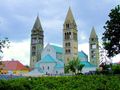 Cathedral
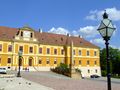 Archives of Pécs
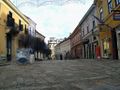 Inner city
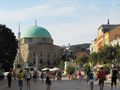 Mosque of Pasha Qasim
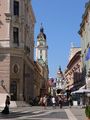 Király Street
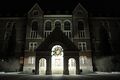 University of Pécs
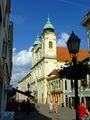 Király Street
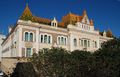 Posta Palace
 Eosin glaze of Zsolnay fountain
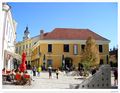 Jókai Square
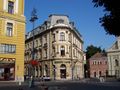 City Centre
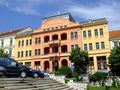 Nádor Hotel
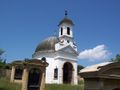 Chapel
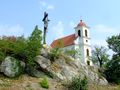 Havihegy Chapel
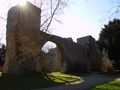 Ruins in Tettye
 St Sebastian Church
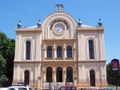 Synagogue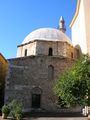
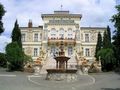 Hungarian Academy of Sciences in Pécs
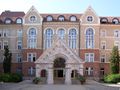 University of Pécs - Faculty of Humanity and Natural Sciences
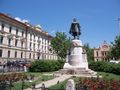 Lajos Kossuth statue
 Kossuth square and Great Synagogue
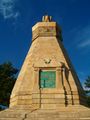 French (Napoleonic War) monument
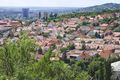 Tettye
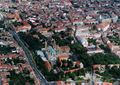 Aerial view
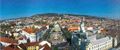 Panorama
 Pannonpower Energy Station
 Logo of the 2010 European Capital of Culture


102.jpg)

