گروزني
{{ safesubst:#invoke:Unsubst||date=__DATE__|$B=
Grozny
Грозный | |
|---|---|
| Other transcription(s) | |
| • Chechen | Соьлжа-ГӀала |
Clockwise from the top, Kadyrov Square, Grozny City Towers, Vaynakh School of Dance, National Museum of the Chechen Republic, The Courtyard of Akhmad Kadyrov Mosque at night | |
.svg&filetimestamp=20220206064427&) Flag .svg&filetimestamp=20220206064427&) الدرع | |
| Anthem: none[2] | |
Location of Grozny  | |
  Grozny Location of Grozny .svg&filetimestamp=20180515202100&) Grozny Grozny (روسيا الأوروپية)  Grozny Grozny (أوروپا) | |
| الإحداثيات: 43°18′45″N 45°41′55″E / 43.31250°N 45.69861°E | |
| البلد | روسيا |
| الكيان الاتحادي | Chechnya[1] |
| Founded | 1818[3] |
| City status since | 1870[3] |
| الحكومة | |
| الكيان | Council of Deputies[4] |
| • Mayor[6] | Muslim Huchiev[5] |
| المساحة | |
• الإجمالي | 324٫16 كم² (125٫16 ميل²) |
| المنسوب | 130 m (430 ft) |
| التعداد | |
• Estimate (2018) | 297٬137 |
| • Subordinated to | city of republic significance of Grozny[7] |
| • Capital of | Chechen Republic[8] |
| • Capital of | city of republic significance of Grozny[7] |
| • Urban okrug | Grozny Urban Okrug[9] |
| • Capital of | Grozny Urban Okrug[9], Groznensky Municipal District[10] |
| منطقة التوقيت | UTC+ ([11]) |
| Postal code(s)[12] | 364000, 364001, 364006, 364008, 364011, 364013–364018, 364020–364022, 364024, 364028–364031, 364034, 364035, 364037, 364038, 364040, 364042, 364043, 364046, 364047, 364049, 364051, 364052, 364058, 364060–364063, 364066, 364068, 364700, 366000 |
| Dialing code(s) | +7 8712 |
| OKTMO ID | 96701000001 |
| City Day | October 5[13] |
| الموقع الإلكتروني | www |


گروزني (روسية: Гро́зный؛ بالشيشانية: Соьлж-ГIала؛ Sölƶ-Ġala أو بالشيشانية: Соьлжа-ГIала، Sölƶa-Ġala؛ وأحياناً يشار إليها بإسم Джовхар-ГIала، Dƶovxar-Ġala وبالإنگليزية: Grozny ) هي عاصمة الجمهورية الشيشانية في روسيا. وتقع المدينة على نهر سونژا. وحسب إحصاء السكان في عموم روسيا عام 2002, فعدد سكان المدينة هو 210,720 نسمة (وهو أكثر بقليل من نصف تعداد المدينة منذ عقد مضى).
الاسم
بالروسية، كلمة "گروزني" تعني "المخيف" أو "المزعج" أو "الرهيب" (فعلى سبيل المثال، الشخص المعروف بالإنگليزية بإسم "إيڤان الرهيب" يُدعى "إيڤان گروزني" (Иван Грозный) بالروسية). وفي عهد الجمهورية المستقلة، فقد سُميت المدينة رسمياً جوهر-قلعة في 1996، والانفصاليون الشيشان أحياناً مازالوا يشيرون إلى المدينة بإسم جوهر (بالشيشانية: Джовхар-ГIала، Dƶovxar-Ġala)؛ وقد سميت على اسم جوهر دودايڤ، أول رئيس على جمهورية إچكريا الشيشانية الانفصالية. وفي ديسمبر 2005، صوت البرلمان الشيشاني على تغيير اسم المدينة إلى أحمد قلعة على اسم أحمد قديروڤ، وهو الاقتراح الذي رفضه ابنه رمضان قديروڤ، رئيس الوزراء ولاحقاً رئيس الجمهورية.
التاريخ
حصن روسي
تأسست گروزني كحصن روسي باسم گروزنايا (Гро́зная; lit. fearsome) (a feminine form of Grozny, as the word fortress (крепость) is feminine in Russian) في عام 1818[3] as a Russian military outpost on the Sunzha River by general Aleksey Petrovich Yermolov. As the fort was being built, the workers were fired upon by the Chechens. The Russians solved the problem by placing a cannon at a carefully chosen point outside the walls. When night fell and the Chechens came out of their hiding places to drag the gun away, all the other guns opened up with grapeshot. When the Chechens recovered their senses and began to carry away the bodies, the guns fired again. When it was over, 200 dead were counted. Thus did the 'fearsome' fort receive its baptism of fire.[14] It was a prominent defense center during the Caucasian War. Russian poets Alexander Griboedov, Alexander Polezhayev, Mikhail Lermontov, the classic of Russian literature Leo Tolstoy, the Decembrist and writer Alexander Bestuzhev and other famous figures of Russian culture visited the fortress. After the annexation of the region by the Russian Empire, the military use of the old fortress was obsolete and on 11 January [ن.ق. 30 December 1869] 1870) it was granted town status and renamed Grozny[15] (as the word town (город) is masculine in Russian). As most of the residents there were Terek Cossacks, the town grew slowly until the development of oil reserves in the early 20th century. The founder of the Nobel prize, Alfred Nobel, took part in the development of the oil industry of the city of Grozny, as well as members of the Rothschild family. In addition to the Nobels and Rothschilds, British companies played an important role in the oil industry from 1893 onward. Alfred Stuart, an English engineer, completed the first well in Grozny by drilling in 1893 the largest oil field in the Caucasus region (outside the Baku district).[16] Eleven firms drilled 116 wells before 1900. This encouraged the rapid development of industry and petrochemical production. In addition to the oil drilled in the city itself, the city became a geographical center of Russia's network of oil fields, and in 1893 became part of the Transcaucasia — Russia Proper railway. The result was the population almost doubled from 15,600 in 1897 to 30,400 in 1913.[15] In early 1914, the largest oil company Royal Dutch Shell was established in the city thus making Grozny one of the largest industrial centers of the Caucasus.[17]
عاصمة إقليمية سوڤيتية
One day after the October Revolution, on 8 November 1917, the Bolsheviks headed by N. Anisimov seized Grozny. As the Russian Civil War escalated, the Proletariat formed the 12th Red Army, and the garrison held out against numerous attacks by Terek Cossacks from 11 August to 12 November 1918. However, with the arrival of Denikin's armies, the Bolsheviks were forced to withdraw and Grozny was captured on 4 February 1919, by the White Army. Underground operations were carried out, but only the arrival of the Caucasus front of the Red Army in 1920 allowed the city to permanently end up with the Russian SFSR on 17 March. Simultaneously it became part of the Soviet Mountain Republic, which was formed on 20 January 1921, and was the capital of the Chechen National Okrug inside it.
  |
On 30 November 1922, the mountain republic was dissolved, and the national okrug became the Chechen Autonomous Oblast (Chechen AO) with Grozny as the administrative centre. At this time most of the population was still Russian, but of Cossack descent. As Cossacks were viewed as a potential threat to the Soviet nation, Moscow actively[citation needed] encouraged the migration of Chechens into the city from the mountains. In 1934 the Chechen-Ingush Autonomous Oblast was formed, becoming the Chechen-Ingush ASSR in 1936.
بسبب نفطها، فقد كانت جروزني مع مايكوپ الهدفان الاستراتيجيان لعملية Fall Blau الألمانية في صيف 1942 (انظر معركة القوقاز).
The failure to take Grozny was a major defeat for Germany and was a factor in holding fast at the Battle of Stalingrad, as that city could have served as a base from which to take Grozny or cut off oil supplies up the Volga River from Astrakhan. The failure to prioritise Grozny, even transferring critical Panzer divisions north to the Siege of Leningrad, was a major factor in Adolf Hitler taking operational level control of the Wehrmacht from his generals who had repeatedly prioritised the two major cities over the oil supplies – against Hitler's express orders. Soviet doctrine however never failed to prioritise the food of Ukraine nor the oil of the Caucasus, which resulted in drastic action after Germany's expulsion/retreat in 1943.
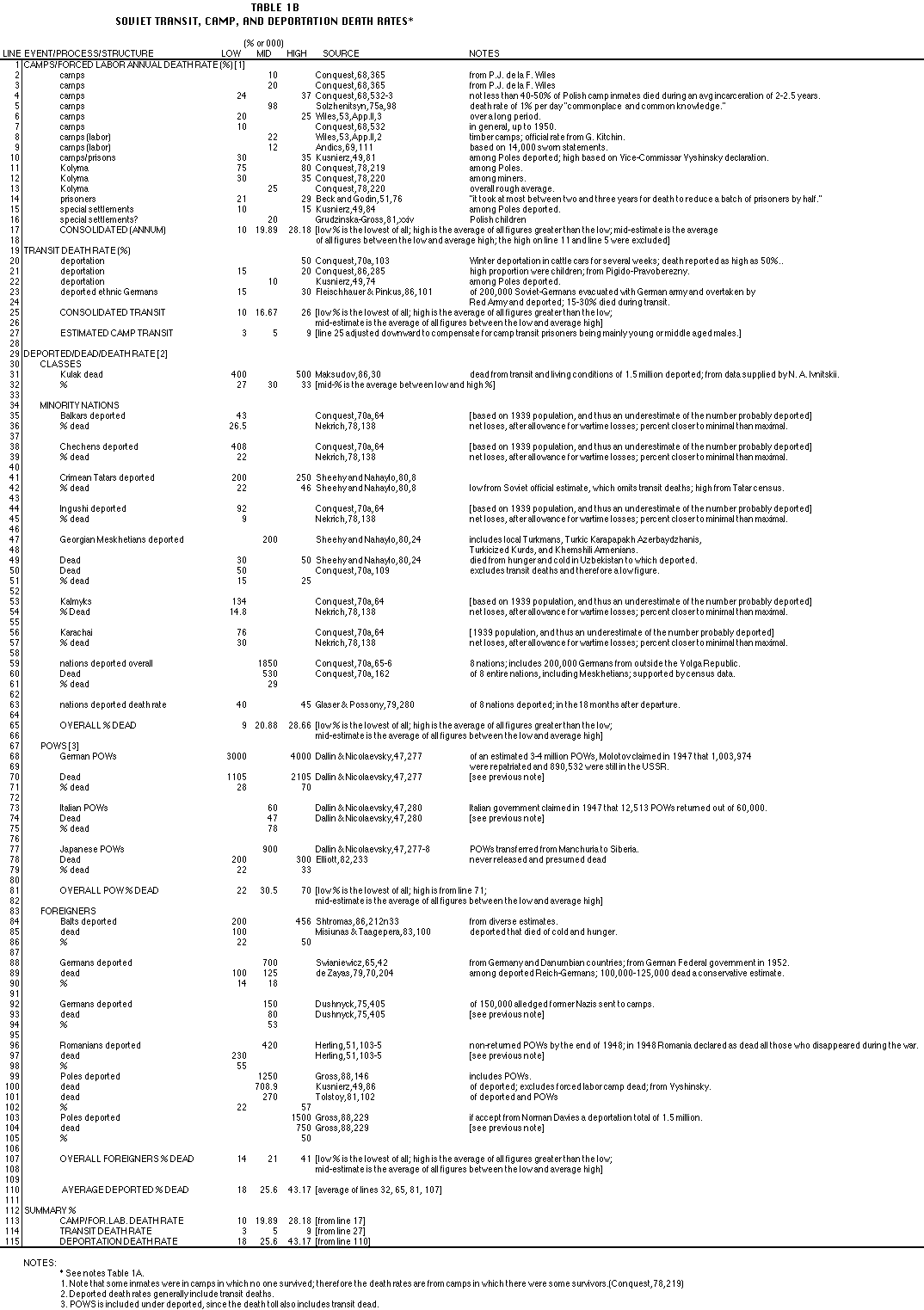
In 1944, the entire population of Chechens and Ingush was deported after being falsely accused of collaborating with advancing armed forces of Nazi Germany. Large numbers of people who were not deemed fit for transport were "liquidated" on the spot,[18] and the adverse situation with transport and the stay in Siberia caused many deaths as well.[19][20] According to internal NKVD data, a total of 144,704 died in 1944–1948 alone (death rate of 23.5% per all groups).[21] Authors such as Alexander Nekrich, John Dunlop and Moshe Gammer, based on census data from the period estimate a death toll of about 170,000–200,000 among Chechens alone,[22][23][24][25] thus ranging from over a third of the total Chechen population that was deported to nearly half dying during those four years (rates for other groups for those four years hover around 20%). All traces of them in the city, including books[26] and graveyards,[27] were destroyed by the NKVD troops. The act was recognised by the European Parliament as an act of genocide in 2004.[28]
Grozny became the administrative centre of Grozny Oblast of the Russian SFSR, and the city at the time was again wholly Russian. In 1957, the Chechen-Ingush ASSR was restored, and the Chechens were allowed to return. The return of the Chechens to Grozny, which had been lacking of Nakh for thirteen years, would cause massive disruptions to the social, economic and political systems of what had been a Russian city for the period until their return. This caused a self-feeding cycle of ethnic conflict between the two groups, both believing the other's presence in the city was illegitimate. Once again migration of non-Russians into Grozny continued whilst the ethnic Russian population, in turn, moved to other parts of the USSR, notably the Baltic states, after inter-ethnic conflict broke out briefly in 1958.

According to sociologist Georgy Derluguyan, the Checheno-Ingush Republic's economy was divided into two spheres – much like French settler-ruled Algeria – and the Russian sphere had all the jobs with higher salaries,[29] while non-Russians were systematically kept out of all government positions. Russians (as well as Ukrainians and Armenians) worked in education, health, oil, machinery, and social services. Non-Russians (excluding Ukrainians and Armenians) worked in agriculture, construction, a long host of undesirable jobs, as well as the so-called "informal sector" (i.e. illegal, due to the mass discrimination in the legal sector).[29]
At the same time a great deal of development occurred in the city. Like many other Soviet cities, the Stalinist style of architecture was prevalent during this period, with apartments in the centre as well as administrative buildings including the massive Council of Ministers and the Grozny University buildings being constructed in Grozny. Later projects included the high-rise apartment blocks prominent in many Soviet cities, as well as a city airport. In 1989, the population of the city was almost 400,000 people.[30]
انهيار السلطة الروسية
After the collapse of the Soviet Union, Grozny became the seat of a separatist government led by Dzhokhar Dudayev. According to some,[حسب من؟] many of the remaining Russian and other non-Chechen residents fled or were expelled by groups of militants, adding to a harassment and discrimination from the new authorities.[31] These events are perceived by some as an act of an ethnic cleansing of non-Chechens, which has been reflected in the materials of General Prosecutor's office of the Russian Federation.[32]
This view is disputed by authors, such as Russian economists Boris Lvin and Andrei Illarionov, who argue that Russian emigration from the area was no more intense than in other regions of Russia at the time.[33] According to this view of the ethnic situation in Ichkeria, the primary cause of Russian emigration was the extensive bombing of Grozny (where four out of five, or nearly 200,000 Russians in Chechnya lived before the war) by the Russian military during the First Chechen War.[34]
The covert Russian attempts of overthrowing Dudayev by means of armed Chechen opposition forces resulted in repeated failed assaults on the city. Originally, Moscow had been backing the political opposition of Umar Avturkhanov "peacefully" (i.e. without supplying the opposition with weapons and encouraging them to try a coup). However, this changed in 1994, after the coups in neighbouring Georgia and Azerbaijan (both of which Moscow was involved with), when Russia encouraged armed opposition, and occasionally assisted. In August 1994 Avturkhanov attacked Grozny, but was repelled first by Chechen citizens who were then joined by Grozny government troops; Russian helicopters covered his retreat.[35] On 28 September, one of these helicopters was shot down and its Russian pilot was held as a prisoner-of-war by the Chechen government.[36] The last assault, on 26 November 1994, ended with capture of 21 Russian Army tank crew members[37] who had secretly been hired as mercenaries by the FSK (former KGB, not long after renamed FSB); their capture was sometimes cited as one of the reasons for Boris Yeltsin's decision to openly intervene. In the meantime, Grozny airport and other targets were bombed by unmarked Russian aircraft.
حرب الشيشان الأولى

حرب الشيشان الثانية
.jpg&filetimestamp=20081014212355&) |
بعد الحروب

هنأ رئيس الوزراء الروسي فلاديمير بوتين الرئيس الشيشاني رمضان قديروڤ بمناسبة يوم العاصمة گروزني، الذي يصادف كذلك ذكرى مرور 420 عاما على إقامة علاقات متينة بين الروس والشيشان.
واعلن المكتب الصحفي في مقر عمدة مدينة گروزني "أنه للمرة الأولى بعد تأسيس مدينة گروزني تم الاحتفال بيوم المدينة في تاريخ عيد ميلاد الرئيس الشيشاني رمضان قديروڤ أي في 5 أكتوبر، وذلك تقديرا له".
وبهذه المناسبة تم افتتاح شارع النصر الواقع في منتصف العاصمة گروزني بحضور الرئيس الشيشاني رمضان قديروڤ. حيث تم تغيره بالكامل واعادة تسميته إذ اطلق الشيشان عليه شارع "بوتين". وقد جاءت هذه التسمية على شرف الرئيس الروسي السابق لما قدمه لتطوير جمهورية الشيشان إقتصاديا وإجتماعيا.[38]
الوضع الإداري والبلدي
| السنة | تعداد | ±% |
|---|---|---|
| 1897 | 16٬000 | — |
| 1926 | 70٬898 | +343.1% |
| 1939 | 172٬448 | +143.2% |
| 1959 | 242٬068 | +40.4% |
| 1970 | 341٬259 | +41.0% |
| 1979 | 375٬326 | +10.0% |
| 1989 | 399٬688 | +6.5% |
| 2002 | 210٬720 | −47.3% |
| 2010 | 271٬573 | +28.9% |
| 2021 | 328٬533 | +21.0% |
| 2025 | 399٬286 | +21.5% |
| Sources: Census data, estimate[39] | ||
Grozny is the capital of the republic.[8] Within the framework of administrative divisions, it is incorporated as the city of republic significance of Grozny – an administrative unit with the status equal to that of the districts.[7] As a municipal division, the city of republic significance of Grozny is incorporated as Grozny Urban Okrug.[9] The city also serves as the administrative centre of Groznensky Municipal District,[10] but not of the corresponding administrative district.[1]
City divisions
For administrative purposes, the city is divided into four city districts: Akhmatovsky District, Baysangurovsky District, Visaitovsky District, Sheikh-Mansurovsky District.
الثقافة والتعليم

Grozny is known for its modern architecture and as a spa town and although nearly all the town was destroyed or seriously damaged during the Chechen Wars, it has since been entirely rebuilt. It is home to Chechen State University, one of the leading in Russia About Grozny. The FC Akhmat Grozny, which after a fifteen-year absence from its home town returned to Grozny in March 2008, is the local football club. Also in Grozny is Chechen State Pedagogical Institute and Grozny State Oil Technical University.
The main objects of the cultural life of Grozny are About Grozny:
- Grozny Russian Drama Theater named after M. Lermontov.
- Chechen State Drama Theater named after Kh. Nuradilov
- Chechen State Theater for Young People
- Chechen State Youth Theater Serlo
- The State Symphony Orchestra of the Chechen Republic
- The National Library of the Chechen Republic
- The Republican Children's Library of the Chechen Republic
- The National Museum of the Chechen Republic
- Chechen State Philharmonic
الجغرافيا
.jpg&filetimestamp=20260807122543&)
The city is located along the Sunzha River, a major tributary of the Terek River. The city is located in a valley approximately 80 kilometres (50 miles) north of the main range of the Greater Caucasus Mountains.
المناخ
Grozny has a humid continental climate (Köppen Dfa) with hot summers and cold winters. Precipitation peaks during early summer, where sunshine hours also peak.
| بيانات المناخ لـ گروزني (1991–2020 normals, extremes 1938–الحاضر) | |||||||||||||
|---|---|---|---|---|---|---|---|---|---|---|---|---|---|
| الشهر | ينا | فب | مار | أبر | ماي | يون | يول | أغس | سبت | أكت | نوف | ديس | السنة |
| القصوى القياسية °س (°ف) | 15.5 (59.9) |
22.3 (72.1) |
32.9 (91.2) |
33.7 (92.7) |
38.1 (100.6) |
39.1 (102.4) |
42.0 (107.6) |
41.4 (106.5) |
40.7 (105.3) |
32.5 (90.5) |
23.7 (74.7) |
18.0 (64.4) |
42.0 (107.6) |
| متوسط القصوى اليومية °س (°ف) | 2.3 (36.1) |
3.7 (38.7) |
10.1 (50.2) |
17.3 (63.1) |
23.2 (73.8) |
28.2 (82.8) |
30.8 (87.4) |
30.6 (87.1) |
25.1 (77.2) |
17.2 (63.0) |
8.8 (47.8) |
3.5 (38.3) |
16.7 (62.1) |
| المتوسط اليومي °س (°ف) | −1.5 (29.3) |
−0.6 (30.9) |
4.7 (40.5) |
10.8 (51.4) |
16.7 (62.1) |
21.4 (70.5) |
23.9 (75.0) |
23.6 (74.5) |
18.5 (65.3) |
11.6 (52.9) |
4.5 (40.1) |
0.1 (32.2) |
11.1 (52.0) |
| متوسط الدنيا اليومية °س (°ف) | −4.2 (24.4) |
−3.7 (25.3) |
0.8 (33.4) |
5.7 (42.3) |
11.5 (52.7) |
15.9 (60.6) |
18.2 (64.8) |
17.9 (64.2) |
13.4 (56.1) |
7.3 (45.1) |
1.4 (34.5) |
−2.5 (27.5) |
6.8 (44.2) |
| الصغرى القياسية °س (°ف) | −31.5 (−24.7) |
−30.8 (−23.4) |
−19.1 (−2.4) |
−7.6 (18.3) |
−3.1 (26.4) |
5.6 (42.1) |
9.2 (48.6) |
5.0 (41.0) |
−2.7 (27.1) |
−9.6 (14.7) |
−23.5 (−10.3) |
−26.6 (−15.9) |
−31.5 (−24.7) |
| متوسط تساقط الأمطار mm (inches) | 29 (1.1) |
24 (0.9) |
34 (1.3) |
43 (1.7) |
67 (2.6) |
84 (3.3) |
53 (2.1) |
48 (1.9) |
48 (1.9) |
51 (2.0) |
36 (1.4) |
33 (1.3) |
550 (21.7) |
| Average precipitation days (≥ 1.0 mm) | 4.9 | 5.2 | 4.9 | 5.1 | 7.2 | 8.0 | 6.2 | 5.7 | 4.6 | 5.9 | 5.8 | 6.3 | 69.8 |
| Mean monthly ساعات سطوع الشمس | 59 | 67 | 104 | 167 | 219 | 242 | 247 | 234 | 186 | 136 | 68 | 49 | 1٬778 |
| Source 1: Погода и Климат[40] | |||||||||||||
| Source 2: NOAA (sunshine and precipitation days 1961–1990)[41] | |||||||||||||
مدن شقيقة
گروزني متوأمة مع:
 أردخان، تركيا[citation needed]
 باكو، أذربيجان[citation needed]
 Comrat، مولدوڤا[citation needed]
- سيڤاس، تركيا[42]
 تفليس، جورجيا[citation needed]
 - وارسو، بولندا (1997)
- - كراكوڤ، بولندا (1997)
- - Łuków, بولندا
 - أوديسا، اوكرانيا
أشهر أبناء گروزني
- Makka Sagaipova
- Gennady Troshev
- Lyudmila Turishcheva, gold medal winning gymnast from the 1972 Olympics.
وصلات خارجية

| گروزني
]].
- City Grozny. History of Grozny. Photos, virtual museum.
- Grozny Virtual
- Photo Essay: A Walk Through Grozny PBS
- Grozny - Chechnya : Photo Essay Time (magazine)
- Grozny: Fallen City Time
- Putin: 'Grozny liberated' BBC
- Grozny photos
المصادر
- ^ أ ب ت Decree #500
- ^ Article 3 of the Charter of Grozny states that the city may have an anthem, providing a law is adopted to that effect. اعتبارا من 2015[تحديث], no such law is in place, nor is an anthem mentioned on the official website of Grozny Archived يناير 7, 2015 at the Wayback Machine.
- ^ أ ب ت Энциклопедия Города России. Moscow: Большая Российская Энциклопедия. 2003. pp. 111–112. ISBN 5-7107-7399-9.
- ^ Charter of Grozny, Article 28
- ^ Official website of Grozny. [1], Mayor of Grozny
- ^ Charter of Grozny, Article 47
- ^ أ ب ت Constitution of the Chechen Republic
- ^ أ ب Constitution of the Chechen Republic, Article 59
- ^ أ ب ت Law #44-RZ
- ^ أ ب Law #12-RZ
- ^ "Об исчислении времени". Официальный интернет-портал правовой информации (in Russian). 3 June 2011. Retrieved 19 January 2019.
{{cite web}}: CS1 maint: unrecognized language (link) - ^ Почта России. Информационно-вычислительный центр ОАСУ РПО. (Russian Post). Поиск объектов почтовой связи (Postal Objects Search) (in روسية)
- ^ Charter of Grozny, Article 2
- ^ John F. Baddeley, Russian Conquest of the Caucasus, Ch VII
- ^ أ ب Ваксман А. А., "Записки краеведа", Чечено-Ингушское книжное издательство, Грозный,1984
- ^ Oil and Geopolitics in the Caspian Sea Region. Westport, Connecticut, London: Praeger. 1999. pp. 9–10. ISBN 0-275-96395-0.
- ^ The Oil and the Glory: The Pursuit of Empire and Fortune on the Caspian Sea. United States of America: Random House. 2007. pp. 32–33. ISBN 978-0-375-50614-7.
- ^ "The Soviet War against 'Fifth Columnists': The Case of Chechnya, 1942–1944" by Jeffrey Burds Archived نوفمبر 16, 2010 at the Wayback Machine, p.39
- ^ Dunlop, John. Russia Confronts Chechnya: The Roots of a Separatist Conflict. Pages 67–69
- ^ Bugai, Nikolai Fedorovich. The Truth about the Deportation of the Chechen and Ingush People. Printed in English in Soviet Studies in History, Fall 1991. Originally in Russian in Voprosy istorii, June 1990.
- ^ Wood, Tony. Chechnya: The Case for Independence. page 37-38
- ^ Nekrich, Punished Peoples
- ^ Dunlop.Russia Confronts Chechnya, pp 62–70
- ^ Gammer.Lone Wolf and the Bear, pp166-171
- ^ "Soviet Transit, Camp, and Deportation Death Rates".
- ^ "Chechnya: Rewriting History". Iwpr.net. 1944-02-23. Retrieved 2009-05-05.
- ^ [2] Archived فبراير 13, 2012 at the Wayback Machine
- ^ Chechnya: European Parliament recognizes the genocide of the Chechen People in 1944, 27 February 2004
- ^ أ ب Derluguyan, Georgi (2005). Bourdieu's Secret Admirer in the Caucasus. University of Chicago Press. pp. 244–5. ISBN 978-0-226-14283-8.
- ^ Avtoshliakhovyk Ukrayiny. The State Enterprise - The State Road Transport Research Institute - SE SRTRI. doi:10.33868/0365-8392.
- ^ Hughes, James (2007). Chechnya: from nationalism to jihad. University of Pennsylvania Press. p. 64. ISBN 978-0812202311. Retrieved 2010-11-01.
- ^ "Русская линия / Библиотека периодической печати: Судьба русских из Грозного". rusk.ru (in الروسية). Retrieved 2022-02-25.
- ^ Boris Lvin and Andrei Illarionov. Moscow News. February 24- March 2, 1995
- ^ Carlotta Gall and Thomas de Waal. Pages 197, 227
- ^ Carlotta Gall and Thomas De Waal. Small Victorious War. p151-2
- ^ Carlotta Gall and Thomas De Waal. Small Victorious War. p151
- ^ Carlotta Gall and Thomas De Waal.Chechnya:Calamity in the Caucasus.Pages 155–157
- ^ "الذكرى الـ 190 لتأسيس مدينة غروزني". روسيا اليوم. 2008-10-06. Retrieved 2008-10-14.
- ^ "Численность постоянного населения Российской Федерации по муниципальным образованиям на 1 января 2025 года". Federal State Statistics Service. Retrieved 27 April 2025.
- ^ "Climate Groznyj" (in الروسية). Погода и Климат. Retrieved 7 November 2021.
- ^ "GROZNYJ 1961–1990". NOAA. Retrieved 7 November 2021.
- ^ Uzaklar Yakinlaşti – Sivas Twin Towns Archived ديسمبر 27, 2013 at the Wayback Machine(in تركية)
- Olga Oliker, Russia's Chechen Wars 1994-2000: Lessons from Urban Combat. (Santa Monica CA: RAND Arroyo Center, 2001)
 | المقاطعات الادارية |  | |
|---|---|---|---|
| المدن والبلدات | |||
- Pages using gadget WikiMiniAtlas
- مقالات فيها عبارات متقادمة منذ 2015
- جميع المقالات التي فيها عبارات متقادمة
- Articles with روسية-language sources (ru)
- CS1 الروسية-language sources (ru)
- Articles with تركية-language sources (tr)
- Short description is different from Wikidata
- Pages using multiple image with auto scaled images
- Pages using infobox mapframe without shape links in Wikidata
- Coordinates on Wikidata
- Pages using infobox settlement with image map1 but not image map
- Pages using infobox settlement with deprecated parameters
- Articles containing روسية-language text
- Pages using Lang-xx templates
- Articles containing چچن-language text
- Articles with unsourced statements from October 2010
- All articles with specifically marked weasel-worded phrases
- Articles with specifically marked weasel-worded phrases from December 2024
- Articles with hatnote templates targeting a nonexistent page
- Articles with unsourced statements from November 2019
- عواصم جمهوريات روسيا
- گروزني
- Terek Oblast
- عواصم أمم سابقة
- Populated places established in 1818
- مدن مدمرة
- Razed cities
- صفحات مع الخرائط