متحف البرازيل الوطني
Museu Nacional | |
| ملف:Museu nacional logo.png | |
 متحف البرازيل الوطني | |
 | |
| تأسس | 6 يونيو 1818 |
|---|---|
| الموقع | Quinta da Boa Vista in Rio de Janeiro, Brazil |
| الإحداثيات | 22°54′21″S 43°13′34″W / 22.90583°S 43.22611°W |
| النوع | Natural history, ethnology and archaeology |
| حجم المجموعات | نحو 20 مليون غرض (قبل حريق 2018) [3] |
| الزوار | approx. 150,000 (2017)[2] |
| المؤسس | King João VI of Portugal, Brazil and the Algarves |
| المدير | 2018–02.2026 ألكسندر كلنر |
| المالك | Federal University of Rio de Janeiro |
| الموقع الإلكتروني | museunacional |
المتحف الوطني (برتغالية: Museu Nacional) هو أقدم مؤسسة علمية في البرازيل وواحداً من أكبر متاحف التاريخ الطبيعي وعلم الأعراق في الأمريكتين. يقع المتحف داخل منتزه كوينتا دا بوا ڤيستا، بمدينة ريو دي جانيرو، وكان مقاماً في پاسو دى ساو كريستوڤاو (قصر القديس كريستوفر). كان يخدم القصر كمقر للعائلة الملكية الپرتغالية بين عام 1808 و1821، واستضاف العائلة الامبراطورية البرازيلية ما بين 1822 و1889، كما استضاف المجلس الدستوري الجمهوري من 1889 حتى 1891، قبل أن يخصص ليستخدم متحفاً عام 1892. أُدرج المبنى على قائمة التراث الوطني البرازيلي منذ عام 1938.[4]
بأمر من الملك جواو السادس من الپرتغال، تأسس المتحف في 6 يونيو 1818، باسم "المتحف الملكي"، في البداية أُستضيف المتحف في منتزه كامپو دى سانتانا، حيث كان يعرض مجموعة تم الحصول عليها من بيت التاريخ الطبيعي السابق، وشهرته Casa dos Pássaros ("بيت الطيور")، والذي تأسس في 1784 بواسطة نائب ملك البرازيل لويس دى ڤاسكونسيلوس إي سوسا، بالإضافة لمجموعات علم المعادن وعلم الحيوان. كان الهدف من تأسيسه تلبية اهتمامات تعزيز التنمية الاقتصادية الاجتماعية للبلاد بنشر التعليم، الثقافة والعلوم. في القرن 19، كان المتحف قد أصبح بالفعل واحداً من أهم المتاحف في أمريكا الجنوبية. دُمج ضمن جامعة ريو دي جانيرو الفدرالية في 1946.[5][4][6]
كان المتحف الوطني يحتفظ بمجموعة ضخمة تضم أكثر من 20 مليون قطعة، مؤلفة واحدة من أهم سجلات العينات المتعلقة بالعلوم الطبيعية وعلم الأعراق في البرازيل، فضلاً عن عدد ضخم من المعروضات مختلفة المنشأ من النباتات والمنتجة من ثقافات مختلفة وحضارات قديمة. تشكلت المجموعة على مدى أكثر من قرنين من خلال الحملات وعمليات التنقيب والاستحواذات والتبرعات والتبادلات، وتم تقسيمها إلى سبع مجموعة أساسية: الجيولوجيا، علم الإحاثة، علم النبات، علم الحيوان، علم الإنسان الحيوي]]، علم الآثار، وعلم الأعراق. كانت المجموعة قاعدة أساسية للأبحاث التي عقدتها الادارة الأكاديمية في المتحف- والتي كانت مسئولة عن تنفيذ الأنشطة في جميع المناطق على الأراضي البرازيلية وأماكن مختلفة في العالم، من بينها قارة أنتاركتيكا. كما يضم المتحف واحدة من أكبر المكتبات العلمية في البرازيل، بأكثر من 470.000 جزء و2.400 عمل نادر.[4]
في مجال التعليم، يوفر المتحف تخصصات، وبرامج لما بعد التخرج في مختلف المجالات المعرفية، بالإضافة لاستضافة معارض مؤقتة ودائمة وأنشطة تعليمية مفتوحة للعامة.[4] يدير المتحف Horto Botânico (الحديقة النباتية)، بجوار پاكو دى ساو كريستوڤاو، بالإضافة لحرم جامعي متقدم في مدينة سانتا تريزا، في إسپيريتو سانتو - محطة سانت لوشيا النباتية، ويشترك مع المتحف في الادارة أستاذ علم النبات مـِلو ليتاو. الموقع الثالث، يقع في مدينة ساكوارمو، يستخدم كمركز للدعم واللوجستيات للأنشطة التخصصية. وأخيراً، يستضيف المتحف أرشيف المتحف الوطني، أقدم دورية علمية في البرازيل[بحاجة لمصدر] والتي تُنشر بشكل متواصل منذ عام 1876.[5][7]
في 2 سبتمبر 2018، تعرض القصر الذي يستضيف المتحف للدمار بسبب حريق شب أثناء الليل.[8][9][10]
التاريخ

تأسس المتحف الوطني بأمر من ملك الپرتغال الدوم جواو السادس (1769-1826) عام 1818 باسم المتحف الملكي، في مبادرة لتشجيع البحث العلمي على أراضي البرازيل. ضم المتحف في البداية عينات نباتية وحيوانية، وخاصة الطيور، ولذلك كان سكان ريو دى جانيرو، التي كان المبنى يقع في وسطها، يطلقون عليه "بيت الطيور".
المجموعات
يضم المعرض واحدة من أكبر المجموعات في الأمريكتين، تتألف من حيوانات، حشرات، معادن، مجموعات أواني للشعوب الأصلية، مومياوات مصرية وقطع أثرية أمريكية جنوبية، أحجار نيزكية، أحفورات واكتشافات أثرية أخرى.

أحد النيازك المعروضة كان نيزك بندگو، وكان يزن أكثر من 5.000 كگ وتم اكتشافه عام 1784.[11]
الآثار
مصر القديمة

بأكثر من 700 قطعة، كانت المجموعة الأثرية المصرية في المتحف الوطني واحدة من أكبر المجموعات في أمريكا اللاتينية والأقدم في الأمريكتين. دخلت معظم مقتنيات المجموعة المتحف عام 1826، عندما قام التاجر نيكولاو فينگو بشراء مجموعة أنتيكات المصرية في مارسيليا كانت تخص المستكشف الإيطالي الشهير جوڤاني باتيستا بلزوني، الذي كان مسئولاً عن التنقيب عن الآثار في مقابر طيبة (الأقصر حالياً) ومعبد الكرنك.[12]
المجموعة كان مقصدها الأصلي هو الأرجنتين، ولعل من طلبها كان رئيس ذلك البلد برناردينو ريڤاداڤيا، مؤسس جامعة بوينس آيرس والذي اشتهر بحبه للمتاحف. إلا أن حصاراً بحرياً في نهر لا پلاتا حال دون أن يُكمل فينگو رحلته، مجبراً إياه على العودة من مونتڤيديو إلى ريو دي جانيرو، حيث عرض القطع للبيع في مزاد. اشترى الامبراطور پدرو الأول المجموعة بأكملها بخمسة ملايين ريال، وتبرع بها لاحقاً للمتحف الوطني. وقد اقترح البعض أن تصرف پدرو الأول كان بتأثير من جوسيه بونيفاسيو دي أندرادا، العضو المبكر الهام في الماسونية في البرازيل، ربما بدافع من اهتمام تلك الجماعة بالأيقونات المصرية.[13][14] [15]
The collection started by Pedro I would be expanded by his son, emperor Pedro II, amateur Egyptologist and notable collector of archaeological and ethnographic artifacts. One of the most important additions to the Egyptian collection of the National Museum made by Pedro II is the polychromed wood sarcophagus of the singer of Amun, Sha-Amun-en-su, from the Late Period, offered to the emperor as a gift during his second trip to Egypt, in 1876, by the الخديوي إسماعيل. The sarcophagus is distinguished for its rarity, since it is one of few examples that have never been opened, still preserving the mummy of the singer in its interior.[12] The collection would be enriched through other acquisitions and donations, becoming, at the beginning of the 20th-century, sufficiently relevant to draw the attention of international researchers and egyptologysts, such as Alberto Childe, who served as conservator of the Department of Archaeology of the museum between 1912 and 1938, and was also responsible for publishing the Guide of the Collections of Classical Archaeology of the National Museum, in 1919.[13][14][15]

Besides the forementioned coffin of Sha-Amun-en-su, the museum possesses other three sarcophagi, from the Third Intermediate Period and the Late Era, belonging to three priests of Amun: Hori, Pestjef, and Harsiese. The museum also conserves six human mummies (four adults and two children), as well as a number of mummies and sarcophagi of animals (cats, ibises, fishes, and crocodiles). Among the human examples, the highlight is a mummy of a woman from the Roman Period, which is considered extremely rare for the preparatory technique used, of which there are only eight similar examples worldwide. Called "princess of the Sun" or "princess Kherima", the mummy has her members and fingers of the hands and feet individually swaddled and is richly adorned, with painted strips.[15] "Princess Kherima" is one of the most popular items of the National Museum collection, being even related to accounts of parapsychological experiences and collective trances, that supposedly occurred in the 1960s. "Kherima" also inspired the romance The Secret of the Mummy by Everton Ralph, member of the Rosicrucian society.[13][16][17]
The collection of votive and funerary steles is composed of dozens of pieces dated, in their majority, from the Intermediate Period and the Late Era. The steles of Raia and Haunefer, which are graved with titles of Semitic origins present in the Bible and in the tablets of Mari, stand out, as well as an unfinished stele, attributed to the emperor Tiberius, of the Roman Period. The museum also has a vast collection of shabtis, i.e. statuettes representing funerary servers, including a group of pieces that belonged to pharaoh Seti I, excavated from his tomb at the Valley of the Kings. Still among the group of rare artifacts, there is a limestone statue of a young woman, dated of the New Kingdom, carrying a conic ointment vessel on the top of her head — an iconography that is almost exclusively found among paintings and reliefs. The collection also includes fragments of reliefs, masks, statues of deities in bronze, stone and wood (such as representations of Ptah-Sokar-Osiris), canopic jars, alabaster bowls, funerary cones, jewels, amulets, etc.[13][15][18]
-
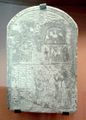 نصب رعيا، المملكة الجديدة، الأسرة التاسعة عشر، ح. 1300-1200 ق.م.
 -
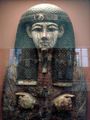 ناوس حوري، الفترة الانتقالية الثالثة، الأسرة الحادية والعشرون، ح. 1049-1026 ق.م.
 -
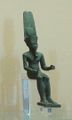 تمثال برونزي لآمون.
 -
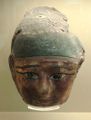 قناع ذهبي، المملكة الپطلمية، ح. 304 ق.م.

_01.jpg&filetimestamp=20180903143655&)


ثقافات المتوسط

The collection of classical archaeology of the National Museum added up to around 750 pieces and consists mostly of Greek, Roman, Etruscan, and Italiote objects, being the largest collection of its kind in Latin America. Most of the pieces previously belonged to the Greco-Roman collection of empress Teresa Cristina, who had been interested in archaeology since her youth. When the empress disembarked in Rio de Janeiro in 1843, right after her proxy wedding to Emperor Pedro II, she brought an assemblage of antiquities found during the excavations of Herculaneum and Pompeii, the Ancient Roman cities destroyed by the eruption of Mount Vesuvius in 79 AD. Part of this collection had also belonged to Carolina Murat, sister of Napoleon Bonaparte and queen consort of the king of Naples, Joachim Murat.[19][20][21]
In turn, Ferdinand II of the Two Sicilies, brother of empress Teresa Cristina, had ordered the excavations of Herculaneum and Pompeii, initiated in the 18th century, be resumed. The recovered pieces were sent to the Royal Bourbon Museum of Naples. Aiming to increase the number of classical artifacts in Brazil with a view to the future creation of a museum of Greco-Roman archaeology in the country, the empress established formal exchanges with the Kingdom of Naples. She requested the shipment of Greco-Roman objects to Rio de Janeiro, while sending artifacts of indigenous origins to Italy. The empress also personally financed excavations in Veios, an Etruscan archeological site located fifteen kilometers north of Rome, thus enabling a large part of the objects found there to be brought to Brazil. A greater part of those had been gathered between 1853 and 1859, but Teresa Cristina continued to enrich the collection until the fall of the Brazilian empire in 1889, when the Republic was proclaimed and the empress left the country with all the royal family.[19][20]

Among the highlights of the collection were a set of four frescos from Pompeii, made around the 1st century AD. Two of those are decorated with marine motifs, respectively depicting a sea dragon and a seahorse as the central figure surrounded by dolphins, and had adorned the lower walls of the room of the devotees at the Temple of Isis. The other two frescos are decorated with representations of plants, birds, and landscapes, stylistically close to the paintings of Herculaneum and Stabiae. The museum also housed a large number of objects from Pompeii portraying the daily life of Ancient Roman citizens: fibulae, jewels, mirrors, and other pieces of the Roman female toilette, glass and bronze vessels, phallic amulets, oil lamps molded in terracotta, etc.[16][21][22]
The collection of Mediterranean pottery comprised more than dozens of objects and is noted for the diversity of origins, shapes, decorations and utilitarian purposes. Several of the most important styles and schools of classical antiquity are represented, from the Corinthian geometric style of the 7th century BC to the Roman terracotta amphoras of the Early Christian era. The museum houses examples of kraters, oenochoai, kantharos, chalices, kyathos, cups, hydriai, lekythoi, askoi, and lekanides. The groups of Etruscan Bucchero pottery (7th–4th centuries BC), Greek black-figure vases (7th–5th centuries BC), Gnathian vessels (4th century BC), and the vast set of Italian red-figure vases, with ceramics from Apulia, Campania, Lucania and Magna Graecia, which also stand out.[16]
The collection of sculptures comprised a large number of Tanagra figurines, small terracotta sculptures of Greek origin that were widely appreciated in the Ancient world, as well as a group of Etruscan bronze statuettes representing warriors and female figures. The collection of military artifacts included entire pieces or fragments of helmets, maces, scabbards, bronze blades, brooches and phalleras.[16]
-

-

-
 Corinthian oinochoe with lid, ح. 600–575 BC
 -
 Campanian Red-figure chalice krater, late 4th century BC
 -

-

-

-

-

_01.jpg&filetimestamp=20260829170849&)


_-_pequenas_%C3%A2nforas.jpg&filetimestamp=20260829164717&)


آثار ما قبل كلومبس

The National Museum housed an important group of about 1,800 artifacts produced by the Indigenous peoples of the Americas during the Pre-Columbian era, as well as Andean mummies. Gathered throughout the 19th century, the collection was based on holdings of the Brazilian royal family, with several objects coming from the private collection of Emperor Pedro II. It was later enlarged through acquisitions, donations, exchanges, and excavations. By the end of the 19th century, the collection already had considerable prestige, being cited, on the occasion of opening the 1889 Anthropological Exposition, as one of the largest collections of South American archaeology.[16][23][24]


The collection comprised mostly objects related to the textile manufacturing, featherwork, ceramic production, and stonecraft of the Andean cultures (groups of Peru, Bolivia, Chile, and Argentina) and, to a lesser extent, of the Amazonian natives (including a rare assemblage of artifacts from the area of present-day Venezuela) and Mesoamerican cultures (mainly from present-day Mexico and Nicaragua). Several aspects of the daily routine, social organization, religiosity, and imagery of the Pre-Columbian civilizations are addressed in the collection, which has items from common daily use (clothing, body ornaments, weapons) to more refined artifacts, imbued with notable artistic sense (measurement and musical instruments, ritual objects, figurative ceramic sculptures and vessels distinguished for their aesthetic features).[23][16] Other aspects of Pre-Columbian life, such as the dynamics of trade, ideological diffusion, and cultural influences among the groups, are also represented in the collection. Items are evaluated in terms of the similarity of decorative patterns and artistic techniques, as well as in the subjects portrayed. Common to nearly all distinct groups are such subjects as plants, nocturnal animals (bats, serpents, owls), and fantastic creatures associated to natural elements and phenomena.[25][16][26]
The best represented groups, in the context of Andean cultures, include:
- Nazca culture, which flourished on the southern coast of Peru between the 1st century BC and 800 AD. The National Museum has a large set of fragments of Nazca textiles depicting animals (mainly llamas), fantastic beings, plants, and geometric patterns;[25]
- Moche civilization, which flourished on the northern coast of Peru between the early Christian era and 8th century AD, responsible for building large monuments, temples, pyramids, and ceremonial complexes, represented in the collection by a group of figurative pottery of high artistic and technical quality (zoomorphic, anthropomorphic, and globular vessels) and examples of goldsmithery;[27][28]
- Wari culture, which inhabited the south-central Andes since the 5th century AD, represented by anthropomorphic ceramic vessels and textile fragments;[28]
- Lambayeque culture, which arose in the homonymous region of Peru during the 8th century AD, exemplified in the collection through textiles, pottery and metalwork;[29]
- Chimú culture, which flourished on the Valley of the Moche River since the 10th century AD, represented by a group of zoomorphic and anthropomorphic pottery (characteristically dark, obtained through the technique of reducing burning, and inspired by stylistic elements of the Moche and Wari cultures), as well as textiles decorated with varying motifs;[30][31]
- Chancay culture, which developed between the Intermediate and Late periods (from about 1000 to 1470 AD), on the valleys of the rivers Chancay and Chillon, presented in the collection by a set of anthropomorphic pottery (characteristically dark, decorated with light-colored engobe and brown painting) and sophisticated textiles depicting animals and vegetables – namely a large mantle, with three meters of length;[16][32]
- Inca civilization, which flourished around the 13th century AD and became the largest empire of the Pre-Columbian Americas in the following century. The National Museum possesses a set of figurative pottery and vessels decorated with geometric patterns ("Incan aryballos"), miniature figures of human beings and llamas, made with alloys of gold, silver, and copper, miniatures of Inca ceremonial clothing, featherwork, quipus, mantles, tunics, and several other examples of textiles.[33][34]
The collection of Andean mummies of the National Museum allows a glimpse at the funerary practices of the cultures of the region. The mummies of the collection were preserved either naturally (as a result of the favorable geo-climatic conditions of the Andean Mountains) or artificially, in the context of religious and ritualistic practices. Originating from Chiu Chiu, at the Atacama Desert, northern Chile, there is a mummy of a man with an estimated age of 3,400 to 4,700 years, preserved in a seated position, with the head resting on the knees and covered by a wool cap. This was the position which the Atacaman cultures used to sleep, due to the cold climate of the desert. It was also the position in which they were buried, together with their belongings.[35] A second mummy in the collection – an Aymara man, found in the surroundings of Lake Titicaca, between Peru and Bolivia – is preserved in the same position, but involved in a funerary bundle.[36] The collection of mummies also include a boy, donated by the Chilean government, and, illustrating the techniques of artificial mummification of Pre-Columbian cultures, an example of a shrunken head, coming from the Jivaroan peoples of equatorial Amazon, of ritualistic purposes.[26][37]
-
 Peruvian Moche civilization. Head-shaped ceramic vessel, ح. 100 BC–800 AD
 -

-

-

-

-

-

-


الآثار البرازيلية
The collection of Brazilian archaeology of the National Museum brought together a vast set of artifacts produced by the cultures that flourished in the Brazilian territory during the pre-colonial era, with more than 90,000 objects. It was considered the largest collection in its typology worldwide. Gradually assembled since the early 19th century, the collection started being systematically gathered since 1867 and has been continually expanded until the present day, through excavations, acquisitions and donations, also serving as basis for a large number of research projects conducted by the academics of the museum, the Federal University of Rio de Janeiro, and other institutions. It was composed of objects coming from all regions of Brazil, establishing a timeline spanning more than 10,000 years.[26][38][39]
From the oldest inhabitants of the Brazilian territory (horticulturists and hunter-gatherer groups), the museum preserved several artifacts made of stone (flint, quartz and other minerals) and bones, such as projectile points used for hunting, axe blades of polished stone and other tools used for carving, scraping, cleaving, triturating, and piercing, in addition to artifacts of ceremonial use and adornments. Although objects made of wood, fiber, and resin were also produced, the majority of them didn't stand the test of time and are almost absent in the collection, except for some individual pieces – namely a woven straw basket covered by resin, only partially preserved, found in the southern coast of Brazil.[26][40][25][41]
In the segment regarding the Sambaqui people, i.e. the fishing and gathering communities which lived in the south-central coast of Brazil between 8,000 years before present and the early Christian era, the National Museum holds a large number of vestiges originating from deposits constituted of agglomerated lime and organic material – the so-called Sambaquis, or middens. Two fragments of Sambaquis are preserved in the collection, in addition to a group of human skeletal remains found in these archaeological sites, as well as several cultural testimonies of the Sambaqui people, encompassing utilitarian objects used in routine tasks (vessels, bowls, pestles and mortars carved in stone), ceremonies and rituals (such as votive statuettes). Among the highlights of the Sambaqui collection, there is a large set of zoolites (stone sculptures of votive use, with representation of animals, such as fish and birds, and human figures).[26][25]

The collection included several examples of funerary urns, rattles, dishes, bowls, clothing, dresses, idols, and amulets, with emphasis being placed on ceramic objects, produced by numerous cultures of precolonial Brazil.[26] Best represented groups in the collection include:
- Marajoara culture, which flourished on Marajó island, at the mouth of the Amazon River, between the 5th and the 15th centuries, considered the group that reached the highest level of social complexity in precolonial Brazil. The museum has a vast assemblage of Marajoara pottery, notable for their heightened artistic and aesthetic sense, as well as for the variety of shapes and refined decoration – mostly works of figurative nature (representations of humans and animals), combined with rich geometric patterns (compositions imbued with symmetry, rhythmic repetitions, paired elements, binary oppositions, etc.) and with a predominant usage of the excision technique. Major part of the ceramic pieces are of ceremonial nature, used in funerary contexts, rites of passage, etc. Among the highlights, it's possible to mention the anthropomorphic statuettes (particularly the phallus-shaped female figurines, uniting the male and female principles, a recurring theme of the Marajoara art), large-scale funerary urns, anthropomorphic vases with geometric decoration, ritual thongs, zoomorphic, anthropomorphic and hybrid vessels, etc.[42]
- Santarém culture (or Tapajós culture), which inhabited the region of the Tapajós River in the state of Pará, between the 5th and the 15th centuries, known for their ceramic work of peculiar style and high technical quality, produced with the techniques of modeling, incision, dotted lines, and appliqué, imbued with aesthetic features that suggest the influence of the Mesoamerican civilizations. Among the highlights of the collection were the anthropomorphic statuettes of naturalist style (characterised by the closed eyes, shaped like coffee beans), the anthropomorphic and zoomorphic vessels, vases for ceremonial use and, above all, the so-called "caryatid vases" – complex ceramic vessels, endowed with bottlenecks, reliefs and pedestals decorated with anthropomorphic and zoomorphic figurines and fantastic beings. The museum also possesses several examples of Muiraquitãs, i.e. small statuettes carved in green gems, shaped like animals (mainly frogs) used as adornments or amulets.[42]

- Konduri culture, which reached their apex in the 7th century and met their decline in the 15th century, and inhabited the region between the Trombetas and Nhamundá rivers, in Pará. Although this culture kept an intense contact with the Santarém culture, their artistic production developed unique features. The Konduri collection is primarily composed of pottery, noted for the techniques of decoration such as incision and dotted lines, the lively polychromy, and the reliefs with anthropomorphic and zoomorphic motifs.[43]
- Trombetas River culture, which inhabited the lower Amazon, in the state of Pará, near the region of Santarém. This culture, still largely unknown, was responsible for producing rare artifacts sculpted in polished stone and objects imbued with stylistic elements common to the Mesoamerican cultures. The museum collection preserves lithic artifacts of ceremonial use, as well as anthropomorphic and zoomorphic statuettes (zoolites representing fish and jaguars).[44]
- Miracanguera culture, which flourished on the left bank of the Amazon river, in the region between Itacoatiara and Manaus, between the 9th and the 15th centuries. The museum preserved several examples of ceremonial pottery, mainly anthropomorphic funerary urns characterized by the presence of bulges, necks, and lids, used to store the ashes of the deceased, and other vessels related to funerary rituals. The Miracanguera pottery is distinguished for the presence of tabatinga layers (clay mixed with organic materials) and the eventual painted decoration of geometric motifs. The plastic composition frequently outlines specific details, such as human figures in a seated position, with the legs represented.[45]

- Maracá culture, which lived in the region of Amapá between the 15th and the 18th centuries, represented in the collection by a group of typical funerary urns depicting male and female figurines in hierarchic position, with head-shaped lids, as well as zoomorphic funerary urns depicting quadrupedal animals, originating from indigenous cemeteries located in the outskirts of the Maracá River. The Maracá pottery was frequently adorned with geometric patterns and polychromed with white, yellow, red, and black pigments. Ornaments in the members and the head of the figures expressed the social identity of the deceased.[46]
- Tupi-Guaraní culture, which inhabited the Brazilian coast when the Portuguese arrived in the 16th century – subdivided into the group of the Tupinambá people (in the North, Northeast, and Southeast regions of Brazil) and the group of the Guaraní people (in the South region of Brazil and parts of Argentina, Paraguay, and Uruguay). The collection is predominantly composed of ceramics and lithic artifacts of daily use (such as pans, bowls, jars, and dishes) or ritual nature (mainly funerary urns). The Tupi-Guaraní pottery is characterized by its distinct polychromy (with predominance of red, black, and white pigments) and drawings of geometric and sinuous patterns.[47]
The National Museum held the oldest known examples of indigenous mummies found in the Brazilian territory. The collection consisted of the body of an adult woman of approximately 25 years of age, and two children, one located at her feet, with an estimated age of twelve months, involved in a bundle, and a new-born, also covered by a mantle, positioned behind the head of the woman. This mummified set is composed of individuals that probably belonged to the group of the Botocudos (or Aimoré) people, of the Macro-Jê branch. They were found at the Caverna da Babilônia, a cavern located in the city of Rio Novo, interior of the state of Minas Gerais, in a farm that belonged to Maria José de Santana, who donated the mummies to emperor Pedro II. As an act of gratitude for this favor, Pedro II awarded Maria José with the title of Baroness of Santana.[48]
-
 Hunter-gatherer groups. Projectile point.
 -
 Sambaqui culture. Stone sculpture of a human figure
 -

-
 Maracá culture. Anthropomorphic funerary urn, 1000–1500 AD
 -
 Marajoara urn
 -

-

-
 Marajora items
 -
 Santarém items


معرض
-

-
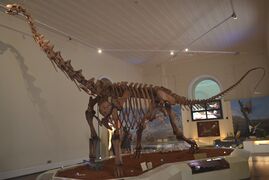
-
 Recreation of dinosaur heads
 -
 Pompeii fresco
 -
 Pompeii fresco
 -
 Historic artwork of the interior
 -

-
 Ceiling artwork
 -

-
 Artwork of an Egyptian sarcophagus
 -
 Butterflies on display
 -
 The throne room, on display in preserved rooms in the front wings of the museum
 -
 Part of the preserved throne room
 -
 Pre-Columbian artifacts
 -
 Pre-Columbian jars and ceramics
 -

-
 Ancient Greek vases
 -
 Paleontological tools


الصعوبات المالية وحريق 2018

منذ عام 2014، واجه المتحف تخفيضا في الميزانية والتي خفضت الميزانية المخصصة للصيانة بالمتحف إلى أقل من 520.000 ريال برازيلي سنوياً. أصبح المبنى في حالة سيئة، وظهر ذلك من خلال تقشر مادة الجدار والأسلاك الكهربائية المكشوفة.[49] بحلول يونيو 2018، في الذكرى السنوية رقم 200 للمتحف، وصل إلى حالة إهمال شبه كاملة.[50]
تضرر المبنى بشكل كبير من حريق ضخم نشب في 2 سبتمبر 2018.[8][10] على الرغم من إنقاذ بعض المعروضات، إلا أنه يعتقد بأن جزءاً كبيراً من الـ20 مليون قطعة مؤرشفة قد دُمّر في الحريق، بينما تم تخزين قطع أخرى في مبنى منفصل لم يلحق به أي أضرار.[9] وكان أول المستجيبين لمكافحة الحريق يعوقهم نقص المياه. ادعى رئيس الإطفاء في ريو أن اثنين من حنفيات الحريق القريبة كانت مياههما غير كافية، مما دفع برجال الإطفاء للجوء إلى ضخ المياه من بحيرة مجاورة.[51]
انظر أيضاً
- پاسو دى ساو كريستوڤاو، القصر التاريخي الذي يضم المتحف الوطني
- متحف البرازيل التاريخي الوطني
الهامش
- ^ "Museus em Números, Vol. 1" (PDF). Instituto Brasileiro de Museus – IBRAM. p. 73. Archived from the original (PDF) on 29 October 2015.
- ^ "200 Anos do Museu Nacional" (PDF). Associação Amigos do Museu Nacional. p. 8. Archived from the original (PDF) on 2017-07-08.
- ^ "Museus em Números, Vol. 1" (PDF). Instituto Brasileiro de Museus – IBRAM. p. 73. Archived from the original (PDF) on 2015-10-29.
- ^ أ ب ت ث (in pt)Museu Nacional - UFRJ. Museus do Rio. Archived from the original. You must specify the date the archive was made using the
|archivedate=parameter. http://www.museusdorio.com.br/joomla/index.php?option=com_k2&view=item&id=12:museu-nacional. Retrieved on 2017-02-15 - ^ أ ب Grande Enciclopédia Larousse Cultural. Santana de Parnaíba: Banco Safra. 1998. p. 4132.
- ^ (in pt)O Museu. Museu Nacional - UFRJ. Archived from the original. You must specify the date the archive was made using the
|archivedate=parameter. http://www.museunacional.ufrj.br/dir/omuseu/omuseu.html. Retrieved on 2017-02-15 - ^ (in pt)A Revista Arquivos e a Biblioteca do Museu Nacional. Revista do Arquivo Nacional. Archived from the original. You must specify the date the archive was made using the
|archivedate=parameter. http://linux.an.gov.br/seer/index.php/info/article/view/574/489. Retrieved on 2017-02-15 - ^ أ ب "Rio's 200-year old National Museum hit by massive fire". Reuters. 2 September 2018. Archived from the original on 2 September 2018. Retrieved 2 September 2018.
{{cite web}}:|archive-date=/|archive-url=timestamp mismatch; 3 سبتمبر 2018 suggested (help); Unknown parameter|dead-url=ignored (|url-status=suggested) (help) - ^ أ ب "Fire engulfs 200-year-old Brazil museum". BBC. 2 September 2018. Archived from the original on 2 September 2018. Retrieved 2 September 2018.
{{cite web}}:|archive-date=/|archive-url=timestamp mismatch; 3 سبتمبر 2018 suggested (help); Unknown parameter|dead-url=ignored (|url-status=suggested) (help) - ^ أ ب "Incêndio atinge prédio do Museu Nacional, no Rio". UOL Notícias (in البرتغالية). 2 September 2018. Retrieved 2 September 2018.
- ^ Sears, P M (1963). "Recovery of the Bendego Meteorite". Merteoritics. 2 (1): 22–23. Retrieved 27 December 2017.
- ^ أ ب (in pt)Guia de Exposições do Museu Nacional - Egito Antigo (I). Museu Nacional/UFRJ. Archived from the original. You must specify the date the archive was made using the
|archivedate=parameter. http://www.museunacional.ufrj.br/guiaMN/Guia/paginas/4/princ9.htm. Retrieved on 2017-02-09 - ^ أ ب ت ث Barkos, Margaret Marchiori (2004). Egiptomania – O Egito no Brasil. São Paulo: Paris Editorial. pp. 31–35. ISBN 85-72-44261-8.
- ^ أ ب O Museu Nacional. São Paulo: Banco Safra. 2007. p. 222.
- ^ أ ب ت ث Brancaglion Junior, Antonio (2007). Revelando o Passado: estudos da coleção egípcia do Museu Nacional (in In: Lessa, Fábio de Souza & Bustamente, Regina. "Memoria & festa"). Rio de Janeiro: Mauad Editora. pp. 75–80.
- ^ أ ب ت ث ج ح خ د O Museu Nacional. São Paulo: Banco Safra. 2007. pp. 41–42.
- ^ (in pt)Múmia Kherima intriga pesquisadores do Museu Nacional. O Globo. 2016. Archived from the original. You must specify the date the archive was made using the
|archivedate=parameter. http://oglobo.globo.com/sociedade/historia/mumia-kherima-intriga-pesquisadores-do-museu-nacional-10998769. Retrieved on 2017-02-09 - ^ (in pt)Guia de Exposições do Museu Nacional – Egito Antigo (II). Museu Nacional/UFRJ. 2016. Archived from the original. You must specify the date the archive was made using the
|archivedate=parameter. http://www.museunacional.ufrj.br/guiaMN/Guia/paginas/4/principal10.htm. Retrieved on 2017-02-09 - ^ أ ب "Culturas do Mediterrâneo". Museu Nacional/UFRJ (in البرتغالية). Archived from the original on 11 February 2017. Retrieved 9 February 2017.
- ^ أ ب O Museu Nacional. São Paulo: Banco Safra. 2007. p. 238.
- ^ أ ب "Italianos restauram afrescos inéditos da coleção Imperatriz Tereza Cristina". Agência Brasil (in البرتغالية). Archived from the original on 11 February 2017. Retrieved 9 February 2017.
- ^ "Culturas Mediterrâneas". Museu Nacional/UFRJ (in البرتغالية). Archived from the original on 1 March 2018. Retrieved 9 February 2017.
- ^ أ ب O Museu Nacional. São Paulo: Banco Safra. 2007. p. 19.
- ^ Projeto da Nova Exposição do Museu Nacional/UFRJ (PDF) (in البرتغالية). Museu Nacional/UFRJ. Archived from the original (PDF) on 14 February 2017. Retrieved 9 February 2017.
- ^ أ ب ت ث "Guia de Visitação Escolar ao Museu Nacional/UFRJ". Slideboom (in البرتغالية). Archived from the original on 14 February 2017. Retrieved 9 February 2017.
- ^ أ ب ت ث ج ح O Museu Nacional. São Paulo: Banco Safra. 2007. p. 43.
- ^ "Cultura Moche". Museu Nacional/UFRJ (in البرتغالية). Archived from the original on 14 February 2017. Retrieved 9 February 2017.
- ^ أ ب O Museu Nacional. São Paulo: Banco Safra. 2007. p. 290.
- ^ "Cultura Lambayeque". Museu Nacional/UFRJ (in البرتغالية). Archived from the original on 14 February 2017. Retrieved 9 February 2017.
- ^ "Cultura Chimu". Museu Nacional/UFRJ (in البرتغالية). Archived from the original on 14 February 2017. Retrieved 9 February 2017.
- ^ O Museu Nacional. São Paulo: Banco Safra. 2007. p. 296.
- ^ "Cultura Chancay". Museu Nacional/UFRJ (in البرتغالية). Archived from the original on 15 February 2017. Retrieved 9 February 2017.
- ^ "Cultura Inca". Museu Nacional/UFRJ (in البرتغالية). Archived from the original on 14 February 2017. Retrieved 9 February 2017.
- ^ O Museu Nacional. São Paulo: Banco Safra. 2007. p. 304.
- ^ O Museu Nacional. São Paulo: Banco Safra. 2007. p. 308.
- ^ O Museu Nacional. São Paulo: Banco Safra. 2007. p. 309.
- ^ O Museu Nacional. São Paulo: Banco Safra. 2007. p. 334.
- ^ خطأ استشهاد: وسم
<ref>غير صحيح؛ لا نص تم توفيره للمراجع المسماةMNRJ Arqueologia Dep - ^ خطأ استشهاد: وسم
<ref>غير صحيح؛ لا نص تم توفيره للمراجع المسماةMN Safra 2007 p 45 - ^ "Arqueologia Brasileira – Artefatos líticos dos primeiros povoadores". Museu Nacional (in البرتغالية). Archived from the original on 3 May 2015. Retrieved 16 February 2017.
- ^ O Museu Nacional. São Paulo: Banco Safra. 2007. p. 261.
- ^ أ ب O Museu Nacional. São Paulo: Banco Safra. 2007. pp. 264–275.
- ^ O Museu Nacional. São Paulo: Banco Safra. 2007. p. 282.
- ^ O Museu Nacional. São Paulo: Banco Safra. 2007. pp. 284–285.
- ^ "Arqueologia Brasileira – Miracanguera". Museu Nacional (in البرتغالية). Archived from the original on 28 February 2017. Retrieved 16 February 2017.
- ^ O Museu Nacional. São Paulo: Banco Safra. 2007. pp. 286–289.
- ^ "Arqueologia Brasileira – Cerâmica Tupi-guaran". Museu Nacional (in البرتغالية). Archived from the original on 1 March 2017. Retrieved 16 February 2017.
- ^ Regina Dantas (2008). "Só para os íntimos". Revista de História (in البرتغالية). Archived from the original on 24 June 2016. Retrieved 16 February 2017.
- ^ Pamplona, Nicola; Alegretti, Laís (2 September 2018). "Incêndio de grandes proporções atinge Museu Nacional na Quinta da Boa Vista, no Rio". Folha de S.Paulo (in البرتغالية). Retrieved 3 September 2018.
- ^ "Fogo destrói Museu Nacional, mais antigo centro de ciência do País". Estadão (in البرتغالية). 2 September 2018. Retrieved 3 September 2018.
- ^ Phillips, Dom (3 September 2018). "Brazil museum fire: 'incalculable' loss as 200-year-old Rio institution gutted". The Guardian.
وصلات خارجية
- National Museum website
- The National Museum and its European employees Jens Andermann
- The National Museum at Rio de Janeiro Jens Andermann
- Pages using gadget WikiMiniAtlas
- CS1 errors: unsupported parameter
- CS1 errors: archive-url
- CS1 البرتغالية-language sources (pt)
- Short description is different from Wikidata
- Articles with hatnote templates targeting a nonexistent page
- Coordinates on Wikidata
- Pages using infobox museum with unknown parameters
- Articles containing برتغالية-language text
- Pages using Lang-xx templates
- مقالات ذات عبارات بحاجة لمصادر
- متاحف في ريو دي جانيرو (مدينة)
- متحف البرازيل الوطني
- متاحف تاريخي طبيعي في البرازيل
- متاحف أثرية في البرازيل
- جامعة ريو دي جانيرو الفدرالية
- مؤسسات بحثية في البرازيل
- متاحف تأسست في 1818
- تأسيسات عقد 1810 في البرازيل
- صفحات مع الخرائط