شعارة (فن)

علم شعارات النبالة (ويُعرف أيضًا باسم علم الأسلحة) هو تخصص يتناول تصميم شارات النبالة وعرضها ودراستها ونقلها. وقد تشتمل مجموعة شعارات النبالة الكاملة على شعار النبالة على درع، وخوذة وعُرف، إلى جانب عناصر مرافقة مثل حاملي الدرع، والشارات، والرايات، والشعارات.[1] وتُوصف مجموعات شعارات النبالة رسميًا باستخدام الوصف الشعاري.[2]
وعلى الرغم من أن استخدام مختلف العناصر للدلالة على الأفراد والجماعات يعود إلى العصور القديمة، فإن شكل هذه العناصر واستخدامها كانا متفاوتين على نطاق واسع؛ إذ إن مفهوم التصاميم المنتظمة والموروثة، الذي يشكل السمة المميزة لشعارات النبالة، لم يتطور إلا في العصور الوسطى العليا.[3] وكثيرًا ما يُقال إن استخدام الخوذ ذات واقيات الوجه خلال هذه الفترة جعل من الصعب التعرف على القادة في ميدان المعركة عندما كانت الجيوش الكبيرة تجتمع لفترات طويلة، مما استلزم تطوير شعارات النبالة بوصفها لغة رمزية؛ إلا أن هذه الرؤية لا تحظى إلا بدعم محدود.[3][4]
وقد سمح الجمال المتصور والمظاهر الاحتفالية في تصاميم شعارات النبالة لها بالبقاء بعد التخلي التدريجي عن الدروع في ميدان المعركة خلال القرن السابع عشر. ووُصف علم شعارات النبالة على نحو شعري بأنه "خادمة التاريخ"،[5] و"اختزال التاريخ"،[6] و"الإطار الزهري في حديقة التاريخ".[7][صفحة مطلوبة] وفي العصر الحديث، يستخدم الأفراد والمنظمات العامة والخاصة والشركات والمدن والبلدات والمناطق وغيرها من الكيانات علم شعارات النبالة واصطلاحاته لترميز تراثها وإنجازاتها وتطلعاتها.[8]
وتشمل التخصصات ذات الصلة علم الرايات (دراسة الأعلام)، وعلم الأنساب، ودراسات المراسم والرتب والألقاب.[9][10]
التاريخ
المقدمات
استخدمت رموز مختلفة لتمثيل الأفراد أو الجماعات منذ آلاف السنين. وتُظهر أقدم التمثيلات الفنية للأشخاص والمناطق المميزة في مصر استخدام رايات تعلوها صور أو رموز لآلهة مختلفة، كما تظهر أسماء الملوك على شعارات تُعرف باسم سيرخ، وهي تمثل قصر الملك، ويعلوها عادة صقر يمثل الإله حورس، الذي كان يُنظر إلى الملك باعتباره تجسيدًا أرضيًا له. وتوجد شعارات وعناصر مماثلة في الفن الرافدي القديم في الفترة نفسها، كما يمكن العثور على أسلاف الوحوش الشعاراتية مثل الغريفين فيها أيضًا.[3]
ويشير سفر العدد في الكتاب المقدس إلى الرايات والأعلام الخاصة بـأبناء إسرائيل، الذين أُمروا بالتجمع تحت هذه الشعارات وإعلان أنسابهم.[11] وكثيرًا ما يصف الكتاب اليونانيون واللاتينيون دروع مختلف الأبطال ورموزهم،[12] كما كانت وحدات الجيش الروماني تُعرَف أحيانًا بعلامات مميزة على دروعها.[13] ويُعتقد أيضًا أن قطعة أثرية أوروبية واحدة على الأقل تعود إلى عصور ما قبل التاريخ، وهي قرص نيبرا السماوي، تمثل سلفًا لشعارات النبالة.[14]
وحتى القرن التاسع عشر، كان من الشائع أن يستشهد كتّاب شعارات النبالة بأمثلة من هذا النوع، إلى جانب الرموز المجازية مثل "أسد يهوذا" أو "نسر القياصرة"، باعتبارها دليلًا على قِدم علم شعارات النبالة نفسه؛ وأن يستنتجوا أن كبار الشخصيات في التاريخ القديم كانوا يحملون شعارات تمثل مكانتهم النبيلة ونسبهم. ويعلن كتاب سانت ألبانز، الذي جُمِع عام 1486، أن المسيح نفسه كان من النبلاء الذين يملكون شعار نبالة.[15] وتُعد هذه الادعاءات الآن ضربًا من الخيال الذي ابتكره منظرو شعارات النبالة في العصور الوسطى، إذ لا يوجد دليل على وجود لغة رمزية مميزة شبيهة بلغة شعارات النبالة خلال تلك الفترة المبكرة؛ كما أن كثيرًا من الدروع التي وُصفت في العصور القديمة لا تشبه بدرجة كبيرة دروع شعارات النبالة في العصور الوسطى؛ ولا يوجد أيضًا دليل على أن رموزًا أو تصاميم محددة كانت تنتقل من جيل إلى آخر لتمثل شخصًا معينًا أو سلالة بعينها.[16]
كما ابتكر منظرو شعارات النبالة في العصور الوسطى شعارات لفرسان وأمراء مختلفين من التاريخ والأدب. ومن الأمثلة البارزة الضفادع التي نُسبت إلى فراموند، والصليب وطائر المارتلت المنسوبان إلى إدوارد المعترف، ومختلف الشعارات المنسوبة إلى التسعة الأماجد وفرسان المائدة المستديرة. وهذه أيضًا تُرفض بسهولة باعتبارها اختراعات خيالية، لا أدلة على قِدم علم شعارات النبالة.
-
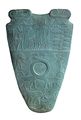 الوجه الخلفي من لوحة نارمر، نحو 3100 ق.م. يصور الصف العلوي أربعة رجال يحملون رايات. وفوقهم مباشرةً يوجد سيرخ يتضمن اسم الملك نارمر.
 -
 لوحة جدارية تصور درعًا من النوع الشائع في اليونان الميسينية.
 -
 إناء يصور جنودًا يونانيين يرتدون الدروع، نحو 550 ق.م.
 -
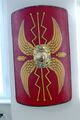 إعادة بناء لدرع كان يحمله جندي فيلق روماني.
 -
 دروع من "قائد الجيش الحاضر الثاني". من Notitia Dignitatum، وهي نسخة من العصور الوسطى لسجل روماني متأخر للقيادات العسكرية. ومع ذلك، فمن المرجح أن تكون الرسوم الموجودة على الدروع قد صُممت بما يتناسب مع الفترة/العصر الذي أُنتجت فيه، وليس من الأصل.[بحاجة لمصدر]
 -
 مقتل الملك هارولد، من نسيج بايو. تبدو الدروع شبيهة بدروع شعارات النبالة، لكنها لا تبدو شعارات شخصية أو موروثة.


أصول علم شعارات النبالة الحديث

لا يمكن أن يُعزى تطور لغة شعارات النبالة الحديثة إلى شخص أو زمن أو مكان واحد. فعلى الرغم من أن بعض التصاميم التي تُعد اليوم شعارات نبالة كانت مستخدمة بوضوح خلال القرن الحادي عشر، فإن معظم الروايات والتصويرات التي تتناول الدروع حتى بداية القرن الثاني عشر لا تقدم إلا القليل من الأدلة، أو لا تقدم أي دليل، على طابعها الشعاري. فعلى سبيل المثال، يصور نسيج بايو، الذي يوضح الغزو النورماندي لإنجلترا عام 1066، والذي يُرجح أنه كُلِّف به نحو عام 1077 عندما أُعيد بناء كاتدرائية بايو،[i] عددًا من الدروع ذات الأشكال والتصاميم المختلفة، وكثير منها بسيط، بينما زُين بعضها بالتنانين أو الصلبان أو غيرها من الأشكال التي تُعد شعارات نبالة نموذجية. ومع ذلك، لا يظهر أي شخص مرتين وهو يحمل الشعار نفسه، كما لا يُعرف أن أيًا من أحفاد الأشخاص المختلفين المصورين قد حمل شعارات تشبه تلك الموجودة في النسيج.[17][18]
وبالمثل، تصف رواية عن الفرسان الفرنسيين في بلاط إمبراطور الإمبراطورية البيزنطية ألكسيوس الأول في بداية القرن الثاني عشر دروعهم المعدنية المصقولة الخالية من أي تصميمات شعاراتية. وتصف مخطوطة إسبانية تعود إلى عام 1109 دروعًا بسيطة وأخرى مزخرفة، لا يبدو أن أيًا منها كان ذا طابع شعاراتي.[19] وكانت دير سان دوني تضم نافذة تخلّد ذكرى الفرسان الذين انطلقوا في الحملة الصليبية الثانية عام 1147، ويرجح أنها صُنعت بعد الحدث بوقت قصير؛ إلا أن الرسم الذي أعده مونفوكون للنافذة قبل تدميرها لا يُظهر أي تصميم شعاراتي على أي من الدروع.[18][20]
وفي إنجلترا، منذ وقت الغزو النورماندي، كان يتعين ختم الوثائق الرسمية. وابتداءً من القرن الثاني عشر، اتخذت الأختام طابعًا شعاريًا واضحًا؛ إذ يبدو أن عددًا من الأختام التي يعود تاريخها إلى الفترة بين 1135 و1155 يظهر تبني الشعارات في إنجلترا وفرنسا وألمانيا وإسبانيا وإيطاليا.[21] ومن الأمثلة البارزة على الأختام الشعاراتية المبكرة ختمٌ ملحق بميثاق منحه فيليب الأول، كونت فلاندر عام 1164. أما الأختام التي تعود إلى أواخر القرن الحادي عشر وبداية القرن الثاني عشر فلا تُظهر أي دليل على الرمزية الشعاراتية، لكن بحلول نهاية القرن الثاني عشر أصبحت الأختام ذات طابع شعاراتي بصورة منتظمة.[19][22]
ويمكن رؤية أحد أقدم الأمثلة المعروفة على الشعارات كما أصبحت تُمارس لاحقًا على قبر جودفري بلانتاجنيه، كونت أنجو، الذي توفي عام 1151.[23] وتصور قطعة من المينا، يُرجح أن أرملة جودفري كلفت بصنعها بين عامي 1155 و1160، جودفري وهو يحمل درعًا أزرق مزينًا بستة أسود ذهبية في وضعية الهجوم.[ii] وكان يرتدي خوذة زرقاء يزينها أسد آخر، بينما كانت بطانته مصنوعة من فرو الفور. وتذكر إحدى الوقائع التاريخية في العصور الوسطى أن جودفري مُنح درعًا بهذه المواصفات عندما نُصِّب فارسًا على يد والد زوجته، هنري الأول، عام 1128؛ إلا أن هذه الرواية يرجح أنها تعود إلى نحو عام 1175.[24][25]
ونسب كتّاب شعارات النبالة الأوائل أسود إنجلترا إلى وليام الفاتح، لكن أقدم دليل على ارتباط الأسود بالتاج الإنجليزي هو ختم يحمل أسدين عابرين، استخدمه الملك يوحنا المستقبلي في عهد والده هنري الثاني، الذي توفي عام 1189.[26][27] وبما أن هنري الثاني كان ابن جودفري بلانتاجنيه، فمن المعقول افتراض أن تبني هنري أو أبنائه للأسود بوصفها شعارًا شعاراتيًا ربما استُلهم من درع جودفري. ويُعتقد أن شقيق يوحنا الأكبر، ريتشارد قلب الأسد، الذي خلف والده على العرش باسم ريتشارد الأول، كان أول من حمل شعار الأسود الثلاثة العابرة الحارسة، وهو الشعار الذي لا يزال شعار إنجلترا؛ إذ كان قد استخدم قبل ذلك أسدين متواجهين في وضعية الهجوم، وربما كان هذا الشعار أيضًا يعود إلى والده.[28] وينسب إلى ريتشارد الأول أيضًا ابتكار العُرف الإنجليزي المتمثل في أسد قائم، وهو اليوم أسد قائم حارس.[27][29]
وترتبط أصول شعارات النبالة أحيانًا بـالحملات الصليبية، وهي سلسلة من الحملات العسكرية التي شنتها جيوش مسيحية بين عامي 1096 و1487، بهدف استعادة القدس وغيرها من الأراضي البيزنطية السابقة التي استولت عليها القوات الإسلامية خلال القرن السابع. وعلى الرغم من عدم وجود دليل على أن الفن الشعاري نشأ أثناء الحملات الصليبية، فلا يوجد ما يدعو إلى الشك في أن تجمع جيوش كبيرة من مختلف أنحاء أوروبا لتحقيق هدف مشترك قد شجع على تبني الشعارات بوصفها وسيلة للتعرف على القادة في ميدان المعركة، أو أن ذلك ساعد في نشر مبادئ علم شعارات النبالة في أنحاء أوروبا. وهناك ميزتان مميزتان على الأقل في علم شعارات النبالة تُقبل عمومًا باعتبارهما من نتاج الحملات الصليبية: الأولى هي السوركوت، وهو لباس خارجي يُرتدى فوق الدرع لحماية مرتديه من حرارة الشمس، وكان يُزيَّن غالبًا بالعناصر نفسها التي تظهر على درع الفارس. ومن هذا اللباس اشتُقت عبارة "شعار النبالة".[30] أما الثانية فهي اللامبريكين، أو الستارة، التي تتدلى من الخوذة وتؤطر الدرع في شعارات النبالة الحديثة؛ وقد بدأت بوصفها غطاءً عمليًا للخوذة ومؤخرة العنق خلال الحملات الصليبية، تؤدي وظيفة شبيهة إلى حد كبير بوظيفة السوركوت. ويُعتقد أن حافتها المشقوقة أو المتموجة، التي تُصوَّر اليوم على شكل زخارف متطايرة، نشأت نتيجة الاحتكاك الشديد أثناء القتال، أو بوصفها وسيلة لتخفيف ضربة السيف وربما تشابك سلاح المهاجم.[31]
المبشّرون والسلطات الشعاراتية
أدى انتشار شعارات النبالة في أنحاء أوروبا إلى ظهور مهنة جديدة؛ إذ تولّى المبشّر، الذي كان في الأصل نوعًا من الرسل الذين يستخدمهم النبلاء، مسؤولية تعلم ومعرفة رتب وأنساب وشعارات مختلف الفرسان والأمراء، إلى جانب القواعد المنظمة لتصميم الشعارات ووصفها، أو الوصف الشعاري، وأسبقية حامليها.[32] وبحلول أواخر القرن الثالث عشر، مُنح بعض المبشرين العاملين لدى الملوك لقب "ملك المبشرين"، الذي أصبح في نهاية المطاف "ملك الشعارات".[32]

في الفترة المبكرة، كان حاملو الشعارات يتخذونها لأنفسهم دون الحاجة إلى سلطة شعاراتية. لكن بحلول منتصف القرن الرابع عشر، أصبح المبدأ القائل بأن شخصًا واحدًا فقط يحق له حمل شعار نبالة معين مقبولًا عمومًا، ويبدو أن النزاعات حول ملكية الشعارات أدت تدريجيًا إلى إنشاء سلطات شعاراتية لتنظيم استخدامها. وأقدم عمل معروف في الفقه الشعاري، De Insigniis et Armis، كتبه نحو عام 1350 بارتولوس دي ساسوفيراتو، أستاذ القانون في جامعة بادوا.[33][34] وأشهر نزاع شعاري في شعارات النبالة الإنجليزية هو قضية سكروب ضد غروسفينور (1390)، التي ادعى فيها رجلان مختلفان الحق في حمل الشعار azure, a bend or، أي حقل أزرق يتوسطه شريط ذهبي مائل.[35] وأدى الانتشار المستمر للشعارات، وعدد النزاعات الناشئة عن اتخاذ رجال مختلفين للشعار نفسه، إلى إصدار هنري الخامس إعلانًا عام 1419 يحظر على كل من لم يكن قد حمل شعارًا في معركة أجينكور اتخاذ شعار نبالة، إلا عن طريق الميراث أو بمنحة من التاج.[36]
وبدءًا من عهد هنري الثامن، أُمر ملوك الشعارات الإنجليز بإجراء زيارات شعاراتية، كانوا يتنقلون خلالها في أنحاء البلاد لتسجيل الشعارات المحمولة بموجب سلطة صحيحة، وإلزام من يحملون شعارات دون سلطة إما بالحصول على ترخيص لها أو بالتوقف عن استخدامها. وكانت الشعارات المحمولة بصورة غير مشروعة تُنزع وتُشوَّه. بدأت أول زيارة من هذا النوع عام 1530، وأُجريت الأخيرة عام 1700، رغم عدم إصدار أي تكليفات جديدة بإجراء الزيارات بعد اعتلاء ويليام الثالث العرش عام 1689.[37] ولا توجد أدلة كثيرة على أن المبشرين الاسكتلنديين أجروا زيارات شعاراتية من هذا النوع.
وفي عام 1484، في عهد ريتشارد الثالث، جرى دمج مختلف المبشرين العاملين لدى التاج في كلية الأسلحة الإنجليزية، التي أصبحت في نهاية المطاف الجهة التي تصدر جميع المنح الجديدة لشعارات النبالة.[38][39] وتتكون الكلية حاليًا من ثلاثة ملوك للشعارات، يساعدهم ستة مبشرين وأربعة ملاحقي شعارات، أو ضباط شعارات مبتدئين، وجميعهم يخضعون لسلطة إيرل المارشال؛ غير أن جميع الشعارات التي تمنحها الكلية تُمنح بسلطة التاج.[40] وفي اسكتلندا، تشرف محكمة ملك الشعارات اللورد ليون على علم شعارات النبالة، وتعقد جلسات قضائية تُعد جزءًا رسميًا من نظام المحاكم الاسكتلندي.
وتنظم هيئات مماثلة منح الشعارات في الملكيات الأخرى وفي عدد من أعضاء كومنولث الأمم، لكن معظم البلدان الأخرى لا توجد فيها سلطة شعاراتية، ولا يوجد قانون يمنع أي شخص من اتخاذ أي شعار يريده، شريطة ألا ينتهك شعار شخص آخر.[39]
الاستخدامات والتطورات اللاحقة
على الرغم من أن علم شعارات النبالة نشأ بدافع الضرورة العسكرية، فإنه سرعان ما وجد مكانًا له في مظاهر البطولات في العصور الوسطى. وأتاحت الفرصة للفرسان والأمراء لعرض شعاراتهم في إطار تنافسي مزيدًا من التطوير، مثل ابتكار خوذات البطولات المزخرفة، وأسهمت في زيادة انتشار فن شعارات النبالة في أنحاء أوروبا. كما اتخذ الأعيان من سكان المدن البارزون والشركات، بما في ذلك العديد من المدن والبلدات، شعارات أو حصلوا على منح لها، ولم يكن ارتباطها بالشؤون العسكرية في كثير من الحالات سوى ارتباط اسمي.[41] وصُورت العناصر الشعاراتية في سياقات مختلفة، مثل الفن الديني وفن الجنائز، وباستخدام مجموعة واسعة من الوسائط، بما في ذلك الأعمال الحجرية، والخشب المنحوت، والمينا الزجاجية، والزجاج المعشق، والتطريز.[42]
ومع جعل ظهور الأسلحة النارية الفارسَ الممتطي للفرس أقل أهمية بصورة متزايدة خلال القرنين السادس عشر والسابع عشر، وتلاشي البطولات من التاريخ، حل الاستخدام الزخرفي محل الطابع العسكري لشعارات النبالة. ومع تحرر الفنانين الشعاريين من قيود الدروع الحقيقية والحاجة إلى أن تكون الشعارات سهلة التمييز أثناء القتال، صمموا مجموعات شعاراتية أكثر تعقيدًا، بلغت ذروتها في ظهور "شعارات النبالة الطبيعية"، التي تضمنت تصويرات واقعية للمناظر الطبيعية، خلال الجزء الأخير من القرن الثامن عشر وبداية القرن التاسع عشر. وقد خرجت هذه التصاميم من الموضة خلال منتصف القرن التاسع عشر، عندما أدى تجدد الاهتمام بتاريخ شعارات النبالة إلى إعادة تقييم التصاميم الأقدم وتقدير جديد للأصول الوسيطة لهذا الفن.[43][44] وعلى وجه الخصوص، تمثل أحد الاستخدامات المتأخرة للصور الشعاراتية في الاحتفالات الوطنية والقومية والدعاية القومية خلال القرن التاسع عشر وأوائل القرن العشرين.[45] ومنذ أواخر القرن التاسع عشر، ركز علم شعارات النبالة على استخدام أنماط متنوعة من خطوط التقسيم والأشكال الأساسية قليلة الاستخدام لإنتاج تصاميم جديدة وفريدة.[46]
مجموعة شعارات النبالة
عناصر مجموعة شعارات النبالة
يتكون مجمل الشعار الشعاري من درع الشعار، أي شعار النبالة أو الشعار باختصار، إلى جانب جميع العناصر المصاحبة له، مثل العُرف، وحاملي الدرع، وغيرها من الزخارف الشعاراتية. ويشير مصطلح "شعار النبالة" من الناحية التقنية إلى درع الشعار نفسه، لكن العبارة تُستخدم عادةً للإشارة إلى مجمل الشعار. والعنصر الوحيد الذي لا غنى عنه في شعار النبالة هو الدرع؛ إذ تتكون العديد من شعارات النبالة القديمة من الدرع وحده، لكن لا يوجد مجمل شعار أو شعار نبالة من دون درع.[47]
ومنذ وقت مبكر جدًا، كانت الرسوم التوضيحية للشعارات تُزيَّن في كثير من الأحيان بـخوذات توضع فوق الدروع. ثم أصبحت هذه الخوذات تُزيَّن بدورها بأعراف على هيئة مروحة أو أعراف نحتية، غالبًا ما تتضمن عناصر من درع الشعار، إلى جانب إكليل أو عصابة، أو أحيانًا تاج صغير، تتدلى منه الستارة أو غطاء الخوذة. وتضيف شعارات النبالة الحديثة غالبًا إلى هذه العناصر شعارًا يُعرض على شريط، عادةً أسفل الدرع. وتُحمل الخوذة بحكم الحق، ولا تشكل جزءًا من منحة الشعار؛ إذ يجوز لأي شخص يحق له حمل شعار نبالة أن يتخذها دون سلطة رسمية، إلى جانب الستارة وأي شعار يختاره حامل الشعار. أما العُرف، إلى جانب العصابة أو التاج الصغير الذي ينبثق منه، فيجب أن يكون ممنوحًا أو مؤكدًا من السلطة الشعاراتية المختصة.[47]
وإذا كان حامل الشعار مستحقًا لشريط أو طوق أو شارة لنظام من أنظمة الفروسية، فقد يحيط ذلك بالدرع أو يتدلى منه. وتُزَيَّن بعض الشعارات، ولا سيما شعارات النبلاء، بصورة إضافية بحاملي الدرع، وهم أشكال شعاراتية تقف إلى جانب الدرع أو خلفه؛ وغالبًا ما تقف هذه الأشكال على قاعدة، تكون عادةً كومة من التراب والعشب، يمكن أن تُعرض عليها شارات ورموز أو رايات شعاراتية أخرى. وفي أكثر مجملات الشعارات تعقيدًا، يُعرض الشعار بأكمله أحيانًا تحت مظلة، وهي خيمة أو غطاء مزخرف من النوع المرتبط بـبطولات العصور الوسطى،[47] إلا أن ذلك نادر جدًا في مجملات الشعارات الإنجليزية أو الاسكتلندية.
الدرع
العنصر الأساسي في مجمل الشعار الشعاري هو الدرع، أو الترس، الذي يُصوَّر عليه شعار النبالة.[iii] وجميع العناصر الأخرى في مجمل الشعار مصممة لتزيين هذه الشعارات واستكمالها، لكن درع الشعار وحده هو العنصر الضروري.[47] [48] ويُترك شكل الدرع، شأنه شأن العديد من التفاصيل الأخرى، عادةً لتقدير الفنان الشعاري،[iv] وقد سادت أشكال مختلفة عديدة خلال الفترات المختلفة من تطور التصميم الشعاري، وفي مناطق مختلفة من أوروبا.[53][54]
وكان هناك شكل واحد يُخصص عادةً لغرض معين، وهو المعين، أي الدرع الماسي الشكل، الذي كان يُستخدم تقليديًا لعرض شعارات النساء، على أساس أن الدروع، بوصفها أدوات للحرب، غير ملائمة لهذا الغرض.[55] ولم يكن هذا التمييز يُلتزم به دائمًا بصورة صارمة، وكان يُستثنى منه عادةً أصحاب السيادة، الذين تمثل شعاراتهم أمة بأكملها. وأحيانًا كان يُستعاض عن المعين بدرع بيضاوي، أو خرطوشة؛ كما استُخدم هذا الشكل على نطاق واسع لشعارات رجال الدين في علم شعارات النبالة الفرنسي والإسباني والإيطالي، وإن لم يكن مخصصًا لاستخدامهم وحدهم.[53] وفي الآونة الأخيرة، أصبح استخدام الخرطوشة لشعارات النساء شائعًا في علم شعارات النبالة الاسكتلندي، في حين سمحت السلطات الاسكتلندية والأيرلندية كلتاهما باستخدام الدرع التقليدي في ظروف معينة، وأصبح الدرع يُمنح بانتظام في علم شعارات النبالة الكندي.[56]
ويُسمى كامل سطح الدرع الحقل، ويمكن أن يكون بسيطًا، مكوَّنًا من لون واحد، أو مقسمًا إلى أقسام متعددة ذات ألوان مختلفة بواسطة خطوط تقسيم متنوعة؛ كما يمكن أن يكون أي جزء من الحقل منثورًا، أي مغطى بعدد من الشحنات الصغيرة.[57] وتُستخدم حواف الدرع والأجزاء المتاخمة لها لتحديد مواضع مختلف الشحنات الشعاراتية؛ وتُسمى الحافة العلوية، والثلث العلوي المقابل من الدرع، الرأس؛ بينما يُسمى الجزء السفلي القاعدة. ويُعرف جانبا الدرع باسم الجانب الأيمن والجانب الأيسر، إلا أن هذين المصطلحين يستندان إلى وجهة نظر حامل الدرع، الذي يقف خلفه؛ أما بالنسبة إلى المشاهد، وفي جميع الرسوم الشعاراتية، فإن الجانب الأيمن الشعاري يقع إلى اليسار، والجانب الأيسر الشعاري يقع إلى اليمين.[58][59]
وقد يُشار في وصف مواضع الشحنات المختلفة إلى عدد من النقاط المحددة؛ فتحددها بعض السلطات بتسع نقاط، بينما تحددها أخرى بإحدى عشرة. وأهم ثلاث منها هي نقطة الوسط، الواقعة في المركز المرئي للدرع؛[v] ونقطة الشرف، الواقعة في منتصف المسافة بين نقطة الوسط والرأس؛ ونقطة السرة، الواقعة في منتصف المسافة بين نقطة الوسط والقاعدة.[58][59] وتشمل النقاط الأخرى رأس الجانب الأيمن ورأس الوسط ورأس الجانب الأيسر، الممتدة على طول الجزء العلوي من الدرع من اليسار إلى اليمين، فوق نقطة الشرف؛ وجانب الأيمن وجانب الأيسر، على جانبي الدرع وعلى مستوى نقطة الوسط تقريبًا؛ وقاعدة الجانب الأيمن ووسط القاعدة وقاعدة الجانب الأيسر على طول الجزء السفلي من الدرع، أسفل نقطة السرة.[58]
الألوان والفراء

من أكثر الخصائص المميزة لعلم شعارات النبالة استخدام مجموعة محدودة من الألوان والأنماط، يُشار إليها عادةً باسم الألوان الشعاراتية. وتنقسم هذه إلى ثلاث فئات تُعرف باسم المعادن والألوان والفراء.[vi][60] المعادن هي or وargent، أي الذهب والفضة على التوالي، وإن كانت تُصوَّر عمليًا عادةً باللونين الأصفر والأبيض. وهناك خمسة ألوان معترف بها عالميًا: gules، أي الأحمر؛ وsable، أي الأسود؛ وazure، أي الأزرق؛ وvert، أي الأخضر؛ وpurpure، أي الأرجواني؛ كما تقبل معظم السلطات الشعاراتية لونين إضافيين يُعرفان باسم sanguine أو murrey، وهو أحمر داكن أو لون التوت يقع بين gules وpurpure، وtenné، وهو لون برتقالي أو أصفر داكن يميل إلى البني. وهذان اللونان الأخيران نادران جدًا، وغالبًا ما يُشار إليهما باسم stains، انطلاقًا من الاعتقاد بأنهما كانا يُستخدمان لتمثيل فعل مشين، إلا أنه لا توجد في الواقع أدلة على أن هذا الاستخدام وُجد خارج كتابات بعض مؤلفي الشعارات الخيالية.[61] ولعل إدراك أنه لا يوجد في الواقع ما يسمى stain في شعارات النبالة الحقيقية، إلى جانب الرغبة في ابتكار تصاميم جديدة وفريدة، قد أسهما في قبول استخدام هذه الألوان للأغراض العامة خلال القرنين العشرين والحادي والعشرين.[vii][40] وأحيانًا تُصادف ألوان أخرى، ولا سيما في شعارات النبالة القارية، وإن لم تكن تُعد عمومًا ضمن الألوان الشعاراتية القياسية. ومن بينها cendrée، أي الرمادي الرمادي أو لون الرماد؛ وbrunâtre، أي البني؛ وbleu-céleste أو bleu de ciel، أي الأزرق السماوي؛ وamaranth أو columbine، وهو لون بنفسجي محمر زاهٍ أو وردي؛ وcarnation، الذي يُستخدم عادةً لتمثيل لون اللحم في شعارات النبالة الفرنسية.[62] ومن الإضافات الأحدث استخدام copper، أي النحاس، بوصفه معدنًا في شعارَي نبالة كنديين أو نحو ذلك.
هناك نوعان أساسيان من الفراء الشعاري، يُعرفان باسم ermine وvair، إلا أن كلًا منهما طوّر على مدى القرون عددًا من التنويعات. ويمثل ermine فراء القاقم في معطفه الشتوي الأبيض، حين يُسمى ermine. ويتكون من حقل أبيض، أو فضي أحيانًا، منثور عليه أشكال سوداء تُعرف باسم ermine spots، وتمثل الطرف الأسود لذيل الحيوان. وكان ermine يُستخدم تقليديًا لتبطين عباءات وقبعات النبلاء. وقد اختلف شكل البقعة الشعاراتية لـermine اختلافًا كبيرًا بمرور الزمن، وهي تُرسم اليوم عادةً على هيئة رأس سهم تعلوه ثلاث نقاط صغيرة، وإن كان يمكن استخدام الأشكال الأقدم وفقًا لتقدير الفنان. وعندما يكون الحقل sable وتكون بقع ermine من argent، يُسمى النمط نفسه ermines؛ وعندما يكون الحقل من or بدلًا من argent، يُسمى الفراء erminois؛ وعندما يكون الحقل sable وتكون بقع ermine من or، يُسمى pean.[63]
يمثل vair معطف الشتاء لـالسنجاب الأحمر، الذي يكون أزرق رماديًا من الأعلى وأبيض من الأسفل. ولتكوين بطانات العباءات، كانت الجلود تُخاط معًا لتشكّل نمطًا متموجًا على هيئة أجراس، تتشابك فيه صفوف فاتحة وداكنة. ويُصوَّر الفراء الشعاري في صفوف متشابكة من argent وazure، رغم أن شكل الجلود، التي يُشار إليها عادةً باسم "أجراس vair"، يُترك عادةً لتقدير الفنان. وفي الشكل الحديث، تُصوَّر الأجراس بخطوط مستقيمة وزوايا حادة، ولا تلتقي إلا عند نقاط؛ أما في النمط المتموج الأقدم، المعروف الآن باسم vair ondé أو vair ancien، فتكون أجراس كل صبغة منحنية ومتّصلة عند القاعدة. ولا توجد قاعدة ثابتة تحدد ما إذا كان ينبغي أن تكون أجراس argent في أعلى كل صف أو أسفله. وفي وقت من الأوقات كان vair يأتي عادةً بثلاثة أحجام، ولا يزال هذا التمييز يُصادف أحيانًا في شعارات النبالة القارية؛ فإذا كان الحقل يحتوي على أقل من أربعة صفوف، يُسمى الفراء gros vair أو beffroi؛ وإذا كان يحتوي على ستة صفوف أو أكثر، يُسمى menu-vair أو miniver.[64]
ومن التنويعات الشائعة counter-vair، حيث تُعكس الصفوف المتناوبة، بحيث تتصل قواعد أجراس vair لكل صبغة بأجراس الصبغة نفسها في الصف الأعلى أو الأدنى. وعندما تُرتب الصفوف بحيث تشكل أجراس كل صبغة أعمدة رأسية، يُسمى ذلك vair in pale؛ وفي شعارات النبالة القارية يمكن مصادفة vair in bend، وهو مشابه لـvair in pale، لكنه قطري. وعندما تُعكس الصفوف المتناوبة كما في counter-vair، ثم تُزاح بمقدار نصف عرض جرس واحد، يُسمى ذلك vair in point أو wave-vair. وهناك شكل خاص بشعارات النبالة الألمانية هو alternate vair، حيث يُقسم كل جرس من أجراس vair رأسيًا إلى نصفين، أحدهما argent والآخر azure.[65] ويمكن أيضًا تصوير جميع هذه التنويعات بالشكل المعروف باسم potent، حيث يُستبدل شكل جرس vair بشخصية على هيئة حرف T، تُعرف باسم potent لتشابهها مع العكاز. وعلى الرغم من أنه ليس في الحقيقة سوى تنويع من vair، فإنه كثيرًا ما يُعامل بوصفه فراءً مستقلًا.[66]
وعندما تتكون الأنماط نفسها من صبغات غير argent وazure، يُشار إليها باسم vairé أو vairy من تلك الصبغات، بدلًا من vair؛ وقد توجد أيضًا صيغة potenté من ألوان أخرى. وعادةً ما يتكون vairé من معدن ولون واحد، لكن يمكن أيضًا استخدام ermine أو أحد تنويعاته، كما يوجد أحيانًا vairé من أربع صبغات، عادةً معدنين ولونين. [67]
وتُصادف أحيانًا ثلاثة أنواع إضافية من الفراء في شعارات النبالة القارية؛ ففي شعارات النبالة الفرنسية والإيطالية نجد plumeté أو plumetty، حيث يبدو الحقل مغطى بالريش، وpapelonné، حيث يكون مزينًا بحراشف. وفي شعارات النبالة الألمانية يمكن مصادفة kursch، أو بطون أجراس vair، التي تُصوَّر بنية وفروية؛ ويُرجح أن جميع هذه الأنواع نشأت بوصفها تنويعات من vair.[68]
ويُمنح الفنان الشعاري قدرًا كبيرًا من الحرية في تصوير الصبغات الشعاراتية؛ فلا يوجد ظل أو درجة لونية ثابتة لأي منها.[viii]
وعندما يُصوَّر شيء كما يظهر في الطبيعة، بدلًا من تصويره بواحدة أو أكثر من الصبغات الشعاراتية، يُسمى proper، أي بلون الطبيعة. ويبدو أن هذا الأسلوب لم يكن مستخدمًا في أقدم شعارات النبالة، إلا أن أمثلة عليه معروفة منذ القرن السابع عشر على الأقل. ومع أنه لا يوجد اعتراض على تصوير الأشياء بهذه الطريقة من حين إلى آخر، فإن الإفراط في استخدام الشحنات الشعاراتية بألوانها الطبيعية يُستشهد به كثيرًا بوصفه مؤشرًا على ممارسة شعاراتية سيئة. وقد استخدمت ممارسة شعارات المناظر الطبيعية، التي ازدهرت في الجزء الأخير من القرن الثامن عشر والجزء الأول من القرن التاسع عشر، الألوان غير الشعاراتية على نطاق واسع.[69]
ومن أهم أعراف شعارات النبالة ما يُعرف باسم "قاعدة الصبغات". ولضمان التباين والوضوح، لا ينبغي أبدًا وضع المعادن على المعادن، ولا الألوان على الألوان. ولا تنطبق هذه القاعدة على الشحنات التي تعبر تقسيمًا للحقل يتكون جزئيًا من معدن وجزئيًا من لون؛ كما أنها، من الناحية الدقيقة، لا تمنع أن يتكون الحقل من معدنين أو لونين، رغم أن ذلك غير معتاد. ويُعد الفراء ذا طبيعة مزدوجة، فلا يُعد معدنًا ولا لونًا؛ لكن في الممارسة يُعامل ermine وerminois عادةً بوصفهما من المعادن، بينما يُعامل ermines وpean بوصفهما من الألوان. ويُلتزم بهذه القاعدة التزامًا صارمًا في علم شعارات النبالة البريطاني، مع استثناءات نادرة فقط؛ ورغم مراعاتها عمومًا في شعارات النبالة القارية، فإن الالتزام بها هناك ليس صارمًا بالقدر نفسه. وتُعرف الشعارات التي تنتهك هذه القاعدة أحيانًا باسم "الشعارات المحيّرة"[70]، وأشهر مثال عليها هو شعار مملكة القدس، الذي يتكون من صلبان ذهبية على حقل فضي.[71][72][صفحة مطلوبة]
تنويعات الحقل
The field of a shield, or less often a charge or crest, is sometimes made up of a pattern of colours, or variation. A pattern of horizontal (barwise) stripes, for example, is called barry, while a pattern of vertical (palewise) stripes is called paly. A pattern of diagonal stripes may be called bendy or bendy sinister, depending on the direction of the stripes. Other variations include chevrony, gyronny and chequy. Wave shaped stripes are termed undy. For further variations, these are sometimes combined to produce patterns of barry-bendy, paly-bendy, lozengy and fusilly. Semés, or patterns of repeated charges, are also considered variations of the field.[73] The Rule of tincture applies to all semés and variations of the field.
Divisions of the field

The field of a shield in heraldry can be divided into more than one tincture, as can the various heraldic charges. Many coats of arms consist simply of a division of the field into two contrasting tinctures. These are considered divisions of a shield, so the rule of tincture can be ignored. For example, a shield divided azure and gules would be perfectly acceptable. A line of partition may be straight or it may be varied. The variations of partition lines can be wavy, indented, embattled, engrailed, nebuly, or made into myriad other forms.[74]
Ordinaries
In the early days of heraldry, very simple bold rectilinear shapes were painted on shields. These could be easily recognised at a long distance and could be easily remembered. They therefore served the main purpose of heraldry: identification.[75] As more complicated shields came into use, these bold shapes were set apart in a separate class as the "honourable ordinaries". They act as charges and are always written first in blazon. Unless otherwise specified they extend to the edges of the field. Though ordinaries are not easily defined, they are generally described as including the cross, the fess, the pale, the bend, the chevron, the saltire, and the pall.[76]
There is a separate class of charges called sub-ordinaries which are of a geometrical shape subordinate to the ordinary. According to Friar, they are distinguished by their order in blazon. The sub-ordinaries include the inescutcheon, the orle, the tressure, the double tressure, the bordure, the chief, the canton, the label, and flaunches.[77]
Ordinaries may appear in parallel series, in which case blazons in English give them different names such as pallets, bars, bendlets, and chevronels. French blazon makes no such distinction between these diminutives and the ordinaries when borne singly. Unless otherwise specified an ordinary is drawn with straight lines, but each may be indented, embattled, wavy, engrailed, or otherwise have their lines varied.[78]
Charges
A charge is any object or figure placed on a heraldic shield or on any other object of an armorial composition.[79] Any object found in nature or technology may appear as a heraldic charge in armory. Charges can be animals, objects, or geometric shapes. Apart from the ordinaries, the most frequent charges are the cross – with its hundreds of variations – and the lion and eagle. Other common animals are bears, stags, wild boars, martlets, wolves and fish. Dragons, bats, unicorns, griffins, and other monsters appear as charges and as supporters.
Animals are found in various stereotyped positions or attitudes. Quadrupeds can often be found rampant (standing on the left hind foot). Another frequent position is passant, or walking, like the lions of the coat of arms of England. Eagles are almost always shown with their wings spread, or displayed. A pair of wings conjoined is called a vol.
In English heraldry the crescent, mullet, martlet, annulet, fleur-de-lis, and rose may be added to a shield to distinguish cadet branches of a family from the senior line. These cadency marks are usually shown smaller than normal charges, but it still does not follow that a shield containing such a charge belongs to a cadet branch. All of these charges occur frequently in basic undifferenced coats of arms.[80]
Marshalling

To marshal two or more coats of arms is to combine them in one shield, to express inheritance, claims to property, or the occupation of an office. This can be done in a number of ways, of which the simplest is impalement: dividing the field per pale and putting one whole coat in each half. Impalement replaced the earlier dimidiation – combining the dexter half of one coat with the sinister half of another – because dimidiation can create ambiguity between, for example, a bend and a chevron. "Dexter" (from Latin dextra, "right") means to the right from the viewpoint of the bearer of the arms and "sinister" (from Latin sinistra, "left") means to the bearer's left. The dexter side is considered the side of greatest honour (see also dexter and sinister).
A more versatile method is quartering, division of the field by both vertical and horizontal lines. This practice originated in Spain (Castile and León) after the 13th century.[81] As the name implies, the usual number of divisions is four, but the principle has been extended to very large numbers of "quarters".
Quarters are numbered from the dexter chief (the corner nearest to the right shoulder of a man standing behind the shield), proceeding across the top row, and then across the next row and so on. When three coats are quartered, the first is repeated as the fourth; when only two coats are quartered, the second is also repeated as the third. The quarters of a personal coat of arms correspond to the ancestors from whom the bearer has inherited arms, normally in the same sequence as if the pedigree were laid out with the father's father's ... father (to as many generations as necessary) on the extreme left and the mother's mother's ... mother on the extreme right. A few lineages have accumulated hundreds of quarters, though such a number is usually displayed only in documentary contexts.[82] The Scottish and Spanish traditions resist allowing more than four quarters, preferring to subdivide one or more "grand quarters" into sub-quarters as needed.
The third common mode of marshalling is with an inescutcheon, a small shield placed in front of the main shield. In Britain this is most often an "escutcheon of pretence" indicating, in the arms of a married couple, that the wife is an heraldic heiress (i.e., she inherits a coat of arms because she has no brothers). In continental Europe an inescutcheon (sometimes called a "heart shield") usually carries the ancestral arms of a monarch or noble whose domains are represented by the quarters of the main shield.
In German heraldry, animate charges in combined coats usually turn to face the centre of the composition.
-
 Dimidiation
 -
 Dimidiation (worst case)
 -
 Impalement
 -
 Impalement (worst case)
 -
 Escutcheon of pretence
 -
 Quartering


Helm and crest
.png&filetimestamp=20231104073253&)
In English the word "crest" is commonly (but erroneously) used to refer to an entire heraldic achievement of armorial bearings. The technical use of the heraldic term crest refers to just one component of a complete achievement. The crest rests on top of a helmet which itself rests on the most important part of the achievement: the shield.
The modern crest has grown out of the three-dimensional figure placed on the top of the mounted knights' helms as a further means of identification. In most heraldic traditions, a woman does not display a crest, though this tradition is being relaxed in some heraldic jurisdictions, and the stall plate of Lady Marion Fraser in the Thistle Chapel in St Giles, Edinburgh, shows her coat on a lozenge but with helmet, crest, and motto.
The crest is usually found on a wreath of twisted cloth and sometimes within a coronet. Crest-coronets are generally simpler than coronets of rank, but several specialised forms exist; for example, in Canada, descendants of the United Empire Loyalists are entitled to use a Loyalist military coronet (for descendants of members of Loyalist regiments) or Loyalist civil coronet (for others).
When the helm and crest are shown, they are usually accompanied by a mantling. This was originally a cloth worn over the back of the helmet as partial protection against heating by sunlight. Today it takes the form of a stylised cloak hanging from the helmet.[83] Typically in British heraldry, the outer surface of the mantling is of the principal colour in the shield and the inner surface is of the principal metal, though peers in the United Kingdom use standard colourings (Gules doubled Argent - Red/White) regardless of rank or the colourings of their arms. The mantling is sometimes conventionally depicted with a ragged edge, as if damaged in combat, though the edges of most are simply decorated at the emblazoner's discretion.
Clergy often refrain from displaying a helm or crest in their heraldic achievements. Members of the clergy may display appropriate headwear. This often takes the form of a small crowned, wide brimmed hat called a galero with the colours and tassels denoting rank; or, in the case of Papal coats of arms until the inauguration of Pope Benedict XVI in 2005, an elaborate triple crown known as a tiara. Benedict broke with tradition to substitute a mitre in his arms. Orthodox and Presbyterian clergy do sometimes adopt other forms of headgear to ensign their shields. In the Anglican tradition, clergy members may pass crests on to their offspring, but rarely display them on their own shields.
Mottoes
An armorial motto is a phrase or collection of words intended to describe the motivation or intention of the armigerous person or corporation. This can form a pun on the family name as in Thomas Nevile's motto Ne vile velis. Mottoes are generally changed at will and do not make up an integral part of the armorial achievement. Mottoes can typically be found on a scroll under the shield. In Scottish heraldry, where the motto is granted as part of the blazon, it is usually shown on a scroll above the crest, and may not be changed at will. A motto may be in any language.
Supporters and other insignia

Supporters are human or animal figures or, very rarely, inanimate objects, usually placed on either side of a coat of arms as though supporting it. In many traditions, these have acquired strict guidelines for use by certain social classes. On the European continent, there are often fewer restrictions on the use of supporters.[84] In the United Kingdom, only peers of the realm, a few baronets, senior members of orders of knighthood, and some corporate bodies are granted supporters. Often, these can have local significance or a historical link to the armiger.
If the armiger has the title of baron, hereditary knight, or higher, he may display a coronet of rank above the shield. In the United Kingdom, this is shown between the shield and helmet, though it is often above the crest in Continental heraldry.
Another addition that can be made to a coat of arms is the insignia of a baronet or of an order of knighthood. This is usually represented by a collar or similar band surrounding the shield. When the arms of a knight and his wife are shown in one achievement, the insignia of knighthood surround the husband's arms only, and the wife's arms are customarily surrounded by an ornamental garland of leaves for visual balance.[85]
Differencing and cadency
Since arms pass from parents to offspring, and there is frequently more than one child per couple, it is necessary to distinguish the arms of siblings and extended family members from the original arms as passed on from eldest son to eldest son. Over time several schemes have been used.[86]
Blazon
To "blazon" arms means to describe them using the formal language of heraldry. This language has its own vocabulary and syntax, or rules governing word order, which becomes essential for comprehension when blazoning a complex coat of arms. The verb comes from the Middle English blasoun, itself a derivative of the French blason meaning "shield". The system of blazoning arms used in English-speaking countries today was developed by heraldic officers in the Middle Ages. The blazon includes a description of the arms contained within the escutcheon or shield, the crest, supporters where present, motto and other insignia. Complex rules, such as the rule of tincture, apply to the physical and artistic form of newly created arms, and a thorough understanding of these rules is essential to the art of heraldry. Though heraldic forms initially were broadly similar across Europe, several national styles had developed by the end of the Middle Ages, and artistic and blazoning styles today range from the very simple to extraordinarily complex.
National styles
Heraldry emerged across western Europe almost simultaneously in the various countries. Originally, heraldic style was very similar from country to country.[87] Over time, heraldic tradition diverged into four broad styles: German-Nordic, Gallo-British, Latin, and Eastern.[88] In addition, it can be argued that newer national heraldic traditions, such as South African and Canadian heraldry, have emerged in the 20th century.[89][صفحة مطلوبة]
Germanic heraldry
German-Nordic heraldry

Coats of arms in Germany, the Nordic countries, Estonia, Latvia, the Czech lands and northern Switzerland generally change very little over time. Marks of difference are very rare in this tradition, as are heraldic furs.[91] One of the most striking characteristics of German-Nordic heraldry is the treatment of the crest. Often, the same design is repeated in the shield and the crest. The use of multiple crests is also common.[92] The crest is rarely used separately as in British heraldry, but can sometimes serve as a mark of difference between different branches of a family.[93] Torse is optional.[94] Heraldic courtoisie is observed: that is, charges in a composite shield (or two shields displayed together) usually turn to face the centre.[95]
Coats consisting only of a divided field are somewhat more frequent in Germany than elsewhere.
Dutch heraldry
The Low Countries were great centres of heraldry in medieval times. One of the famous armorials is the Gelre Armorial or Wapenboek, written between 1370 and 1414. Coats of arms in the Netherlands were not controlled by an official heraldic system like the two in the United Kingdom, nor were they used solely by noble families. Any person could develop and use a coat of arms if they wished to do so, provided they did not usurp someone else's arms, and historically, this right was enshrined in Roman Dutch law.[96][صفحة مطلوبة] As a result, many merchant families had coats of arms even though they were not members of the nobility. These are sometimes referred to as burgher arms, and it is thought that most arms of this type were adopted whilst the Netherlands was a republic (1581–1806).[citation needed] This heraldic tradition was also exported to the erstwhile Dutch colonies.[97] Dutch heraldry is characterised by its simple and rather sober style, and in this sense, is closer to its medieval origins than the elaborate styles which developed in other heraldic traditions.[98][صفحة مطلوبة]
Gallo-British heraldry
The use of cadency marks to difference arms within the same family and the use of semy fields are distinctive features of Gallo-British heraldry (in Scotland the most significant mark of cadency being the bordure, the small brisures playing a very minor role). Marks of cadency are mandatory in Scotland, where no two persons can own identical arms at a time. It is common to see heraldic furs used.[91] In the United Kingdom, the style is notably still controlled by royal officers of arms.[99] French heraldry experienced a period of strict rules of construction under Napoleon.[100] English and Scots heraldries make greater use of supporters than other European countries.[92]
African heraldry
African heraldry is a fusion of colonial European heraldic influences as well as local symbols and motifs. In modern times, distinct heraldic traditions have emerged throughout the continent, including in South Africa, Nigeria, and Kenya. Two heraldic authorities also exist on the continent: the Bureau of Heraldry (South Africa) and College of Arms (Kenya).
Modern African heraldry is most visible in national, civic and institutional arms. Several African states use the European armorial framework of a shield, supporters, crest or motto, but combine it with local languages, flora, fauna, political ideals and symbols of economic or cultural life.
Latin heraldry
The heraldry of Latin countries, namely southern France, Andorra, Spain, and Italy, and except for northern France (using the Gallo-British style), Portugal (which does use crests), and Romania (using the Eastern European style), is characterised by a lack of crests, and uniquely shaped shields.[91] Portuguese and Spanish heraldry, which together form a larger Iberian tradition of heraldry, occasionally introduce words to the shield of arms, a practice usually avoided in British heraldry. Latin heraldry is known for extensive use of quartering, because of armorial inheritance via the male and the female lines. Moreover, Italian heraldry is dominated by the Roman Catholic church, featuring many shields and achievements, most bearing some reference to the church.[101]
Trees are frequent charges in Latin arms. Charged bordures, including bordures inscribed with words, are seen often in Spain.
Eastern European heraldry

Eastern European heraldry is in the traditions developed in Eastern Europe and the Balkans, which includes all Slavic countries (except for Czechia, which uses the German-Nordic style), Albania, Hungary, Lithuania, and Romania, and excludes Greece, Cyprus, and Turkey. Eastern coats of arms are characterised by a pronounced, territorial, clan system—often, entire villages or military groups were granted the same coat of arms irrespective of family relationships. In Poland, nearly six hundred unrelated families are known to bear the same Jastrzębiec coat of arms. Marks of cadency are almost unknown, and shields are generally very simple, with only one charge. Many heraldic shields derive from ancient house marks. At least 15% of all Hungarian personal arms bear a severed Turk head, referring to their wars against the Ottoman Empire.[102]
Heraldry in other non-European countries
Caribbean heraldry
Heraldry in the Caribbean developed mainly through European colonial rule, with Spanish, British, French, and Dutch traditions influencing the arms of colonies, cities, churches, institutions, and later independent states. Although formal heraldry was introduced from Europe, Caribbean arms often incorporate local imagery, including Indigenous figures, tropical plants and animals, ships, sugar cane, waves, and other regional symbols.
In the modern Caribbean, heraldry forms part of the official symbolism of many countries and territories. National and territorial coats of arms commonly retain traditional heraldic features such as shields, supporters, crests, and mottoes, while adapting them to express local history, geography, economy, and postcolonial identity. The legal status and regulation of heraldic devices vary across the region, reflecting different colonial inheritances and domestic constitutional traditions.
Quasi-heraldic emblems
True heraldry, as now generally understood, has its roots in medieval Europe. However, there have been other historical cultures which have used symbols and emblems to represent families or individuals, and in some cases these symbols have been adopted into Western heraldry. For example, the coat of arms of the Ottoman Empire incorporated the royal tughra as part of its crest, along with such traditional Western heraldic elements as the escutcheon and the compartment.
Greek symbols
Ancient Greeks were among the first civilisations to use symbols consistently in order to identify a warrior, clan or a state.[103] The first record of a shield blazon is illustrated in Aeschylus' tragedy Seven Against Thebes.
Mon
Mon (紋), also monshō (紋章), mondokoro (紋所), and kamon (家紋), are Japanese emblems used to decorate and identify an individual or family. While mon is an encompassing term that may refer to any such device, kamon and mondokoro refer specifically to emblems used to identify a family. An authoritative mon reference compiles Japan's 241 general categories of mon based on structural resemblance (a single mon may belong to multiple categories), with 5116 distinct individual mon (it is however well acknowledged that there exist lost or obscure mon that are not in this compilation).[104][ix]
The devices are similar to the badges and coats of arms in European heraldic tradition, which likewise are used to identify individuals and families. Mon are often referred to as crests in Western literature, another European heraldic device similar to the mon in function.
Japanese helmets (kabuto) also incorporated elements similar to crests, called datemono, which helped identify the wearer while they were concealed by armour. These devices sometimes incorporated mon, and some figures, like Date Masamune, were well known for their helmet designs.
Socialist emblems

Communist states often followed a unique style characterised by communist symbolism. Although commonly called coats of arms, most such devices are not actually coats of arms in the traditional heraldic sense and should therefore, in a strict sense, not be called arms at all.[105] Many communist governments purposely diverged from the traditional forms of European heraldry in order to distance themselves from the monarchies that they usually replaced, with actual coats of arms being seen as symbols of the monarchs.
The Soviet Union was the first state to use this type of emblem, beginning at its creation in 1922. The style became more widespread after World War II, when many other communist states were established. Even a few non-socialist states have adopted the style, for various reasons—usually because communists had helped them to gain independence—but also when no apparent connection to a Communist nation exists, such as the emblem of Italy.[106] After the fall of the Soviet Union and the other communist states in Eastern Europe in 1989–1991, this style of heraldry was often abandoned for the old heraldic practices, with many new governments reinstating the traditional heraldry that was previously cast aside.
Tamgas
A tamga or tamgha 'stamp, seal' (منغولية: тамга; تركية: damga) is an abstract seal or stamp used by Eurasian nomadic peoples and by cultures influenced by them. The tamga was normally the emblem of a particular tribe, clan or family. They were common among the Eurasian nomads throughout Classical Antiquity and the Middle Ages (including Alans, Mongols, Sarmatians, Scythians and Turkic peoples). Similar "tamga-like" symbols were sometimes also adopted by sedentary peoples adjacent to the Pontic-Caspian steppe both in Eastern Europe and Central Asia,[107] such as the East Slavs, whose ancient royal symbols are sometimes referred to as "tamgas" and have similar appearance.[108]
Unlike European coats of arms, tamgas were not always inherited, and could stand for families or clans (for example, when denoting territory, livestock, or religious items) as well as for specific individuals (such as when used for weapons, or for royal seals). One could also adopt the tamga of one's master or ruler, therefore signifying said master's patronage. Outside of denoting ownership, tamgas also possessed religious significance, and were used as talismans to protect one from curses (it was believed that, as symbols of family, tamgas embodied the power of one's heritage). Tamgas depicted geometric shapes, images of animals, items, or glyphs. As they were usually inscribed using heavy and unwieldy instruments, such as knives or brands, and on different surfaces (meaning that their appearance could vary somewhat), tamgas were always simple and stylised, and needed to be laconic and easily recognisable.[109]
Tughras
Every sultan of the Ottoman Empire had his own monogram, called the tughra, which served as a royal symbol. A coat of arms in the European heraldic sense was created in the late 19th century. Hampton Court requested from Ottoman Empire the coat of arms to be included in their collection. As the coat of arms had not been previously used in Ottoman Empire, it was designed after this request and the final design was adopted by Sultan Abdul Hamid II on 17 April 1882. It included two flags: the flag of the Ottoman Dynasty, which had a crescent and a star on red base, and the flag of the Islamic Caliph, which had three crescents on a green base.
Ancient Iran
The word of "arms" in the Pahlavi scripts is 𐭥𐭢𐭱𐭠𐭥 which is read as nišān (Persian: نشان). In Islamic sources there are some references to the existence of nišāns in ancient Iran. It is suggested that the words arms, mon, and nišān are oscillating on a same semantic context as they all satisfy a similar need: Heraldic identification. al-Masudi writes that nišāns (Arabic: شعار) used by Parthians and Sasanians. When al-Masudi talks about Sasanians, he describes their arms as "flags of Persians and their emblems" (رایات الفرس و أعلامهم). In the world of "pahlavans" (پهلوانان) of Iranian national narratives, as same as the world of European knights, each army under the command of a pahlavan from one of the noble families identified by a nišān on its flag. Usually, when the pahlavans were presented in the court of the king of Iran, they were distinguishing each troop from another with a flag which had their lords' nišāns on itself.[110][111]
Modern heraldry
Today, institutions, companies, and private persons continue using coats of arms as their pictorial identification.[112] In the United Kingdom and Ireland, the English King of Arms, Scotland's Lord Lyon King of Arms, and the Chief Herald of Ireland continue making grants of arms.[x] There are heraldic authorities in Canada (Canadian Heraldic Authority),[xi] South Africa, Kenya, Malta, Spain, and Sweden that grant or register coats of arms. In South African heraldry, the right to armorial bearings is also determined by Roman Dutch law, due to its origins as a 17th-century colony of the Netherlands.[113][صفحة مطلوبة]
Heraldic societies abound in Africa, Asia, Australasia, the Americas, and Europe. Heraldry aficionados participate in the Society for Creative Anachronism, medieval revivals, micronations and other related projects. Modern armigers use heraldry to express ancestral and personal heritage as well as professional, academic, civic, and national pride.[114] Little is left of class identification in modern heraldry, where the emphasis is more than ever on expression of identity.[115]
Heraldry continues to build on its rich tradition in academia, government, guilds and professional associations, religious institutions, and the military. Nations and their subdivisions – provinces, states, counties, cities, etc. – continue to build on the traditions of civic heraldry. The Roman Catholic church, Anglican churches, and other religious institutions maintain the traditions of ecclesiastical heraldry for clergy, religious orders, and schools.
Many of these institutions have begun to employ blazons representing modern objects. For example, some heraldic symbols issued by the United States Army Institute of Heraldry incorporate symbols such as guns, airplanes, or locomotives. Some scientific institutions incorporate symbols of modern science such as the atom or particular scientific instruments. The arms of the United Kingdom Atomic Energy Authority uses traditional heraldic symbols to depict the harnessing of atomic power.[116] Locations with strong associations to particular industries may incorporate associated symbols. The coat of arms of Stenungsund Municipality in Sweden incorporates a hydrocarbon molecule, alluding to the historical significance of the petrochemical industry in the region.
Heraldry in countries with heraldic authorities continues to be regulated generally by laws granting rights to arms and recognising possession of arms as well as protecting against their misuse. Countries without heraldic authorities usually treat coats of arms as creative property in the manner of logos, offering protection under copyright laws. This is the case in Nigeria, where most of the components of its heraldic system are otherwise unregulated.
-
 1977 arms of Stenungsund Municipality, with a hydrocarbon molecule
 -
 2022 arms of Castagneto, showing chestnuts (castagne)
 -
 Arms of the US 52nd Air Defense Artillery Regiment, with a locomotive as a crest


Footnotes
- ^ تولى ذلك أودو، أسقف بايو والأخ غير الشقيق لويليام الأول، الذي يخلّد النسيج ذكرى غزوه لإنجلترا.
- ^ لا يظهر في هذا التصوير سوى أربعة أسود، إذ يظهر الدرع من الجانب، لكن بالنظر إلى مواضعها لا بد من أن عددها كان ستة؛ ويُظهر قبر حفيد جودفري، ويليام لونغسبي، إياه وهو يحمل درعًا يبدو مطابقًا، إلا أن الأسود الستة تظهر عليه، ولو جزئيًا، على الأقل.
- ^ يُستخدم مصطلح "شعار النبالة" أحيانًا للإشارة إلى مجمل الشعار، الذي يشكل الدرع الجزء المركزي منه.
- ^ توجد استثناءات لهذه القاعدة، إذ يُحدد شكل الدرع في الوصف الشعاري؛ ومن أمثلة ذلك شعار نونافوت،[49] وجمهورية بوفوثاتسوانا السابقة؛[50] وفي الولايات المتحدة، يستخدم شعار داكوتا الشمالية درعًا على شكل رأس سهم حجري،[51] بينما يشترط شعار كونيتيكت درعًا من طراز روكوكو؛[52] ويحدد السجل العام الاسكتلندي درعًا بيضاويًا لجمعية كبار السباكين والمهندسين المنزليين في لاناركشاير، ودرعًا مربعًا لمنظمة أنغلو ليزينغ.
- ^ نظرًا إلى أن معظم الدروع تكون أعرض عند الرأس وتضيق باتجاه نقطة عند القاعدة، فإن نقطة الوسط تقع عادةً أعلى قليلًا من منتصف الدرع.
- ^ من الناحية التقنية، تنطبق كلمة لون شعاري تحديدًا على الألوان، وليس على المعادن أو الفراء؛ لكنها تُستخدم بانتظام بهذا المعنى الموسع لعدم وجود مصطلح آخر يشمل الفئات الثلاث جميعًا.
- ^ على سبيل المثال، شعار مدرسة لويس القديمة لقواعد اللغة، الذي مُنح في 25 أكتوبر 2012: "Murrey within an Orle of eight Crosses crosslet Argent a Lion rampant Or holding in the forepaws a Book bound Azure the spine and the edges of the pages Gold" وشعار عائلة وولف، الذي مُنح في 2 أكتوبر 2015: "Murrey a Snow Wolf's Head erased proper on a Chief Argent a Boar's Head coped at the neck between two Fleurs de Lys Azure."
- ^ "لا توجد درجات لونية ثابتة للألوان الشعاراتية. فإذا كان الوصف الرسمي لشعار النبالة يحدد صبغاته بأنها Gules (أحمر)، وAzure (أزرق)، وArgent (أبيض أو فضي)، فعلى أن يكون الأزرق غير فاتح جدًا، والأحمر غير مائل بدرجة كبيرة إلى البرتقالي أو الأرجواني أو الوردي، يظل الأمر متروكًا للفنان ليقرر درجات الألوان المحددة التي يراها مناسبة."[40]
- ^ Some 6939 mon are listed here Archived 2016-10-28 at the Wayback Machine.
- ^ See the College of Arms newsletter for quarterly samplings of English grants and the Chief Herald of Ireland's webpage Archived 2006-10-04 at the Wayback Machine for recent Irish grants.
- ^ See the Public Register of Arms, Flags and Badges of Canada.
References
- ^ Fox-Davies (1909), pp. 1, 57–59
- ^ "Heraldry - Symbols, Blazon, Armorial". Encyclopædia Britannica. Retrieved 2025-07-23.
- ^ أ ب ت Fox-Davies (1909), pp. 1–18
- ^ Brooke-Little (1973), p. 2.
- ^ Boutell (1890), p. 5
- ^ Fox-Davies (1909), p. v
- ^ Moncreiffe & Pottinger (1953).
- ^ Fox-Davies (1909), pp. 19–26
- ^ Fox-Davies (1909), p. 1; Friar (1987), p. 183
- ^ قاموس وبستر الدولي الجديد الثالث، شركة سي. وجي. ميريام، كامبريدج، ماساتشوستس (1960).
- ^ سفر العدد، 1: 2، 18، 52؛ 2: 2، 34؛ نقله ويليام سلون سلون-إيفانز في A Grammar of British Heraldry (لندن، 1854)، ص. ix؛ نقله Fox-Davies (1909), pp. 6.
- ^ Fox-Davies (1909), pp. 6–10
- ^ Notitia Dignitatum، مكتبة بودليان
- ^ Eiland, Murray (2003). "Pre-heraldry on the Sangerhausen Disc". The Armiger's News. 25 (2): 1, 9 – via academia.edu.
- ^ Fox-Davies (1909), p. 6
- ^ Fox-Davies (1909), pp. 11–16
- ^ Woodward & Burnett (1892), pp. 29–31
- ^ أ ب Fox-Davies (1909), pp. 14–16
- ^ أ ب Woodward & Burnett (1892), p. 26
- ^ Woodward & Burnett (1892), p. 31
- ^ Woodcock & Robinson (1988), p. 1
- ^ Wagner (1946), p. 8
- ^ Fox-Davies (1909), pp. 62
- ^ C. A. Stothard, Monumental Effigies of Great Britain (1817) pl. 2, illus. in Wagner (1946), pl. I
- ^ Pastoureau (1997), p. 18
- ^ Woodward & Burnett (1892), p. 32
- ^ أ ب Fox-Davies (1909), pp. 173–174
- ^ Pastoureau (1997), p. 59
- ^ Woodward & Burnett (1892), p. 37
- ^ Fox-Davies (1909), pp. 17–18
- ^ Fox-Davies (1909), pp. 17–18, 383
- ^ أ ب Fox-Davies (1909), pp. 27–29.
- ^ De Insigniis et Armis
- ^ Squibb, George (Spring 1953). "The Law of Arms in England". The Coat of Arms. NS II (15): 244.
- ^ Fox-Davies (1909), pp. 21–22.
- ^ Fox-Davies (1909), pp. 21–22; Woodward & Burnett (1892), pp. 35–36.
- ^ Fox-Davies (1909), pp. 21–22; Franklyn (1960), p. 386.
- ^ Fox-Davies (1909), p. 38
- ^ أ ب Pastoureau (1997), pp. 39–41
- ^ أ ب ت الموقع الرسمي لكلية الأسلحة، تاريخ الوصول 3 مارس 2016.
- ^ Gwynn-Jones (1998), pp. 18–20
- ^ Neubecker (1976), pp. 253–258
- ^ Fox-Davies (1909), pp. 87–88
- ^ Gwynn-Jones (1998), pp. 110–112
- ^
- Eiland, Murray (2010). "Heraldry on German Notgeld". The Armiger's News. 23 (3): 1–3, 12. Archived from the original on 2023-08-18. Retrieved 2022-12-26 – via academia.edu.
- ——— (2018). "Heraldry on American Patriotic Postcards". The Armiger's News. 41 (1): 1–3 – via academia.edu.
- ——— (2019). "Heraldry on German Patriotic Postcards". The Armiger's News. 41 (2): 1–5 – via academia.edu.
- ^ Gwynn-Jones (1998), pp. 113–121
- ^ أ ب ت ث Fox-Davies (1909), pp. 57–59
- ^ Fox-Davies (1909), pp. 57, 60–61; Boutell (1890), p. 6; Whitmore (1968), p. 9.
- ^ "About the Flag and Coat of Arms". Government of Nunavut. Archived from the original on 2006-04-27. Retrieved October 19, 2006.
- ^ Hartemink R. 1996. South African Civic Heraldry-Bophuthatswana. Ralf Hartemink, The Netherlands. Accessed October 19, 2006. Available at NGW.nl
- ^ "US Heraldic Registry". US Heraldic Registry. Retrieved 2012-06-19.
- ^ "American Heraldry Society - Arms of Connecticut". Americanheraldry.org. Archived from the original on 2012-07-22. Retrieved 2012-06-19.
- ^ أ ب Fox-Davies (1909), pp. 57, 60–61; Woodward & Burnett (1892), pp. 54–58.
- ^ Boutell (1890), pp. 6–7; Neubecker (1976), pp. 72–77.
- ^ Fox-Davies (1909), pp. 57, 60–61; Boutell (1890), p. 9; Slater (2003), p. 56.
- ^ Slater (2003), p. 231
- ^ Fox-Davies (1909), pp. 89, 96–98
- ^ أ ب ت Boutell (1890), p. 8; Woodward & Burnett (1892), p. 59–60.
- ^ أ ب Fox-Davies (1909), pp. 104–105
- ^ Fox-Davies (1909), p. 70
- ^ Fox-Davies (1909), pp. 70–74
- ^ Woodward & Burnett (1892), p. 61–62; Fox-Davies (1909), pp. 74.
- ^ Woodward & Burnett (1892), p. 63; Fox-Davies (1909), pp. 77–79.
- ^ Fox-Davies (1909), pp. 79–83; Innes (1978), p. 28.
- ^ Fox-Davies (1909), pp. 79–83.
- ^ Fox-Davies (1909), pp. 84–85
- ^ Fox-Davies (1909), pp. 80–85
- ^ Fox-Davies (1909), pp. 83–85
- ^ Fox-Davies (1909), pp. 75, 87–88
- ^ Neubecker (1976), pp. 87
- ^ Fox-Davies (1909), pp. 85–87
- ^ Heim (1994).
- ^ Fox-Davies (1909), pp. 101
- ^ Friar & Ferguson (1993), p. 148.
- ^ Volborth (1981), p. 18.
- ^ Friar (1987), p. 259
- ^ Friar (1987), p. 330
- ^ Woodcock & Robinson (1988), p. 60
- ^ Boutell (1890), p. 311
- ^ Moncreiffe & Pottinger (1953), p. 20.
- ^ Woodcock & Robinson (1988), p. 14
- ^ Rimša (2005), p. 38.
- ^ Gwynn-Jones (1998), p. 124
- ^ Neubecker (1976), pp. 186
- ^ Franklyn (1960), p. 358.
- ^ "Differencing a.k.a. Cadency". Journalists' & Authors' Guide to Heraldry and Titles. Baronage.co.uk. Archived from the original on Aug 5, 2012. Retrieved 2012-06-19.
- ^ Davies, T. R. (Spring 1976). Brooke-Little, John (ed.). "Did National Heraldry Exist?". The Coat of Arms. NS II (97): 16.
- ^ Warnstedt (1970), p. 128.
- ^ Beddoe (1981).
- ^ Iltanen (2013), pp. 133–134.
- ^ أ ب ت Warnstedt (1970), p. 129.
- ^ أ ب Woodcock & Robinson (1988), p. 15.
- ^ Neubecker (1976), p. 158
- ^ Pinches (1994), p. 82
- ^ Volborth (1981), p. 88.
- ^ De Boo (1977).
- ^ McMillan, Joseph. "Theodore Roosevelt and Franklin Delano Roosevelt, 26th and 32nd Presidents of the United States". American Heraldry Society. Archived from the original on 2018-02-16. Retrieved 2021-10-25.
- ^ Pama (1956).
- ^ Volborth (1979), p. 192.
- ^ Woodcock & Robinson (1988), p. 21.
- ^ Woodcock & Robinson (1988), pp. 24–30
- ^ Warnstedt (1970), pp. 129–30; Woodcock & Robinson (1988), pp. 28–32.
- ^ Claus, Patricia (6 May 2022). "Anicent Greek Shields Struck Fear Into Enemy". Greek Reporter. Retrieved 10 March 2023.
- ^ 日本の家紋大全 [Encyclopedia Of Japanese Emblem Kamon] (in اليابانية). 梧桐書院. 2004. ISBN 434003102X.
- ^ Volborth (1981), p. 11.
- ^ Volborth (1972), p. 158; Volborth (1981), p. 11.
- ^ Neubecker (2002); Brook (2006), p. 154; Franklin & Shepard (1996), pp. 120–121; Pritsak (1998), pp. 78–79.
- ^ Shepard (2006), p. 36.
- ^ Olkhovsky, V. S. (2001). ТАМГА (к функции знака) [Tamga (on the function of a sign)]. Историко-археологический альманах [Historical–Archaeological Almanac] (in الروسية). Armavir, Armenia (7): 75–86.
- ^ Kalani (2022), pp. 85, 88.
- ^ Kalani, Reza (2017). "Multiple Identification Alternatives for Two Sassanid Equestrians on Fīrūzābād I Relief: A Heraldic Approach". Tarikh Negar Monthly. Tehran. p. 3, note 6.
- ^
- Eiland, Murray (2014). "Cigar box heraldry". The Armiger's News. 36 (1): 1–4. Archived from the original on Jan 17, 2023 – via academia.edu.
- ——— (2015). "Heraldry on Crate Labels". The Armiger's News. 37 (3): 1–4. Archived from the original on Aug 18, 2023 – via academia.edu.
- ——— (2018). "Elvis Presley's Coat of Arms". The Armiger's News. 41 (1): 6. Archived from the original on Aug 19, 2023 – via academia.edu.
- ——— (2012). "Postcard from the Supreme Court, London". The Armiger's News. 34 (3): 2–4. Archived from the original on Aug 18, 2023 – via academia.edu.
- ^ Pama (1972).
- ^ Eiland, Murray (2018). "Gathering the clans in California". The Armiger's News. 40 (1): 1–6 – via academia.edu.
- ^ Slater (2003), p. 238
- ^ Child (1976), p. 21.
Bibliography
- Beddoe, Alan (1981). Galloway, Strome (ed.). Beddoe's Canadian Heraldry. Belleville, Ontario: Mika Publishing Company – via Internet Archive.
- de Boo, J. A. (1977). Familiewapens, oud en nieuw. Een inleiding tot de Familieheraldiek [Family Coats of Arms, Old and New: An introduction to Family Heraldry] (in الهولندية). The Hague: Centraal Bureau voor Genealogie. OCLC 63382927.
- Boutell, Charles (1890). Aveling, S. T. (ed.). Heraldry, Ancient and Modern: Including Boutell's Heraldry. London: Frederick Warne. OCLC 6102523 – via Internet Archive.
- Brook, Kevin Alan (2006). The Jews of Khazaria (2nd ed.). Rowman and Littlefield. ISBN 0-7425-4981-X.
- Brooke-Little, John (1973). An Heraldic Alphabet. London: Macdonald.
- Child, Heather (1976). Heraldic Design: A Handbook for Students. Genealogical Publishing Com. ISBN 9780806300719.
- Fox-Davies, Arthur Charles (1909). A Complete Guide to Heraldry. London: T. C. & E. C. Jack. LCCN 09023803 – via Internet Archive.
- Franklin, Simon; Shepard, Jonathan (1996). The Emergence of Rus 750–1200. London: Longman.
- Franklyn, Julian (1960). Shield and Crest: An Account of the Art and Science of Heraldry. London: MacGibbon & Kee.
- Friar, Stephen, ed. (1987). A Dictionary of Heraldry. New York: Harmony Books. ISBN 9780517566657.
- Friar, Stephen; Ferguson, John (1993). Basic Heraldry. New York: W. W. Norton & Company.
- Gwynn-Jones, Peter (1998). The Art of Heraldry: Origins, Symbols, and Designs. London: Parkgate Books. ISBN 9780760710821.
- Hart, Vaughan. 'London's Standard: Christopher Wren and the Heraldry of the Monument', in RES: Journal of Anthropology and Aesthetics, vol.73/74, Autumn 2020, pp. 325–39
- Heim, Bruno (1994). Or and Argent. Gerrards Cross, Buckingham: Colin Smythe Limited.
- Iltanen, Jussi (2013). Suomen kuntavaakunat – Kommunvapnen i Finland [Finnish Municipal Coats of Arms] (in الفنلندية). Helsinki: Karttakeskus. ISBN 978-952-266-092-3.
- Innes of Learney, Thomas (1978). Innes of Edingight, Malcolm (ed.). Scots Heraldry (3rd ed.). London: Johnston & Bacon. ISBN 9780717942282.
- Kalani, Reza (2022). Indo-Parthians and the Rise of Sasanians. Tehran: Tahouri Publishers.
- Moncreiffe, Iain; Pottinger, Don (1953). Simple Heraldry Cheerfully Illustrated. London; Edinburgh: Thomas Nelson and Sons.
- Neubecker, Ottofried (1976). Heraldry: Sources, Symbols and Meaning. Maidenhead, England: McGraw-Hill.
- Neubecker, Ottofried (2002). Heraldik: Wappen – ihr Ursprung, Sinn und Wert [Heraldry: Coats of Arms – Their Origin, Meaning, and Value] (in الألمانية). Orbis. ISBN 9783572013449.
- Pama, Cornelius (1956). Heraldiek in Suid-Afrika [Heraldry in South Africa] (in الأفريقانية). Cape Town: Balkema. OCLC 12781684.
- Pama, Cornelius (1972). Heraldry of South African Families: Coats of Arms/Crests/Ancestry. Cape Town: Balkema – via Internet Archive.
- Pastoureau, Michel (1997). Heraldry: An Introduction to a Noble Tradition. "Abrams Discoveries" series. New York: Harry N. Abrams.
- Pinches, J. H. (1994). European Nobility and Heraldry. Heraldry Today. ISBN 0-900455-45-4.
- Pritsak, Omeljan (1998). The Origins of the Old Rus' Weights and Monetary Systems. Cambridge, Massachusetts: Harvard Ukrainian Research Institute. ISBN 0-582-49090-1.
- Rimša, Edmundas (2005). Heraldry Past to Present. Vilnius: Versus Aureus.
- Shepard, J. (2006). "Closer Encounters with the Byzantine World: The Rus at the Straits of Kerch". In Reyerson, Kathryn L.; Stavrou, Theofanis G.; Tracy, James D. (eds.). Pre-modern Russia and Its World: Essays in Honor of Thomas S. Noonan. Wiesbaden: Otto Harrassowitz Verlag. ISBN 9783447054256.
- Slater, Stephen (2003). The Complete Book of Heraldry. New York: Hermes House. ISBN 9781844772247.
- von Volborth, Carl-Alexander (1972). Alverdens heraldik i farver [Heraldry from All Over the World in Color] (in الدانمركية). Translated by Achen, Sven Tito. Copenhagen: Politikens Forlag. ISBN 87-567-1685-0.
- von Volborth, Carl-Alexander (1979). Heraldry of the World. Dorset: Blandford Press.
- von Volborth, Carl-Alexander (1981). Heraldry – Customs, Rules and Styles. Ware, Hertfordshire: Omega Books. ISBN 0-907853-47-1.
- Wagner, Anthony R. (1946). Heraldry in England. Penguin. OCLC 878505764.
- von Warnstedt, Christopher (October 1970). "The Heraldic Provinces of Europe". The Coat of Arms. XI (84).
- Whitmore, William (1968). The Elements of Heraldry. New York: Weathervane Books.
- Woodcock, Thomas; Robinson, John Martin (1988). The Oxford Guide to Heraldry. New York: Oxford University Press.
- Woodward, John; Burnett, George (1969) [1st pub. 1892]. Woodward's a treatise on heraldry, British and foreign: with English and French glossaries. Edinburgh: W. & A. B. Johnson. ISBN 0-7153-4464-1. LCCN 02020303 – via Internet Archive.
Further reading
- Burke, Bernard (1967). The General Armory of England, Scotland, Ireland and Wales; Comprising a Registry of Armorial Bearings from the Earliest to the Present Time. Baltimore: Genealogical Publishing.
- Dennys, Rodney (1975). The Heraldic Imagination. New York: Clarkson N. Potter.
- Elvins, Mark Turnham (1988). Cardinals and Heraldry. London: Buckland Publications.
- Fairbairn, James (1986). Fairbairn's Crests of the Families of Great Britain & Ireland. New York: Bonanza Books.
- Fox-Davies, Arthur Charles (1904). The Art of Heraldry: An Encyclopedia of Armory. London: T. C. & E. C. Jack – via Internet Archive.
- Franklyn, Julian (1968). Heraldry. Cranbury, New Jersey: A. S. Barnes and Company. ISBN 9780498066832.
- Humphery-Smith, Cecil (1973). General Armory Two. London: Tabard Press. ISBN 9780806305837.
- Le Févre, Jean (1971). Pinches, Rosemary; Wood, Anthony (eds.). A European Armorial: An Armorial of Knights of the Golden Fleece and 15th Century Europe. London: Heraldry Today. ISBN 9780900455131.
- Louda, Jiří; Maclagan, Michael (1981). Heraldry of the Royal Families of Europe. New York: Clarkson Potter.
- Mackenzie of Rosehaugh, George (1680). Scotland's Herauldrie: the Science of Herauldrie treated as a part of the Civil law and Law of Nations. Edinburgh: Heir of Andrew Anderson.
- Nisbet, Alexander (1984). A System of Heraldry. Edinburgh: T & A Constable.
- Parker, James (1970). A Glossary of Terms Used in Heraldry. Newton Abbot: David & Charles.
- Paul, James Balfour (1903). An Ordinary of Arms Contained in the Public Register of All Arms and Bearings in Scotland. Edinburgh: W. Green & Sons – via Internet Archive.
- Reid of Robertland, David; Wilson, Vivien (1977). An Ordinary of Arms. Vol. II. Edinburgh: Lyon Office.
- Rietstap, Johannes B. (1967). Armorial General. Baltimore: Genealogical Publishing.
- Siebmacher, Johann J. (1890–1901). Siebmacher's Grosses und Allgemeines Wappenbuch Vermehrten Auglage [Siebmacher's Large and General Coat of Arms Book] (in الألمانية). Nürnberg: Von Bauer & Raspe.
- Wagner, Anthony R. (1967). Heralds of England: A History of the Office and College of Arms. London: Her Majesty's Stationery Office.
External links


- EuropeanHeraldry.org catalogues a large number of European noble titles and heraldry.
- Heraldry of Greatlitvan Nobility
- Heraldry of the World (civic heraldry), an overview of thousands of coats of arms of towns and countries
 Barron, Oswald (1911). . In Chisholm, Hugh (ed.). دائرة المعارف البريطانية. Vol. 13 (eleventh ed.). Cambridge University Press. pp. 311–330.
 {{cite encyclopedia}}: Cite has empty unknown parameter:|coauthors=(help)- International heraldry Introduction and examples
- Heraldisk Selskab The Scandinavian Heraldry Society (one of the oldest and largest societies dedicated to heraldic research)
- Heraldry for Kids Introducing Heraldry for Kids with free heraldry activity sheets
- Heraldica The history of heraldry, knighthood and chivalry, glossary of the blazon, themes, coats of arms, etc.
- Heraldic Arts Founded in 1987, the Society of Heraldic Arts was the first organisation of its kind in the world.
- Heraldry Art An educational Instagram account focused on the dissemination of European heraldry, with a large international audience.
- Amory Austin Collection Relating to Heraldry, Manuscript Division, Library of Congress, Washington, D.C.

| Officials | |||||||||||||||||
|---|---|---|---|---|---|---|---|---|---|---|---|---|---|---|---|---|---|
| Types | |||||||||||||||||
| Charges of heraldic achievem -ents (List) See also: Canting Alliance (Courtesy) Funerary |
| ||||||||||||||||
| Tinctures Rules Tricking Hatching Fimbriation (with black and white rendering) |
| ||||||||||||||||
| External | |||||||||||||||||
| Applications | |||||||||||||||||
| See also | |||||||||||||||||
| |||||||||||||||||


- مقالات ذات عبارات بحاجة لمصادر
- CS1 uses اليابانية-language script (ja)
- CS1 اليابانية-language sources (ja)
- CS1 uses الروسية-language script (ru)
- CS1 الروسية-language sources (ru)
- مقالات بالمعرفة بحاجة لذكر رقم الصفحة بالمصدر from March 2026
- Articles with hatnote templates targeting a nonexistent page
- Articles with unsourced statements from June 2012
- Articles containing منغولية-language text
- CS1 الهولندية-language sources (nl)
- CS1 الفنلندية-language sources (fi)
- CS1 الألمانية-language sources (de)
- CS1 الأفريقانية-language sources (af)
- CS1 الدانمركية-language sources (da)
- مقالات المعرفة المحتوية على معلومات من دائرة المعارف البريطانية طبعة 1911
- Portal-inline template with redlinked portals
- Pages with empty portal template
- Heraldry