شفوية (فصيلة)
| Mint family | |
|---|---|

| |
| Lemon balm (Melissa officinalis) | |
| التصنيف العلمي | |
| مملكة: | |
| (unranked): | |
| (unranked): | |
| (unranked): | |
| Order: | |
| Family: | Lamiaceae |
| Genera | |
|
See text | |

الفصيلة الشفوية Labiatae أو Labiaceae، تسميتها منسوبة إلى شكل تويجها الشفوي، وتسمى حاليّاًً اللامياسية Lamiaceae نسبة إلى أشهر أجناسها اللاميوم Lamium. تضم أعشاباً حولية أو معمِّرة أو جَنَبات، واسعة الانتشار في حوض المتوسط، كثيرة الاستعمال في حياتنا اليومية كالصَّعتر أو الزَّعتر وإكليل الجبل والمردكوش والنعناع والجعدة والمريمية.[1] Many of the plants are aromatic in all parts and include widely used culinary herbs like basil, mint, rosemary, sage, savory, marjoram, oregano, hyssop, thyme, lavender, and perilla, as well as other medicinal herbs such as catnip, salvia, bee balm, wild dagga, and oriental motherwort.
Some species are shrubs, trees (such as teak), or, rarely, vines. Many members of the family are widely cultivated, not only for their aromatic qualities, but also their ease of cultivation, since they are readily propagated by stem cuttings.[citation needed] Besides those grown for their edible leaves, some are grown for decorative foliage. Others are grown for seed, such as Salvia hispanica (chia), or for their edible tubers, such as Plectranthus edulis, P. esculentus, P. rotundifolius, and Stachys affinis (Chinese artichoke). Many are also grown ornamentally, notably coleus, Plectranthus, and many Salvia species and hybrids.
The family has a cosmopolitan distribution.[2] The enlarged Lamiaceae contain about 236 genera[3] and have been stated to contain 6,900[2] to 7,200[3] species, but the World Checklist lists 7,534.[4] The largest genera are Salvia (900), Scutellaria (360), Stachys (300), Plectranthus (300), Hyptis (280), Teucrium (250), Vitex (250), Thymus (220), and Nepeta (200).[3] Clerodendrum was once a genus of over 400 species,[3] but by 2010, it had been narrowed to about 150.[5]
The family has traditionally been considered closely related to the Verbenaceae;[3] in the 1990s, phylogenetic studies suggested that many genera classified in the Verbenaceae should be classified in the Lamiaceae[6][7] or to other families in the order Lamiales.[8]
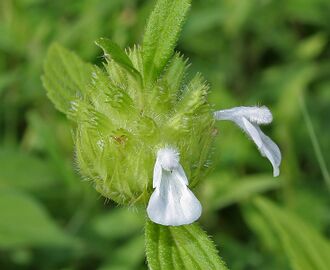
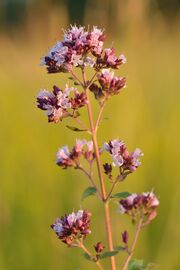
The alternative family name Labiatae refers to the flowers typically having petals fused into an upper lip and a lower lip (labia in Latin). Although this is still considered an acceptable alternative name, most botanists now use the name Lamiaceae in referring to this family. The flowers are bilaterally symmetrical with five united petals and five united sepals. They are usually bisexual and verticillastrate (a flower cluster that looks like a whorl of flowers, but actually consists of two crowded clusters). The leaves emerge oppositely, each pair at right angles to the previous one (decussate) or whorled. The stems are frequently square in cross section,[9] but this is not found in all members of the family, and is sometimes found in other plant families.
أجناس

_in_Talakona_forest,_AP_W_IMG_8284.jpg&filetimestamp=20110919195034&)
The last revision of the entire family was published in 2004.[3] It described and provided keys to 236 genera. These are marked with an asterisk (*) in the list below. A few genera have been established or resurrected since 2004. These are marked with a plus sign (+). Other genera have been synonymised. These are marked with a minus sign (-). The remaining genera in the list are mostly of historical interest only and are from a source that includes such genera without explanation.[10] Few of these are recognized in modern treatments of the family.
Kew Gardens provides a list of genera that includes additional information.[11] A list at the Angiosperm Phylogeny Website is frequently updated.[12] Plants of the World Online currently accepts 227 genera.[13]
- *Acanthomintha (A.Gray) A.Gray
- Acanthoprasium (Benth.) Spach
- *Achyrospermum Blume
- Acinos Mill., synonym of Clinopodium
- Acrocephalus Benth., synonym of Platostoma
- *Acrotome Benth. ex Endl.
- *Acrymia Prain
- Adelosa Blume, synonym of Clerodendrum
- *Aegiphila Jacq.
- *Aeollanthus C.Mart. ex Spreng.
- *Agastache Clayton ex Gronov.
- *Ajuga L.
- *Ajugoides Makino
- *Alajja Ikonn., synonym of Eriophyton
- *Alvesia Welw.
- *Amasonia L.f.
- *Amethystea L.
- *Anisochilus Wall. ex Benth., synonym of Coleus
- Apatelantha T.C.Wilson & Henwood
- *Anisomeles R.Br.
- *Asterohyptis Epling
- *Ballota L.
- *Basilicum Moench
- Becium Lindl., synonym of Ocimum
- *Benguellia G.Taylor
- Betonica L.
- *Blephilia (L.) Raf.
- *Bostrychanthera Benth., synonym of Chelonopsis
- Bovonia Chiov., synonym of Aeollanthus
- *Brachysola Rye
- *Brazoria Engelm. & A.Gray
- *Bystropogon L'Hér.
- Calamintha L., synonym of Clinopodium
- *Callicarpa L.
- Cantinoa Harley & J.F.B.Pastore
- *Capitanopsis S.Moore
- Capitanya Schweinf. ex Gürke, synonym of Coleus
- *Caryopteris Bunge
- *Catoferia (Benth.) Benth.
- *Cedronella Moench
- Ceratanthus F.Muell. ex G.Taylor, synonym of Platostoma
- *Chaiturus Ehrh. ex Willd.
- *Chamaesphacos Schrenk ex Fisch. & C.A.Mey.
- *Chaunostoma Donn.Sm., synonym of Lepechinia
- *Chelonopsis Miq.
- *Chloanthes R.Br.
- *Cleonia L.
- *Clerodendrum L.
- *Clinopodium L.
- *Colebrookea Sm.
- Coleus Lour.
- *Collinsonia L.
- *Colquhounia Wall.
- *Comanthosphace S.Moore
- Condea Adans.
- *Congea Roxb.
- *Conradina A.Gray
- Coridothymus Rchb.f., synonym of Thymbra
- *Cornutia Plum. ex L.
- *Craniotome Rchb.
- *Cryphia R.Br., synonym of Prostanthera
- *Cuminia Colla
- *Cunila D.Royen
- Cyanocephalus (Pohl ex Benth.) Harley & J.F.B.Pastore
- *Cyanostegia Turcz.
- *Cyclotrichium (Boiss.) Manden. & Scheng.
- *Cymaria Benth.
- Dasymalla Endl.
- *Dauphinea Hedge, synonym of Capitanopsis
- *Dicerandra Benth.
- *Dicrastylis Drumm. ex Harv.
- Discretitheca P.D.Cantino
- *Dracocephalum L.
- *Drepanocaryum Pojark.
- *Elsholtzia Willd.
- *Endostemon N.E.Br.
- Englerastrum Briq., synonym of Coleus
- +Eplingiella Harley & J.F.B.Pastore
- Equilabium Mwany., A.J.Paton & Culham
- *Eremostachys Bunge, synonym of Phlomoides
- *Eriope Humb. & Bonpl. ex Benth.
- *Eriophyton Benth.
- Eriopidion Harley
- *Eriothymus (Benth.) Rchb.
- Erythrochlamys Gürke, synonym of Ocimum
- Euhesperida Brullo & Furnari, synonym of Satureja
- *Eurysolen Prain
- *Faradaya F.Muell., synonym of Oxera
- *Fuerstia T.C.E.Fr.
- *Galeopsis L.
- *Garrettia H.R.Fletcher
- Geniosporum Wall. ex Benth., synonym of Platostoma
- *Glechoma L.
- *Glechon Spreng.
- *Glossocarya Wall. ex Griff.
- *Gmelina L.
- *Gomphostemma Wall. ex Benth.
- *Gontscharovia Boriss.
- Gymneia (Benth.) Harley & J.F.B.Pastore
- *Hanceola Kudô
- *Haplostachys (A.Gray) Hillebr.
- *Haumaniastrum P.A.Duvign. & Plancke
- *Hedeoma Pers.
- Heliacria Bo Li, C.L.Xiang, T.S.Hoang & Nuraliev
- *Hemiandra R.Br.
- *Hemigenia R.Br.
- *Hemiphora (F.Muell.) F.Muell.
- *Hemizygia (Benth.) Briq., synonym of Syncolostemon
- *Hesperozygis Epling
- *Heterolamium C.Y.Wu
- *Hoehnea Epling
- *Holmskioldia Retz.
- *Holocheila (Kudô) S.Chow
- Holostylon Robyns & Lebrun, synonym of Coleus
- *Horminum L.
- *Hosea Ridl.
- *Hoslundia Vahl
- *Huxleya Ewart, synonym of Volkameria
- *Hymenocrater Fisch. & C.A.Mey., synonym of Nepeta
- *Hymenopyramis Wall. ex Griff.
- *Hypenia (Mart. ex Benth.) Harley
- *Hypogomphia Bunge
- *Hyptidendron Harley
- *Hyptis Jacq.
- *Hyssopus L., synonym of Dracocephalum
- Isodictyophorus Briq., synonym of Coleus
- *Isodon (Benth.) Schrad. ex Spach
- *Isoleucas O.Schwartz
- +Kalaharia Baill.
- *Karomia Dop
- Keiskea Miq., synonym of Collinsonia
- Killickia Bräuchler, Heubl & Doroszenko
- Kudrjaschevia Pojark.
- *Kurzamra Kuntze
- *Lachnostachys Hook.
- *Lagochilus Bunge ex Benth.
- *Lagopsis (Bunge ex Benth.) Bunge
- *Lallemantia Fisch. & C.A.Mey., synonym of Dracocephalum
- *Lamiophlomis Kudô, synonym of Phlomoides
- *Lamium L.
- *Lavandula L.
- *Leocus A.Chev., synonym of Coleus
- *Leonotis (Pers.) R.Br.
- *Leonurus L.
- *Lepechinia Willd.
- Leptohyptis Harley & J.F.B.Pastore
- *Leucas R.Br.
- Leucophae Webb & Berthel., synonym of Sideritis
- *Leucosceptrum Sm.
- Limniboza R.E.Fr., synonym of Platostoma
- *Lophanthus Adans., synonym of Nepeta
- *Loxocalyx Hemsl.
- *Lycopus L.
- *Macbridea Elliott ex Nutt.
- *Madlabium Hedge, synonym of Capitanopsis
- *Marmoritis Benth., synonym of Nepeta
- *Marrubium L.
- *Marsypianthes Mart. ex Benth.
- +Martianthus Harley & J.F.B.Pastore
- *Matsumurella Makino
- *Meehania Britton
- *Melissa L.
- *Melittis L.
- *Mentha L.
- *Meriandra Benth., synonym of Salvia
- Mesona Blume, synonym of Platostoma
- Mesosphaerum P.Browne
- *Metastachydium Airy Shaw ex C.Y.Wu & H.W.Li, synonym of Phlomoides
- *Microcorys R.Br.
- *Micromeria Benth.
- *Microtoena Prain
- *Minthostachys (Benth.) Spach
- *Moluccella L.
- *Monarda L.
- *Monardella Benth.
- *Monochilus Fisch. & C.A.Mey.
- *Mosla (Benth.) Buch.-Ham. ex Maxim.
- Muniria N.Streiber & B.J.Conn
- Neohyptis J.K.Morton, synonym of Coleus
- Neorapinia Moldenke, synonym of Vitex
- *Nepeta L.
- *Newcastelia F.Muell.
- Nosema Prain, synonym of Platostoma
- *Notochaete Benth., synonym of Phlomoides
- *Obtegomeria Doroszenko & P.D.Cantino
- *Ocimum L.
- Octomeron Robyns, synonym of Platostoma
- *Ombrocharis Hand.-Mazz.
- *Oncinocalyx F.Muell., synonym of Teucrium
- Oocephalus (Benth.) Harley & J.F.B.Pastore
- *Origanum L.
- *Orthosiphon Benth.
- *Otostegia Benth.
- +Ovieda L.
- *Oxera Labill.
- *Panzerina Soják
- *Paralamium Dunn
- *Paraphlomis Prain
- *Paravitex H.R.Fletcher, synonym of Vitex
- *Peltodon Pohl, synonym of Hyptis
- *Pentapleura Hand.-Mazz.
- *Perilla L.
- *Perillula Maxim.
- *Peronema Jack
- -Perovskia Kar., synonym of Salvia
- Perrierastrum Guillaumin, synonym of Capitanopsis
- Petitia Jacq.
- *Petraeovitex Oliv.
- *Phlomidoschema (Benth.) Vved.
- *Phlomis L.
- *Phlomoides Moench
- *Phyllostegia Benth.
- Physominthe Harley & J.F.B.Pastore
- *Physopsis Turcz.
- *Physostegia Benth.
- *Piloblephis Raf.
- Pitardia Batt. ex Pit., synonym of Nepeta
- *Pityrodia R.Br.
- *Platostoma P.Beauv.
- *Plectranthus L.Hér.
- *Pogogyne Benth.
- *Pogostemon Desf.
- *Poliomintha A.Gray
- *Prasium L.
- *Premna L.
- *Prostanthera Labill.
- *Prunella L.
- *Pseuderemostachys Popov, synonym of Phlomoides
- *Pseudocarpidium Millsp.
- *Pseudocaryopteris (Briq.) P.D.Cantino
- Pseudochamaesphacos Parsa
- Pseudodictamnus Fabr.
- *Pseudomarrubium Popov, synonym of Phlomoides
- Puntia Hedge, syononym of Endostemon
- *Pycnanthemum Michx.
- *Pycnostachys Hook., synonym of Coleus
- Quoya Gaudich.
- Rabdosiella Codd, synonym of Coleus
- *Renschia Vatke
- *Rhabdocaulon (Benth.) Epling
- *Rhaphiodon Schauer
- *Rhododon Epling
- -Rosmarinus L., synonym of Salvia
- *Rostrinucula Kudô
- *Rotheca Raf.
- *Roylea Wall. ex Benth.
- *Rubiteucris Kudô
- +Rydingia Scheen & V.A.Albert
- Sabaudia Buscal. & Muschl., synonym of Lavandula
- *Saccocalyx Coss. & Durieu
- Salazaria Torr., synonym of Scutellaria
- *Salvia L.
- *Satureja L.
- *Schizonepeta (Benth.) Briq.
- *Schnabelia Hand.-Mazz.
- *Scutellaria L.
- *Sideritis L.
- *Siphocranion Kudô
- Solenostemon Thonn., synonym of Coleus
- *Spartothamnella Briq., synonym of Teucrium
- *Sphenodesme Jack
- *Stachydeoma Small
- *Stachyopsis Popov & Vved., synonym of Eriophyton
- *Stachys L.
- *Stenogyne Benth.
- *Sulaimania Hedge & Rech.f., synonym of Moluccella
- *Suzukia Kudô
- *Symphorema Roxb.
- Symphostemon Hiern, synonym of Coleus
- *Synandra Nutt.
- *Syncolostemon E.Mey. ex Benth.
- *Tectona L.f.
- *Teijsmanniodendron Koord.
- +Tetraclea A.Gray
- *Tetradenia Benth.
- *Teucridium Hook.f., synonym of Teucrium
- *Teucrium L.
- *Thorncroftia N.E.Br.
- *Thuspeinanta T.Durand
- *Thymbra L.
- *Thymus L.
- *Tinnea Kotschy ex Hook.f.
- *Trichostema L.
- *Tripora P.D.Cantino
- *Tsoongia Merr., synonym of Vitex
- *Vitex L.
- *Viticipremna H.J.Lam, synonym of Vitex
- +Volkameria L.
- *Warnockia M.W.Turner
- *Wenchengia C.Y.Wu & S.Chow
- *Westringia Sm.
- Wiedemannia Fisch. & C.A.Mey., synonym of Lamium
- *Wrixonia F.Muell., synonym of Prostanthera
- Xenopoma Willd., synonym of Clinopodium
- *Zataria Boiss.
- *Ziziphora L.
تتميز الفصيلة الشفوية بنباتاتها العطرة المزودة بخلايا مفرزة عطرية خاصة بالأنواع، وبسوقها الفتية المربعة، وأوراقها المتقابلة المتصالبة، وتويجها الثنائي الشفة. نوراتها سنمية، ثنائية الجانب، متفاوتة درجة الانكماش، معظم أزهارها حشرية التأبير. تضم قرابة 200 جنس و4000 نوع واسعة الانتشار في منطقة حوض البحر المتوسط. تتمثل في المجموع النباتي السوري اللبناني (النبيت) بـ 31 جنساً و235 نوعاً، وتحتل المكان الرابع بالنسبة إلى عدد الأنواع السورية اللبنانية، أبرز أجناسها وأنواعها:
ـ الزعتر: Thymus يضم نحو 350 نوعاً تنتشر في أوربا وآسيا، من أهمها الزعتر المبتذل Thymus vulgaris المطهِّر والمقوِّي لجهاز المناعة، والمفيد في علاج الإنفلونزا والزكام والتهاب الحلق والتهاب الجيوب والسعال والتهاب القصبات، إضافة إلى استخدامه في التغذية. ويتمثل الزعتر في النبات الطبيعي السوري اللبناني بسبعة أنواع أشهرها الزعتر السوري T.syriacus.
ـ النعناع Mentha: أو النعنع يضم قرابة 25 نوعاً، جميعها معمِّرة عطرية منتشرة في أنحاء العالم، أبرزهاالنعناع السنبلي M.spicata والنعناع الفلفلي M.piperita والنعناع العكش M.crispa، وكلها تحتوي على زيوت عطرية طيارة في طليعتها المانيتول والسينيول والكادنين والليمونين المستعملة معطِّرة لمعاجين الأسنان، وعلكة المضغ. يزرع العديد من أنواعه في مختلف أنحاء العالم، ويعد النعناع الأخضر من أهم مكونات المائدة الممتازة المفيدة للجهاز الهضمي. وتكمن فوائد النعناع العلاجية الرئيسة الطاردة للريح والتخمة والمغص، والمساعِدة على تدفق العصارة الهضمية والصفراء وارتخاء العضلات. كما يخفف الغثيان ويلطِّف تشنج القولون، ويخفِّف الصداع المرتبط بضعف الهضم، ويسكِّن المغص المعِدِي، واضطرابات المرارة، والرشح.
ـ ندى البحر المخزني Rosmarinus officinalis: من أسمائه المتداولة: إكليل الجبل، حصا البان، حصلبان. أزهاره جميلة زرقاء، وافرة الرحيق، يَجْرُسها (أي يمتص رحيقها النحل). تستعمل مشروباته ضد الرثّة (الروماتيزم)، وأمراض الجهاز البولي، وأمراض المعدة، مفرغة للصفراء، مقشِّعة صدرية، لائمة للجروح، منظفة لبشرة الوجه، ومعالجة للرمد الربيعي، منشطة للدورة الدموية، محسنة للقدرة على التركيز، منشطة للذاكرة، مخففة آلام الصداع والشقيقة. تعد أوراقه من التوابل والأفاويه التي تضاف إلى كثير من المأكولات لتحسين الطعم وزيادة الشهية. ويستعمل زيته في مستحضرات الزينة وصناعة الصابون.
ـ السالفيا Salvia: وتعني الشافية، تعرف عامياً بالمريميّة، واسعة الانتشار في حوض المتوسط وأمريكا الشمالية. من أكثر الأجناس غنى بالأنواع إذ تضم أكثر من 600 نوع تقريباً، 32 منها تنبت في سورية ولبنان. من أسمائها المتداولة: قويسة، قويصة، مريمية، قصعين، ناعمة. أبرز أنواعها الطبية: المريمية المخزنية Salvia officinalis. موادها الفعالة: الأستروجين، الزيوت العطرية، الكافور، السينول، المواد العفصية، الأسس المرة، السالفين. تستعمل مطهِّرة لكل أنواع التهابات الحلق الجرثومية والفطرية والفيروسية، وتنشط عمليات الهضم، وتخفف العرق، كما تنقص كمية سكر الدم، وتطرد الديدان، وتخفض الحرارة، وتقطع الإسهال، وتستعمل مضادة للربو. ويعتقد، في الطب الشعبي، أن المريمية منشطة لعمل الهرمون الأنثوي «الاستروجين» الأمر الذي يبرر استعمالها علاجاً ممتازاً لمشاكل سن اليأس، مساعدة للجسم على التكيُّف مع التغيرات الهرمونية الحاصلة. كما تستعمل الأوراق الجافة في الطبخ لتحسين طعم العديد من المأكولات. أبرز أنواعها المستعملة في الوطن العربي: السالفيا الأفانينية Salvia fruticosa المعروفة بالمريمية. والسالفيا السورية، والسالفيا الفلسطينية وغيرها.
ـ اللاوندولا Lavandula: من أسمائها المتداولة اللاوندا واللافندا، أشهر أنواعها: اللاوندا المخزنية Lavandula officinalis المعروفة بمفعولها الملطِّف والمهدِّئ لحالات الربو والسعال التشنجي، تمزج مع أعشاب أخرى لتخفيف الاكتئاب وتخفيف تشنج العضلات.
ـ الأوريغانوم السوري Origanum syriacum: الذي يسمى أيضاً: الماجورانا سيرياكا Majorana syriaca. من أسمائه المتداولة مردقوش والزعتر الخليلي. نبات طبي يخفف من الصداع، ويحبس الزكام. نصل أوراقه خملي البشرة، تستعمل أوراقه الجافة في الطبخ لتحسين طعم العديد من المأكولات.
ـ الميكروميريا Micromeria myrtifolia: من أسمائها المتداولة: الشميسة، الزوفا، المستعملة في الساحل السوري كالشاي.
ـ الأوسيموم Ocimum: الذي يضم نحو 150 نوعاً مدارية الانتشار، أبرزها الأوسيموم بازيليكوم Ocimum basilicum المعروف عامياً بالريحان المزروع من أصول مدارية.
ـ اللاميوم Lamium: الذي يضم نحو 50 نوعاً تشكل غالباً أعشاباً ضارة، من أكثرها انتشاراً اللاميوم الأبيض أو (القرَّاص الكاذب).
ـ التوكريوم Teucrium: من أسمائه المتداولة الجعدة T.polium، عشب معمِّر، أوراقه متموِّجة الحافة، مغطاة بوبر أبيض، يستعمل مغلي الورق في النَّزلات الصدرية والآلام المعدية.
تعديلات مؤخراً
The circumscription of several genera has changed since 2004. Tsoongia, Paravitex, and Viticipremna have been sunk into synonymy with Vitex.[14] Huxleya has been sunk into Volkameria.[5] Kalaharia, Volkameria, Ovieda, and Tetraclea have been segregated from a formerly polyphyletic Clerodendrum.[5] Rydingia has been separated from Leucas.[15] The remaining Leucas is paraphyletic over four other genera.[16]
Subfamilies and tribes
In 2004, the Lamiaceae were divided into seven subfamilies, plus 10 genera not placed in any of the subfamilies.[3] The unplaced genera are: Tectona, Callicarpa, Hymenopyramis, Petraeovitex, Peronema, Garrettia, Cymaria, Acrymia, Holocheila, and Ombrocharis. The subfamilies are the Symphorematoideae, Viticoideae, Ajugoideae, Prostantheroideae, Nepetoideae, Scutellarioideae, and Lamioideae. The subfamily Viticoideae is probably not monophyletic.[14] The Prostantheroideae and Nepetoideae are divided into tribes. These are shown in the phylogenetic tree below.
شجرة المحتد
Most of the genera of Lamiaceae have never been sampled for DNA for molecular phylogenetic studies.[17] Most of those that have been are included in the following phylogenetic tree. The phylogeny depicted below is based on seven different sources.[3][7][5][14][18][19][20]
| Lamiaceae |
| |||||||||||||||||||||||||||||||||||||||||||||||||||||||||||||||||||||||||||||||||||||||||||||||||||||||||||||||||||||||||||||||||||||||||||||||||||||||||||||||||||||||||||||||||||||||||||||||||||||||||||||||||||||||||||||||||||||||||||||||||||||||||||||||||||||||||||||||||||||||||||||||||||||||||||||||||||||||||||||||||
معرض صور
-
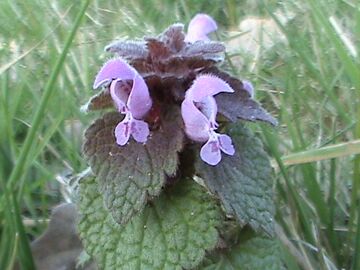 Lamium purpureum, showing the bilaterally symmetrical flower
 -
-
-
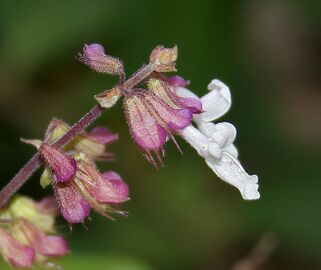 Orthosiphon thymiflorus flower
 -
-
-


المصادر
- ^ الشَّفوية (الفصيلة ـ) الموسوعة العربية
- ^ أ ب Heywood, Vernon H.; Brummitt, Richard K.; Seberg, Ole; Culham, Alastair (2007). Flowering Plant Families of the World. Ontario, Canada: Firefly Books. ISBN 978-1-55407-206-4.
- ^ أ ب ت ث ج ح خ د Harley RM, Atkins A, Budantsev AL, et al. 2004. "Labiatae" pages 167-275. In: Klaus Kubitzki (editor) and Joachim W. Kadereit (volume editor). The Families and Genera of Vascular Plants volume VII. Springer-Verlag: Berlin; Heidelberg, Germany. ISBN 978-3-540-40593-1
- ^ "World Checklist of Selected Plant Families". Archived from the original on 2017-07-09. Retrieved 2022-02-21.
- ^ أ ب ت ث Yuan, Yao-Wu; Mabberley, David J.; Steane, Dorothy A.; Olmstead, Richard G. (2010). "Further disintegration and redefinition of Clerodendrum (Lamiaceae): Implications for the understanding of the evolution of an intriguing breeding strategy". Taxon. 59 (1): 125–133. Bibcode:2010Taxon..59..125Y. doi:10.1002/tax.591013.
- ^ Cantino, P.D., Harley, R.M. & Wagstaff, S.J. 1992. Genera of Labiatae: status and classification. Pp. 511-522. In: Raymond M. Harley and Tom Reynolds (editors). Advances in Labiate Science. Richmond, Royal Botanic Gardens, Kew.
- ^ أ ب Wagstaff, Steven J.; Hickerson, Laura; Spangler, Russ; Reeves, Patrick A.; Olmstead, Richard G. (1998). "Phylogeny in Labiatae s.l., inferred from cpDNA sequences". Plant Systematics and Evolution. 209 (3–4): 265–274. Bibcode:1998PSyEv.209..265W. doi:10.1007/bf00985232. S2CID 601658.
- ^ خطأ استشهاد: وسم
<ref>غير صحيح؛ لا نص تم توفيره للمراجع المسماةMOBOT - ^ Parnell, J. and Curtis, T. 2012. Webb's An Irish Flora. Cork University Press ISBN 978-185918-4783
- ^ "List of genera in Lamiaceae". In: "Lamiaceae". In: "List of families". In: "Families and genera in GRIN. (see External links below)
- ^ List of Genera in Lamiaceae. At: Vascular Plant Families and Genera. At: World Checklist of Selected Plant Families. At: Electronic Plant Information Center. At: Website of Royal Botanic Gardens, Kew. (see External Links below).
- ^ "APG list of Lamiaceae genera". Archived from the original on 2022-01-31. Retrieved 2022-02-21.
- ^ Lamiaceae Martinov. Plants of the World Online. Retrieved 14 April 2024.
- ^ أ ب ت Bramley, Gemma L.C.; Forest, Félix; Rogier (2009). "Troublesome tropical mints: re-examining generic limits of Vitex and relations (Lamiaceae) in South East Asia". Taxon. 58 (2): 500–510. Bibcode:2009Taxon..58..500B. doi:10.1002/tax.582014.
- ^ Scheen, Anne-Cathrine; Albert, Victor A. (2007). "Nomenclatural and taxonomic changes within the Leucas clade (Lamioideae; Lamiaceae)". Systematics and Geography of Plants. 77 (2): 229–238. JSTOR 20649740.
- ^ Scheen, Anne-Cathrine; Albert, Victor A. (2009). "Molecular Phylogenetics of the Leucas Group (Lamioideae; Lamiaceae)". Systematic Botany. 34 (1): 173–181. Bibcode:2009SysBo..34..173S. doi:10.1600/036364409787602366. S2CID 85894904.
- ^ Zhao, Fei; Chen, Ya-Ping; Salmaki, Yasaman; Drew, Bryan T.; Wilson, Trevor C.; Scheen, Anne-Cathrine; Celep, Ferhat; Bräuchler, Christian; Bendiksby, Mika; Wang, Qiang; Min, Dao-Zhang; Peng, Hua; Olmstead, Richard G.; Li, Bo; Xiang, Chun-Lei (8 January 2021). "An updated tribal classification of Lamiaceae based on plastome phylogenomics". BMC Biology. 19 (1): 2. doi:10.1186/s12915-020-00931-z. PMC 7796571. PMID 33419433.
- ^ Zhong, Jin-Shun; Li, Jie; Li, Lang; Conran, John G.; Hsi-wen, Li (2010). "Phylogeny of Isodon (Schrad. ex Benth.) Spach (Lamiaceae) and Related Genera Inferred from Nuclear Ribosomal ITS, trnL-trnF Region, and rps16 Intron Sequences and Morphology". Systematic Botany. 35 (1): 207–219. Bibcode:2010SysBo..35..207Z. doi:10.1600/036364410790862614. S2CID 54808462.
- ^ Walker, Jay B.; Sytsma, Kenneth J. (2007). "Staminal Evolution in the Genus Salvia (Lamiaceae): Molecular Phylogenetic Evidence for Multiple Origins of the Staminal Lever". Annals of Botany. 100 (2): 375–391. doi:10.1093/aob/mcl176. PMC 2735309. PMID 16926227.
- ^ Ryding, P. Olof (2010). "Pericarp structure and phylogeny of tribe Mentheae (Lamiaceae)". Plant Systematics and Evolution. 285 (3–4): 165–175. Bibcode:2010PSyEv.285..165R. doi:10.1007/s00606-010-0270-9. S2CID 24076224.
وصلات خارجية

- List of genera in family LABIATAE At: Dicotyledons At: List Genera within a Family At: Vascular Plant Families and Genera At: About the Checklist At: World Checklist of Selected Plant Families At: Data Sources At: ePIC At: Scientific Databases At: Kew Gardens
- List of Genera in Lamiaceae At: Lamiaceae At: Lamiales At: Angiosperm Phylogeny Website At: Missoure Botanical Garden Website
- List of genera At: Lamiaceae At: List of families At: Families and Genera in GRIN At: Queries At: GRIN taxonomy for plants
- Lamiaceae in L. Watson and M.J. Dallwitz (1992 onwards). The families of flowering plants: descriptions, illustrations, identification, information retrieval. http://delta-intkey.com
- Lamiaceae images
- Family Lamiaceae Flowers in Israel
- Chilean Lamiaceae Chileflora
- Family Lamiaceae (Labiatae) Plant Life Forms