جبل نبو
| Mount Nebo | |
|---|---|
| جَبَل نِيبُو הַר נְבוֹ | |
 | |
| أعلى نقطة | |
| الارتفاع | 700 متر |
| الإحداثيات | 31°46.0′N 35°43.5′E / 31.7667°N 35.7250°E |
| التسمية | |
| جَبَل نِيبُو (عربية) | |
| الجغرافيا | |
| الموقع | الأردن |
| المنطقة | محافظة مأدبا |
جبل نبو هو جبل يقع في الأردن، ويرتفع 680 مترا عن سطح البحر. يعتقد أن على الجبل وجدت مدينة نبو التي تبعد عن عمان 41 كيلومتراً وتبعد 10 كم إلى الغرب من مدينة مادبا. منطقة جبل نبو مطلة على البحر الميت ووادي الأردن، وهو من أفضل الأماكن للمراقبة في العالم وفي الأيام الصافية يستطيع المرء من على قمته أن يرى بالعين المجردة البحر الميت وجبال البلقاء وكل فلسطين بما فيها قبة مسجد الصخرة والمسجد الأقصى وأبراج الكنائس في مدينة القدس وشواطئ البحر الأبيض المتوسط وجنوب لبنان وجبل الشيخ شمالا حتى جبال سيناء جنوبا. وهو الوجهة المفضلة لدى الحجاج اليهود القادمين من حول العالم لإيمانهم أن قمة الجبل تضم رفات النبي موسى عليه السلام.
التسمية والتاريخ
نبا هو إله التجارة عند البابليين. وتذكر مسلة ملك مؤاب "ميشع" مدينة نبو والحروب التي دارت على ذلك الجبل، ومنذ ذلك الوقت هجرت المدينة وفي القرن الرابع عندما وصلتها قبيلة بدوية مسيحية بنت فيها كنيسة وعادت المدينة وازدهرت في القرن السادس.
اسم المدينة مذكور في التوراة هكذا: «اصعد إلى جبل عباريم، هذا جبل نبو الذي في أرض موآب الذي قبالة أريحا».
أهميته

يعتقد المسيحيون أن نبي الله موسى وقف على جبل نبو مع قومه ورأى الأرض الموعودة التي لم يصلها وأنه توفي ودفن عليه السلام في جبل نبو. على قمة الجبل شيدت كنيسة إيوانية الشكل أنشأها رهبان الفرنسيسكان بين القرنين الرابع والسادس بعد الميلاد وفيها لوحات من الفسيفساء. بالرغم من وجود اعتقاد أن قبر النبي موسى موجود فيها إلا أن أيا من علماء الآثار لم يتمكن من العثور عليه وبالتالي فلا يوجد أي تأكيد على موقعه أو وجوده.
الآثار
.jpg&filetimestamp=20260416134157&)
Systematic exploration begun by Sylvester J. Saller O.F.M. was continued in 1933 by Jerome Mihaic of the Studium Biblicum Franciscanum. On the highest point of the mountain, Syagha,[1] the remains of a Byzantine church[2] and monastery were discovered in 1933.[3] The church was first constructed in the second half of the 4th century to commemorate the place of Moses' death. The church design follows a typical basilica pattern. It was enlarged in the late fifth century AD and rebuilt in AD 597. The church is first mentioned in an account of a pilgrimage made by a lady Aetheria in AD 394. Six tombs have been found hollowed from the natural rock beneath the mosaic-covered floor of the church.
Bellarmino Bagatti worked on the site in 1935. Virgilio Canio Corbo later excavated the interior of the basilica.[4]
تاريخ النصب التذكاري الحديث للنبي موسى
The ancient church, a pilgrimage destination since the 4th century, was excavated between 1933 and 1938 by Sylvester Saller, bringing to light the basilica with its chapels and the annexes of the monastery.[5] The exquisite mosaics were then covered back with soil for protection.[5] In 1963, the Custody of the Holy Land decided to restore the mosaic floors and Virgilio Corbo was put in charge of the project.[5] A metal shelter designed in Oxford was erected over the ruins, but work was interrupted by the 1967 Arab-Israeli war.[5] Renewed work ensued between 1976 and 1984, when a new mosaic was discovered in the diaconicon-baptistery.[5] By 1984 the consolidation work was completed, and as a result, the basilica could be used both for liturgical purposes, as well as for displaying the restored mosaics, either in situ or mounted on the walls.[5] After renewed plans drawn in 1989 and geological surveys and assessments of the ancient and modern structures made a decade later, a new shelter, basically a complete basilica was built over the ancient church between December 2007 and the reopening day on 15 October 2016. Not even the sudden death of Michelle Piccirillo, a key figure in the project, in October 2008, led to a break in the work.[5]
الفسيفساء المعروضة
In the modern chapel presbytery, built to protect the site and provide worship space, remnants of mosaic floors from different periods can be seen. The earliest of these is a panel with a braided cross presently placed on the east end of the south wall.[citation needed]
معرض
-
 Stone marker at the entrance
 -
 Stone marker next to the building
 -
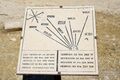 Plaque showing the distance from Mount Nebo to various locations
 -
 Old (pre-2017) structure protecting the excavated church remains
 -
 New structure
 -
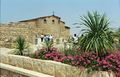 Old (pre-2017) structure
 -
![Theotokos chapel: apse with altar and mosaic[6]](/w/images/thumb/4/4f/Mosaic_at_MountNebo.jpg/120px-Mosaic_at_MountNebo.jpg) Theotokos chapel: apse with altar and mosaic[6]
Theotokos chapel: apse with altar and mosaic[6] -
 A cross-shaped baptismal font
 -
 Baptismal font
 -
Mosaic floor in the diaconicon-baptistery
-
 Mosaic: peacock
 -
 Mosaic: zebu (humped ox)
 -
 Mosaic inscription ("Offering of Caesarion, at the time of Alexios and Theophilos priests")
 -
 The Brazen Serpent sculpture, Mount Nebo
 -
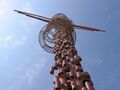 Detail of Brazen Serpent statue
 -
 View from Mount Nebo
.jpg&filetimestamp=20260416133359&)


.jpg&filetimestamp=20190219225140&)
![Theotokos chapel: apse with altar and mosaic[6]](/w/index.php?title=%D9%85%D9%84%D9%81:Mosaic_at_MountNebo.jpg&filetimestamp=20260416133353&)


.jpg&filetimestamp=20260416134358&)
.jpg&filetimestamp=20260416134529&)


_(1330156315).jpg&filetimestamp=20260416133410&)
انظر أيضاً

- Early Byzantine mosaics in the Middle East
- Mount Nebo, Utah
- Mount Pisgah (Bible)
- Nabau
- Nabi Musa
- Michele Piccirillo (archaeologist) (1944–2008), active at Mount Nebo and buried there
مصادر
- ^ Also found as "Siyagha" the peak is (710 metres), while the south eastern peak "el-Mukhayyat" is 790 metres. Piccirillo, Michele (2009). Mount Nebo. p. 17.
- ^ "Complete compendium of Mount Nebo". Madain Project. Retrieved 2 April 2018.
- ^ Piccirillo, Michele (2009) Mount Nebo (Studium Biblicum Franciscanum Guide Books, 2) pp. 14–15. Extract from Sylvester Saller The Memorial of Moses on Mount Nebo Jerusalem 1941, pp. 15–18.
- ^ "Chronology of Mount Nebo". Madain Project. Retrieved 2 April 2018.
- ^ أ ب ت ث ج ح خ Pappalardo, Carmelo (2017). Michaelides, Demetrios; Guimier-Sorbets, Anne-Marie (eds.). The Memorial of Moses on Mount Nebo, Jordan. A new shelter for the monument and the restoration of the mosaics: the ongoing project and new perspectives (Managing archaeological sites with mosaics: from real problems to practical solutions). Florence: EDIFIR-Edizioni Firenze. pp. 377–384. ISBN 978-88-7970-844-9. Retrieved 25 November 2021.
- ^ "Theotokos Chapel (Mount Nebo)". Archived from the original on 13 April 2020.
للاستزادة
- Mount Nebo: New Archaeological Excavations: 1967–1997, Michele Piccirillo and Eugenio Alliata
وصلات خارجية

- Franciscans at Mount Nebo
- Archaeology and Art – photographs of excavations in Jordan
- Pictures from Mount Nebo 1
 "Nebo, Mount". New International Encyclopedia. {{{year}}}.
- Photos of Mount Nebo at the American Center of Research
- Photos of Mount Nebo at the Manar al-Athar photo archive
| International | |
|---|---|
| National | |


- Pages using gadget WikiMiniAtlas
- Short description is different from Wikidata
- Articles containing explicitly cited عربية-language text
- Pages using infobox mapframe without shape links in Wikidata
- Coordinates on Wikidata
- Pages using infobox mountain with unknown parameters
- Articles with hatnote templates targeting a nonexistent page
- Articles with unsourced statements from November 2021
- مواقع أثرية في الأردن
- Hebrew Bible mountains
- Jewish Jordanian history
- أساطير يهودية
- جبال الأردن
- Ridges of Asia
- السياحة في الأردن
- Mountains associated with Christian monasticism
- فسيفساء بيزنطية
- Giraffes in art
- جغرافيا الأردن
- آثار أردنية
- صفحات مع الخرائط