بازيليكاتا
Basilicata | |
|---|---|
 Flag  الدرع | |
 | |
 | |
| Country | Italy |
| Capital | Potenza |
| الحكومة | |
| • President | Vito Bardi (centre-right) |
| المساحة | |
• الإجمالي | 9٬995 كم² (3٬859 ميل²) |
| التعداد (3 October 2012) | |
• الإجمالي | 575٬902 |
| • الكثافة | 58/km2 (150/sq mi) |
| صفة المواطن | إنگليزية: Lucanian إيطالية: Lucano (man) إيطالية: Lucana (woman) |
| منطقة التوقيت | UTC+1 (CET) |
| • الصيف (التوقيت الصيفي) | UTC+2 (CEST) |
| ISO 3166 code | IT-77 |
| GDP (nominal) | €12.0 billion (2017)[1] |
| GDP per capita | €21,100 (2017)[2] |
| HDI (2017) | 0.851[3] very high · 17th of 21 |
| NUTS Region | ITF |
| الموقع الإلكتروني | www.regione.basilicata.it |
بازيليكاتا (US: /-ˌzɪl-/,[4] النطق بالإيطالية: [baziliˈkaːta]), also known by its ancient name Lucania (/luːˈkeɪniə/, also US: /luːˈkɑːnjə/,[5][6] النطق بالإيطالية: [luˈkaːnja]) هي أحد الأقاليم العشرين المكونة للأراضي الإيطالية يقع جنوب البلاد ، مطلا من ناحية الجنوب الشرقي على خليج تارانتو ومن ناحية الجنوب الغربي على البحر المتوسط ، يحدها شرقا إقليم بوليا ، وغربا إقليم كامپانيا ، و جنوبا إقليم كالابريا . يبلغ عدد سكانه 597.768 نسمة و مساحته 9.992 كيلومتر مربع ، عاصمته پوتنسا . ويتكون من مقاطعتين هما پوتنسا، وماتيرا.
أصل الاسم
The name probably derives from basilikos (Greek: βασιλικός), which refers to the basileus, the Byzantine emperors, who ruled the region for 200 years as the Catepanate of Italy, from roughly 536/552 to 571/590 and from 879 to 1059.[7] Others argue that the name may refer to the Basilica of Acerenza, which held judicial power in the Middle Ages.[8] During the ancient Greek and Roman eras, Basilicata was known as Lucania. This was possibly derived from leukos (Greek: λευκός), meaning "white", from lykos (Greek: λύκος), meaning "wolf", or from Latin lūcus, meaning "sacred wood".[9] More probably, the name Lucania derived, like the forename (praenomen) Lucius, from the Latin word Lux (gen. lucis), meaning "light" (from PIE *leuk-, "brightness", also the root of the Latin verb lucere, "to shine"), which is a cognate of the name Lucas. Another proposed etymology is a derivation from the Etruscan word Lauchum (or Lauchme), meaning "king", which passed into Latin as Lucumo.[10]
التاريخ
قبل التاريخ
The first traces of human presence in Basilicata date to the late Paleolithic, with findings of Homo erectus. Late Cenozoic fossils, found at Venosa and other locations, include elephants, rhinoceros and species now extinct such as a saber-toothed cat of the genus Machairodus. Examples of rock art from the Mesolithic have been discovered near Filiano. From the fifth millennium, people stopped living in caves and built settlements of huts up to the rivers leading to the interior (Tolve, Tricarico, Aliano, Melfi, and Metaponto). In this period, anatomically modern humans lived by cultivating cereals and animal husbandry (Bovinae and Caprinae). Chalcolithic sites include the grottoes of Latronico and the funerary findings of the Cervaro grotto near Lagonegro.
The first known stable market center of the Apennine culture on the sea, consisting of huts on the promontory of Capo la Timpa, near to Maratea, dates to the Bronze Age. The first indigenous Iron Age communities lived in large villages in plateaus located at the borders of the plains and the rivers, in places fitting their breeding and agricultural activities. Such settlements include that of Tursi, known at the time as Anglona, located between the fertile valleys of Agri and Sinni, of Siris and, on the coast of the Ionian Sea, of Incoronata-San Teodoro. The first presence of Greek colonists, coming from the Greek islands and Anatolia, date from the late eighth century BC. There are virtually no traces of survival of the 11th–8th century BC archaeological sites of the settlements (aside from a necropolis at Castelluccio on the coast of the Tyrrhenian Sea): this was perhaps caused by the increasing presence of Greek colonies, which changed the balance of the trades.
التاريخ القديم

In ancient historical times, the region was originally known as Lucania, named for the Lucani, an Oscan-speaking population from central Italy. Starting from the late 8th century BC, the Greeks established a settlement first at Siris, founded by fugitives from Colophon. Then with the foundation of Metaponto from Achaean colonists, they started the conquest of the whole Ionian coast. There were also indigenous Oenotrian foundations on the coast, which exploited the nearby presence of Greek settlements, such as Velia and Pyxous, for their maritime trades. The region became one of the centers of Magna Graecia, with the foundation along its coasts of many Greek city-states (póleis). The first contacts between the Lucanians and the Romans date from the latter half of the fourth century BC. After the conquest of Taranto in 272, Roman rule was extended to the whole region: the Appian Way reached Brindisi and the colonies of Potentia (modern Potenza) and Grumentum were founded.
العصور الوسطى

After the fall of the Western Roman Empire in 476, Basilicata fell to Germanic rule, which ended in the mid-6th century when the Byzantines reconquered it from the Ostrogoths between 536 and 552 during the apocalyptic Byzantine-Gothic war under the leadership of Byzantine generals Belisarius and Narses. The region, deeply Christianized since as early as the 5th century, became part of the Lombard Duchy of Benevento founded by the invading Lombards between 571 and 590.
In the following centuries, Saracen raids led part of the population to move from the plain and coastal settlements to more protected centers located on hills. The towns of Tricarico and Tursi were under Muslim rule for a short period; the Saracen population would later be expelled.[11] The region was conquered once more for Byzantium from the Saracens and the Lombards in the late 9th century, with the campaigns of Nikephoros Phokas the Elder and his successors, and became part of the theme of Longobardia. In 968, the theme of Lucania was established, with the capital at Tursikon (Tursi).
In the 11th century, Basilicata, together with the rest of much of southern Italy, was conquered by the Normans. Melfi became the first capital of the County of Apulia (later County of Apulia and Calabria) in 1043, where Robert Guiscard was named "Duke" by Pope Nicholas II. Inherited by the Hohenstaufen, a medieval German royal and imperial dynasty, Frederick II reorganized the administrative structure of his predecessors and the Justiciarate of Basilicata, whose borders coincided almost entirely with the actual region, was created. In Melfi, the Emperor promulgated the Liber Augustalis (commonly known as Constitutions of Melfi), code of laws for the Kingdom of Sicily. The Swabians were ousted in the 13th century by the Capetian House of Anjou. Since then, Basilicata began to lose importance and was marked by an irreversible socio-political decline.
Modern and contemporary times

In 1485, Basilicata was the seat of plotters against King Ferdinand I of Naples, the so-called conspiracy of the Barons, which included the Sanseverino of Tricarico, the Caracciolo of Melfi, the Gesualdo of Caggiano, the Orsini del Balzo of Altamura and Venosa and other anti-Aragonese families. Later, Charles V stripped most of the barons of their lands, replacing them with the Carafa, Revertera, Pignatelli and Colonna among others. After the formation of the Neapolitan Republic in 1647, Basilicata also rebelled, but the revolt was suppressed. In 1663, a new province was created in Basilicata with its capital in Matera.
The region came under the dominion of the House of Bourbon in 1735. Basilicata autonomously declared its annexation to the Kingdom of Italy on 18 August 1860 with the Potenza insurrection. It was during this period that the state confiscated and sold off vast tracts of Basilicata's territory formerly owned by the Catholic Church. As the new owners were a handful of wealthy aristocratic families, the average citizen did not see any immediate economic and social improvements after unification, and poverty continued unabated.
This gave rise to the phenomenon of brigandage, which actually turned into a civil war in the form of a guerrilla fighting, whereby the Bourbon in exile and the Church encouraged the peasants to rise up against the Kingdom of Italy. This strong opposition movement continued for many years. The revolt in Basilicata was led by Carmine Crocco, who was the most important chief in the region and the most impressive band leader in southern Italy.[12] After World War II, conditions improved thanks to land reform. In 1952, the inhabitants of the Sassi di Matera were rehoused by the state but many of Basilicata's population had emigrated or were in the process of emigrating, which led to a demographic crisis from which it is still recovering.
الجغرافيا

Basilicata covers an extensive part of the southern Apennine Mountains, between the Ofanto river in the north and the Pollino massif in the south. It is bordered on the east by a large part of the Bradano river depression, which is traversed by numerous streams and declines to the southeastern coastal plains on the Ionian Sea.[13] The region also has a short coastline to the southwest on the Tyrrhenian Sea side of the peninsula.[14]

Basilicata is the most mountainous region in the south of Italy, with 47% of its area of 9،992 km2 (3،858 sq mi) covered by mountains. Of the remaining area, 45% is hilly, and 8% is made up of plains. Notable mountains and ranges include the Pollino massif, the Dolomiti lucane, Monte Vulture, Monte Alpi, Monte Carmine, Monti Li Foj and Toppa Pizzuta. Geological features of the region include the volcanic formations of Monte Vulture, and the seismic faults in the Melfi and Potenza areas in the north, and around Pollino in the south. Much of the region was devastated in the 1857 Basilicata earthquake. In the 20th century, the 1980 Irpinia earthquake destroyed many towns in the northwest of the region.
The mountainous terrain combined with weak rock and soil types makes landslides prevalent. The lithological structure of the substratum and its chaotic tectonic deformation predispose the slope to landslides, and this problem is compounded by the lack of forested land. In common with many another Mediterranean regions, Basilicata was once rich in forests, but they were largely felled and made barren during the time of Roman rule. The variable climate is influenced by three coastlines (Adriatic, Ionian and Tyrrhenian) and the complexity of the region's physical features. In general, the climate is continental in the mountains and Mediterranean along the coasts.
الديمغرافيا
| السنة | تعداد | ±% |
|---|---|---|
| 1861 | 509٬000 | — |
| 1871 | 524٬000 | +2.9% |
| 1881 | 539٬000 | +2.9% |
| 1901 | 492٬000 | −8.7% |
| 1911 | 486٬000 | −1.2% |
| 1921 | 492٬000 | +1.2% |
| 1931 | 514٬000 | +4.5% |
| 1936 | 543٬000 | +5.6% |
| 1951 | 628٬000 | +15.7% |
| 1961 | 644٬000 | +2.5% |
| 1971 | 603٬000 | −6.4% |
| 1981 | 610٬000 | +1.2% |
| 1991 | 611٬000 | +0.2% |
| 2001 | 598٬000 | −2.1% |
| 2010 (estimate) | 587٬000 | −1.8% |
| 2017 | 570٬365 | −2.8% |
| Source: ISTAT, 2001 | ||
أهم المدن

| المدينة | الاسم بالإيطالية | المقاطعة | السكان |
|---|---|---|---|
| 1. بوتنسا | Potenza | بوتنسا | 68.401 |
| 2. ماتيرا | Matera | ماتيرا | 59.569 |
| 3. ميلفي | Melfi | بوتنسا | 17.201 |
| 4. بوليكورو | Policoro | ماتيرا | 15.635 |
معرض صور
-
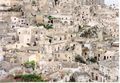 Matera
 -
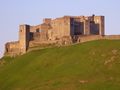 Castello di Melfi
 -
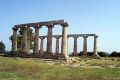 Metaponto
 -
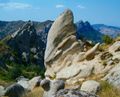 Dolomiti Lucane
 -
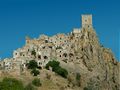 Craco
Craco -
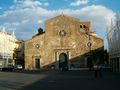
-
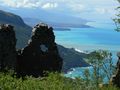
-
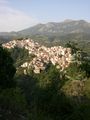


.JPG&filetimestamp=20080427203105&)


المراجع
- ^ "Eurostat - Tables, Graphs and Maps Interface (TGM) table". Epp.eurostat.ec.europa.eu. 14 June 2013. Retrieved 26 July 2013.
- ^ "Regional GDP per capita ranged from 31% to 626% of the EU average in 2017" (Press release). ec.europa.eu. Retrieved 2 September 2019.
- ^ "Sub-national HDI - Area Database - Global Data Lab". hdi.globaldatalab.org (in الإنجليزية). Retrieved 2018-09-13.
- ^ "Basilicata". The American Heritage Dictionary of the English Language (5th ed.). HarperCollins. Retrieved 6 May 2019.
- ^ "Basilicata". Merriam-Webster.com Dictionary. Merriam-Webster. OCLC 1032680871.
- ^ "Lucania". Collins English Dictionary. HarperCollins. Retrieved 6 May 2019.
- ^ Tommaso Pedìo (1997). La Basilicata dalla caduta dell'impero romano agli Angioini. p. 21.
- ^ Touring Club Italiano (1980). Basilicata - Calabria. p. 46.
- ^ Paola Corti (1976). Inchiesta Zanardelli sulla Basilicata. p. 86.
- ^ Bonfante G., Bonfante L., The Etruscan Language: An Introduction, 1983, p. 59.
- ^ Archivio storico per le province napoletane. Società napoletana di storia patria. 1876.
- ^ Eric Hobsbawm, Bandits, Penguin, 1985, p. 25.
- ^ "Portrait of the Regions – Italy: Basilicata – Geography and history". Eurostat. Retrieved 24 November 2025.
- ^ "Geografia Basilicata". Comuni-Italiani.it. Retrieved 24 November 2025.
وصلات خارجية


- Official website
- Basilicata Tourist Office
- Matera - European Capital of Culture 2019
- Photo gallery made by a UNESCO photographer


أبروتسو • وادي أوستا • أپوليا • بازيليكاتا • كالابريا • كامپانيا • إميليا رومانيا • فريولي ڤـِنـِتسيا جوليا • لاتسيو • ليگوريا • لومبارديا • ماركه • موليزه • پيدمونت • سردينيا • صقلية • ترنتينو ألتو أديجه/جنوب التيرول • توسكانيا • اومبريا • ڤـِنـِتو |  | |

| International | |
|---|---|
| National | |

- Short description is different from Wikidata
- Articles containing إنگليزية-language text
- Pages using Lang-xx templates
- Articles containing إيطالية-language text
- صفحات تستخدم جدول مستوطنة بقائمة محتملة لصفات المواطن
- Pages using infobox settlement with unknown parameters
- Pages using infobox settlement with no coordinates
- Pages using infobox settlement with deprecated parameters
- Articles containing Greek-language text
- بازيليكاتا
- مناطق إيطاليا
- أقاليم التصنيف الثاني في الاتحاد الأوروپي
- Wine regions of Italy
- أقاليم إيطاليا